Synopsis
There are some adventurers who cross continents and others who travel only a few miles. The protagonist of Auf der Rückseite der Landschaft (The B-side of the Landscape) has wound up belonging to the second category. Every morning, Gerd Roscher accompanies his wife to her place of work and spends the rest of the day waiting for her in a retail park by the side of the road in northern Germany. His daily landscape is made up of car parks, supermarkets and electrical-appliance outlets. So what makes his experience unique?
For several decades, Gerd was an acclaimed filmmaker and professor, and his films almost always took the form of a journey. Today, he talks about these journeys from a car park and thinks aloud between his van and the restaurant that serves a local speciality. The standard definition of “non-places” is that they are places designed for movement and consumption rather than loitering. But the theory doesn’t match what we see. Guided by Roscher and Hartmann, we discover a different side. The students smoking out of sight, the pensioners eating lunch together, the regulars in the café and the occasional passers-by end up forming an unexpected community.
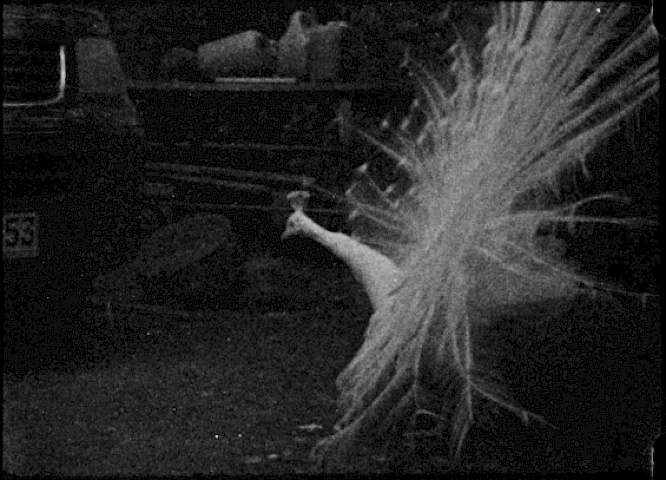
The film lingers on a series of paradoxes. Between immobility and travel, but also between the romantic landscape that Gerd philosophises about and the functional banality of the world from which he does so. Between the grainy images of the 16mm and the almost clinical clarity of the digital recordings made by a man who is losing his sight. As he imagines future films, plans new expeditions and recalls his past travels, Gerd remains sitting opposite the bland façade of a supermarket. And it’s precisely there that something resembling an adventure begins.