Synopsis
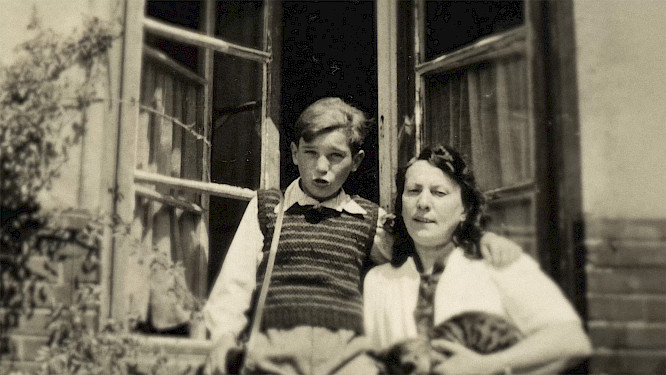
Escape to Borkum tells the story of my father, Ingomar Steineck, whose privileged German childhood in Stryków, Poland, abruptly comes to an end with the final phase of the Second World War.
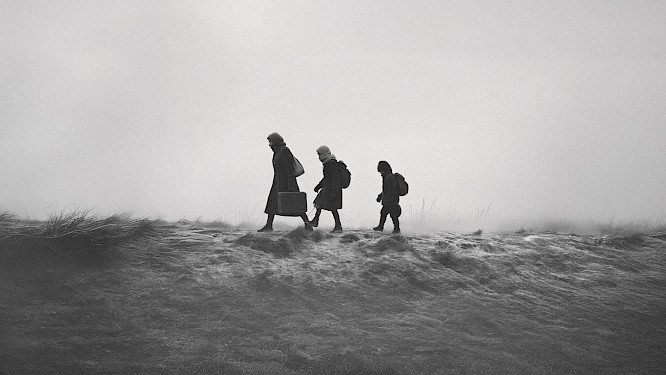
Together with his mother and sister, he is forced to flee, spending nearly two years as a refugee while travelling through a collapsing post-war Europe. The family finally reaches Borkum, a remote island in the North Sea, where they are housed in a refugee accommodation in a former naval barracks.
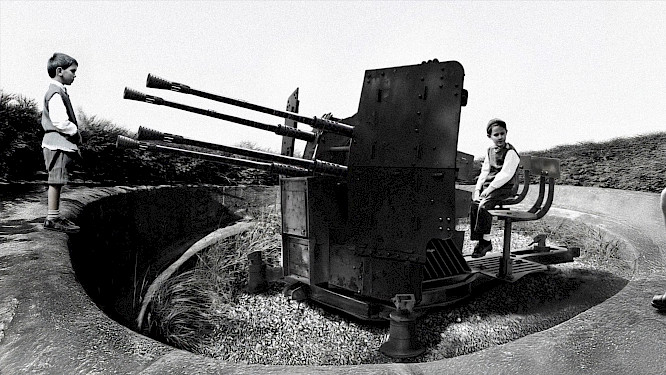
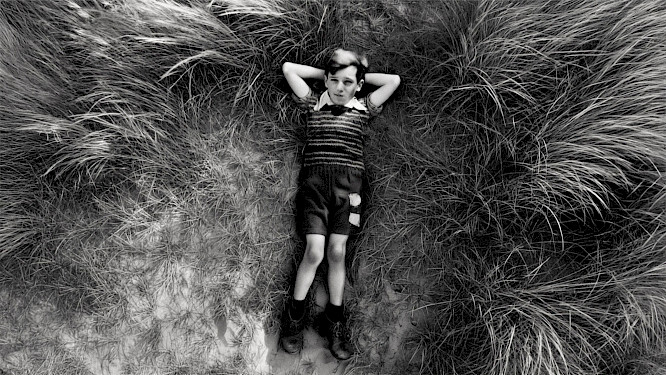
For the boy, still marked by the experiences of the previous two years, nature, school, friendships and the freedom to explore the remnants of the recent past offer a radically different childhood from the one he had known before, gradually creating a sense of normality in a world still profoundly shaped by war.
The film follows the story beyond the flight itself, tracing the family’s years on Borkum and my father’s gradual transition into a new life. Decades later, he reflects on his childhood, his family and the experiences that shaped him, including the repression and silence that characterized how many people dealt with the aftermath of the war. Memories of the flight remain present in unexpected ways, including recurring dreams of events that took place more than seventy years earlier.
Combining eyewitness testimony, historical photographs, archival material, filmed scenes and AI-assisted animation, Escape to Borkum moves between past and present, historical reality and personal memory.

