Films

We are updating this film database for 30 years - so have fun exploring!

You can create your very own catalogue, sorted by your personalized search criteria.
Therefore, you only have to choose your filters and download the emerging pdf.

Loading...
12 films found. Download PDF (approx. 14 pages)
BORN IN RAVENSBRÜCK

Germany 2021, 45 min
by Jule von Hertell

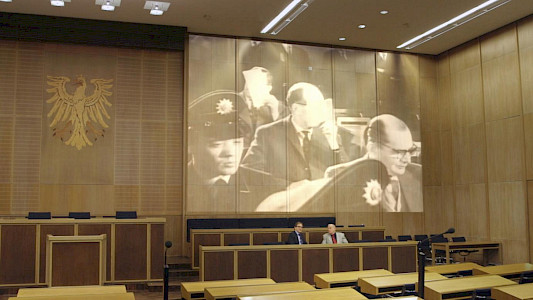
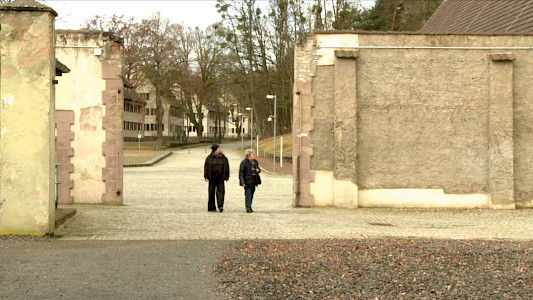
Around 900 children were born in the Ravensbrück women’s concentration camp between 1939 and 1945, only 2 to 3 percent of them survived. One of these children is Ingelore Prochnow. Left behind by her mother in a refugee camp after the liberation, she grew up with foster parents with no knowledge of where she came from. The place of birth 'Ravensbrück' displayed in her passport finally prompted her to research her past and her birth mother. The film deals with attempts at reconstructing events and preserving memory without having one’s own. How can you visualize what is so incomplete and sometimes only describable as a feeling? And how can today’s memorial sites and the available material be used for this? Only 40 survivors of the Ravensbrück concentration camp can tell us in person about this place and their experiences during the Nazi regime. Ingelore Prochnow sees herself as taking on this responsibility, and that is what makes this film important. [18 dokumentarfilmwoche hamburg]With: Ingelore Prochnow, Heike Rode, Klaus Prochnow, Frau SonntagHow is it possible to commemorate something about which you have absolutely no memory? Can you live your life as an eyewitness if you cannot give testimony as a survivor? These are the questions that plague Ingelore Prochnow, one of the last living concentration camp survivors. Her mother was pregnant when she was deported to the women’s concentration camp Ravensbrück because she had “intercourse with a Pole”. Ingelore was born in the camp and lived there until liberation, when she was one year old – a fact she did not learn until she was an adult. Ingelore then began to search for her history, and for possible living relatives. Her mother, maybe a brother, her father, and other prisoners, without whose care no child could have survived the inhuman conditions, all came up in her research, but the details remained vague. Ingelore has dedicated herself to keeping the memory of the Nazi period alive. She meets with survivors, speaks publicly, and does educational work, yet she questions herself, her role, and her search for answers. [63 Nordic Filmdays Lübeck]

Born in Ravensbrück

FEMOCRAZY [Petra Kelly]

Germany 2021, 99 min
by Torsten Körner

FEMOCRACY tells the story of the women who, from reconstruction after Second World War until today, have unrelentingly fought for and improved women‘s rights in politics and in the country. They paved the way for Angela Merkel, the first female German Chancellor.The female pioneers literally had to fight for their place in democracy with success-obsessed and position-hungry men. Modern approaches to Aids education of a female minister lead to a conservative outcry in the country. Housewives realized that their vote counts and they started to stand up for themselves. Women in politics also brought new issues to parliament. Rape in marriage - which was not a punishable offence until the late 1990s - became officially chargeable. Abortion was subject to renegotiation as well. Still a criminal offence, it was no longer prosecuted. Thus women’s rights were strengthened more and more. Furthermore, topics like the NATO dual track decision were discussed by female politicians from a different perspective and therefore brought a deeper dimension into the debates of the German Bundestag.Undaunted, ambitious and with infinite patience, the female heros of FEMOCRACY followed their path and defied prejudice and sexual discrimination. Female politicians of the past get a chance to speak today. Their memories are bothfunny and bitter, absurd and sometimes frighteningly current. Interwoven with partly unseen archive excerpts, the documentary filmmaker and journalist Torsten Körner (Angela Merkel – The Unexpected) has succeeded in creating an emotionally moving chronicle of West German politics from the 1950s to the German reunification. The images he found unfold a force that allows the cinema to be rediscovered as a place of political self-assurance. An insightful contemporary document that makes an unmistakable contribution to the current debate.with: Herta Däubler-Gmelin, Marie Elisabeth Klee, Ursula Männle, Christa Nickels, Ingrid Matthäus-Maier, Renate Schmidt, Rita Süssmuth u.a.

FEMOCRAZY

Am reißenden Fluss

Austria, Germany 2018, 71 min
by Gernot Steinweg

Scene 5 – By the Raging River (English film text / Translation: Leigh Hoch, Hamburg)COOLIE: We took the right route, sir. What we see over there is the river Myr. Though usually not hard to cross at this time of year, when the water stands high the current is quite strong and perilous. The river is high.MERCHANT: We must get across.COOLIE: Waiting up to 8 days is common before it can be crossed safely. It’s very dangerous now.MERCHANT: We’ll see. We can’t wait a single day.COOLIE: Then we have to look for a ford or a boat.MERCHANT: That will take too long.COOLIE: But I’m a very poor swimmer.MERCHANT: The water’s not that high.COOLIE : It is very high.MERCHANT: Once you’re in the water, you’ll swim. Because you’ll have to. The point is, you can’t see this from all sides like I can. Why do we have to go to Urga? Have you heard that roads and even a railway are supposed to be built across this region? Just picture it: there’ll be a bridge here and a wide road here; and have you heard that oil was found there?LEFT CHORUS: We hear that when oil is discovered, it’s hidden.Whoever plugs the hole the oil comes from receives hush money. The victims fall prey in the millions,yet the oil doesn’t come.MERCHANT: There will be food and clothing and God knows what. And who’s going to do that? We are. It all depends on our journey. Just picture it: that the eyes of this whole country, so to speak, are on you, on one little man. And you shy away from doing your duty?COOLIE: I’m not a good swimmer.MERCHANT: But I’m risking my life, too. I understand you. Guided by lowly, profit-seeking deliberations, you have no interest at all in reaching the town of Urga as soon as possible. Your interest lies in getting there as late as possible because you’re paid per day. So it’s not the journey that really interests you, it’s merely the pay.COOLIE: What should I do?LEFT CHORUS: Here is the river.To swim across is dangerousTwo men stand on the riverbank That one swims across, the other Hesitates. Is that one daring? Is the other cowardly? Beyond the river That one has business waiting.That one scales the surmounted riverbank Emerging from peril with a sigh of relief He sets foot on his property He eats a new meal.But the other emerges from perilGasping into nothingness.The weakened one is welcomed with New danger. Are both of them brave?Are both of them wise? Alas! From the jointly vanquished river No two victors emerge.COOLIE: We and: you and I That’s not the same.We achieve the victory And you prevail over me.COOLIE: At least let me rest for half a day. I am tired from all the lugging. When rested, perhaps I can get across.MERCHANT: I know a better remedy. I’ll stick this gun in your back. Want to bet that you’ll get across? My money makes me fear the bandits and forget the river.RIGHT CHORUS. Such is how man overcomesthe desert and the raging riverand overcomes himself, the human being,and garners the oil that’s needed. ________________________The complete German text is published in: The Brecht Yearbook 43 (2018)Bertolt Brecht “The Exception and the Rule” – learning-play with two choruses, edited critically by Reiner Steinweg

By the Raging River