Germany 2022, 8 minby Christian Bau
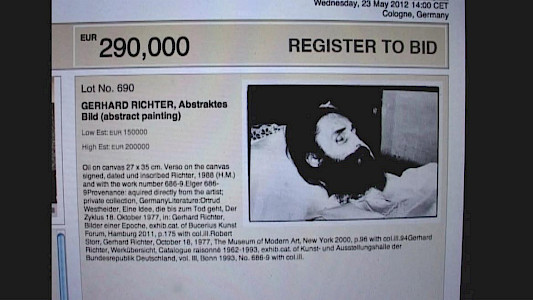
During an art auction, at which Gerhard Richter's "Abstraktes Bild (H.M.)" is being offered for sale, a photo of a dead man appears on the livestream. A paranormal phenomenon?
Dead on Livestream
Germany 2022, 88 minby Pamela Meyer-Arndt
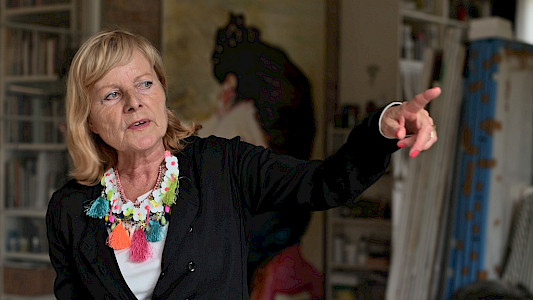
REBEL BEINGS unveils the fight for survival of three female artists behind the iron curtain of the GDR. As young women in Cold War era East Germany, Cornelia Schleime, Gabriele Stötzer and Tina Bara were repressed and persecuted by the socialist system and the Stasi for their art and political protest. At the lowest point, they only had cameras and their bodies left in order to express themselves. This film intimately explores their fearless struggle for existence, creative freedom and exception
REBELS
Germany 2018, 135 minby Volker Koepp
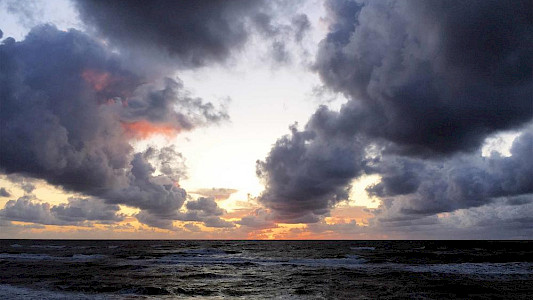
With SEESTÜCK, Volker Koepp concludes a series of documentaries that he began in 2010 with BERLIN-STETTIN. In this film, the director mixed autobiographical references with his description of East German film and living spaces for the first time. IN SARMATIA, 2013 he expanded the view of the region east of the Weichsel (Vistula) and between the Black Sea and the Baltic Sea. With LANDSTÜCK, 2016, Volker Koepp returned to the Uckermark in the north of Berlin. SEESTÜCK - a film about the Baltic Sea
SEESTÜCK
2016, 122 minby Volker Koepp
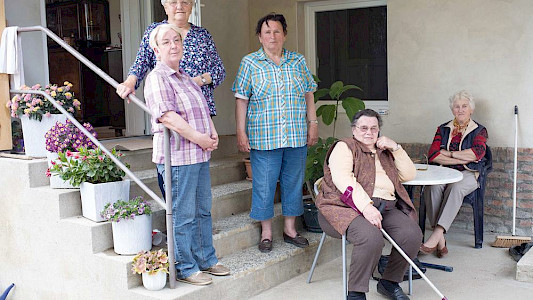
Idyllic landscape shots and conversations with local inhabitants convey the different facets of theUckermark in eastern Germany: a unique natural habitat, an embodiment of demographic change,a battle zone where agribusiness and organic farming duke it out. The end moraines of the Uckermark have kept Volker Koepp busy for decades. Following the socio-historical Uckermark, he devotes himself in Landstück even more intensively to conveying the sensory experience of this sparsely populated
Piece Of Land
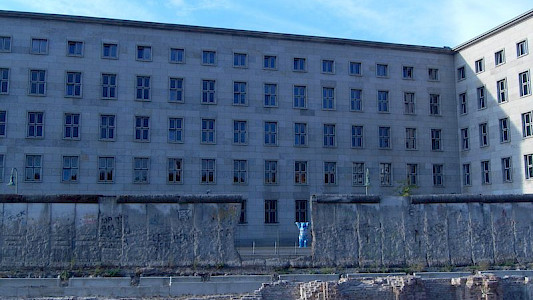
Germany 2012, 90 minby div
GOLDRUSH tells the story of the Treuhandanstalt - the most expensive experiment and the greatest white-collar-crime since Worldwar II. It’s a film about greed as the driving force of economic development. The trust agency 'Treuhand' was established to privatise the state owned enterprises of the GDR. Never before had there been an enterprise like the Treuhand that temporarily ran and speedily privatised 8,500 companies. With four million jobs at stake in East Germany, this was a novel and unique
GOLDRUSH - HOW TO SELL OFF A COUNTRY
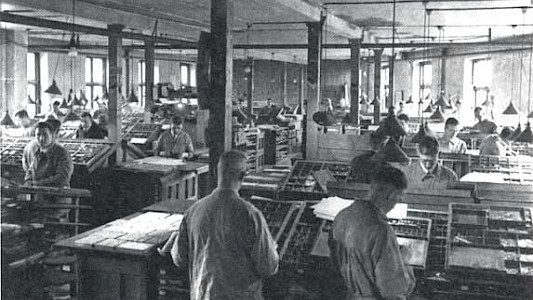
Germany 2010, 58 minby Christian Bau
This poetic documentary film links the fate of the New York artist Jimmy Ernst and his parents Max Ernst and Louise Straus on several narrative levels with the story of the print shop Augustin in Glueckstadt. 1935 - Jimmy's parents had to flee to Paris - the Augustin family take in the 15 year-old as an apprentice typesetter. He learns how to set foreign languages such as Chinese or Arabic as well as Runic characters and cuneiform script. Inspired by his work he develops a fascination for symbol
IN THE BOONDOCKS
You can contribute updates for the current person (Ulrike Haage).
Bitte aktivieren Sie Javascript, um auf unsere Website zugreifen zu können.