Germany 2022, 108 minby Torsten Striegnitz, Simone Dobmeier
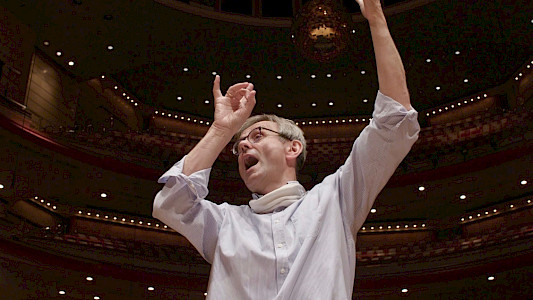
The Joy Of Singing is a music documentary about the beauty of singing together and the longing for community. It follows three choir leaders – star conductor Simon Halsey, vocal coach Judith Kamphues and upcoming Korean conductor Hyunju Kwon – during a time when the need for singing and community becomes their greatest challenge: In their personal lives, in their careers, but also in their tense relationship with the singers. The three take us on an entertaining and encouraging journey between a
The Joy of Singing
Germany 2018, 52 minby Simone Dobmeier, Torsten Striegnitz
Marx survived Marxism. And antimarxism. He is still the most quoted economist in the world. With the help of Marx, can we recognize our complex and complicated world today and in the future, and even change it? 2018: Marx returns to earth once more. He appears in London, Brussels, Berlin and Trier. He is the living projection of our longing for a 'saviour'.At the end of FETISH KARL MARX we realise that capitalism cannot be tamed. The salvation does not lie in Marx – the salvation lies solely in
The Karl Marx Phenomenon
Germany 2017, 45 minby Simone Dobmeier, Torsten Striegnitz, Rolf Scheller
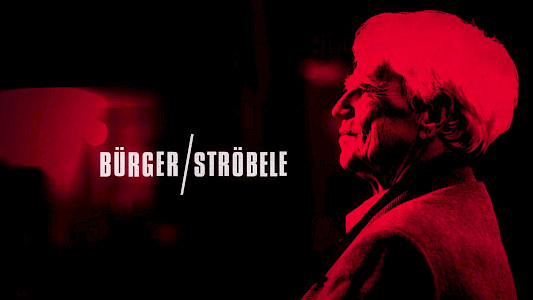
Democracy is up for discussion at the moment. Not only in the United States. The language of politics is changing dramatically. In times of fake news and populist movements, 78-year-old German politician Hans-Christian Ströbele looks like an anachronism: he was a lawyer for the Red Army Faction (RAF) in the 1970s, one of the editors of Die Tageszeitung (taz), a cooperative-owned daily newspaper, and over the years he has become the conscience of the Green Party. Ströbele is about to leave the po
Citizen Stroebele
2016, 51 minby Torsten Striegnitz, Simone Dobmeier
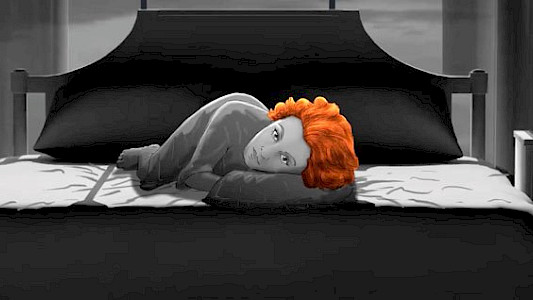
GOLEM recalls the myth from its Jewish origins and the fascination that this rough, destructive creature has held over humans for centuries. It is the tale of a transformation which gets out of hand and leaves behind a trail of devastation. It is also the story of man's quest to measure his strength against God's by creating a creature of his own. GOLEMs have always been created to serve and protect.Robots have long since replaced the crude clay figure with elegant machines. Today's GOLEMs are u
GOLEM
Germany 2013, 52 minby Torsten Striegnitz, Simone Dobmeier
Zarah Leander was the Third Reich’s greatest film star. Admired by the Nazis she became the best-paid film diva ever signed by the UFA. Until today Zarah Leander is intrinsically tied to our collective memory. At the peak of her career in early 1943, Zarah Leander suddenly leaves her mansion in Berlin and returns to her home country Sweden. Around the same time, rumours are starting to spread which will ultimately determine the myth of Zarah Leander: a Nazi diva, a non-political actress or a sov
THE ZARAH LEANDER FILES
Germany 2010, 52 minby Torsten Striegnitz, Simone Dobmeier, Hedwig Schmutte
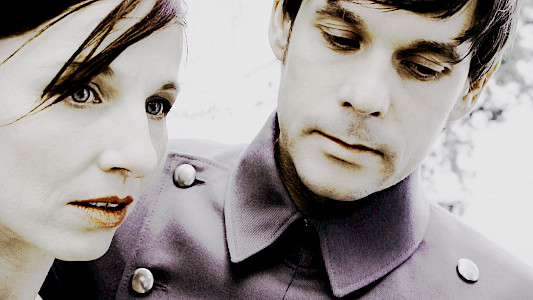
The death at Wannsee Lake – a spectacular case that has, to date, continued to disturb and fascinate the ensuing ages. The German poet Kleist was found shot – what is that supposed to mean? What exactly happened at Wannsee Lake that afternoon on November 21st, 1811? Who shot Kleist? What is known about the woman that died with him? Could it be that the bullets were meant for her? Or that he shot her? Or she, him? If yes, why? And why were the couple so cheerful and playful mere momen
THE KLEIST FILE
You can contribute updates for the current person (Torsten Striegnitz).
Please enable JavaScript to access our website.