2022, 120 minby Vanessa Schlesier, Ronald Rist, Antje Boehmert
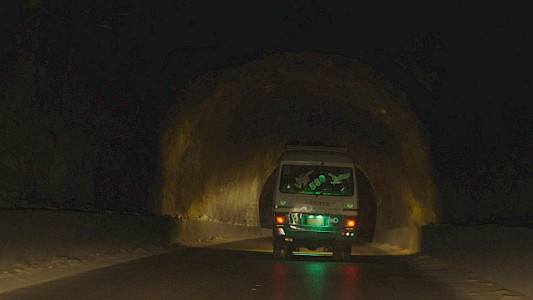
On August 15, 2021, the Taliban take power in Afghanistan, and two weeks later the last U.S. Air Force plane leaves Kabul. The military evacuation is over. But there are still tens of thousands of people in the country who need an airlift because their lives are in danger as local staff, media workers, artists or human rights activists. Many of them hope for “Kabul-Luftbruecke” – a Berlin NGO that, on its own initiative, evacuates people from Afghanistan because, as local employees, media worker
Mission Kabul-Luftbrücke
Germany 2021, 89 minby Antje Boehmert, Dominik Wessely
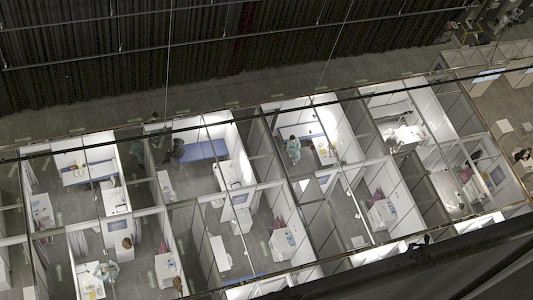
The vaccination campaign against Covid-19 represents a challenge of unprecedented proportions for the whole of society and, at the same time, our only way out of the pandemic. Sooner or later, the virus will reach everyone who has not been immunized by vaccination, according to the assessment of leading experts. Over a period of nine months, the documentary film Germany's Race to Vaccinate tells the story of this vaccination campaign: from the initial debate surrounding which population groups s
Germany's Race to Vaccinate
2020, 85 minby Sascha Schöberl
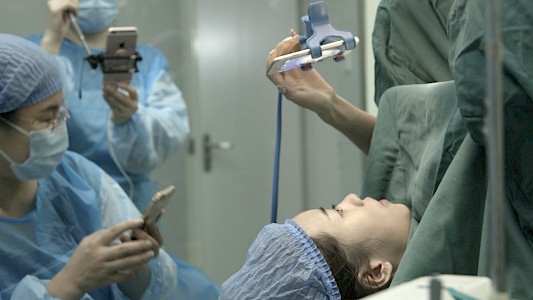
“Mirror, Mirror on the Wall – who’s the fairest of them all? “ In a land of “likes” and beauty-obsessed selfie culture, a talented but troubled surgeon seizes the spotlight with live-streamed plastic surgery performances, chasing animpossible dream of perfection.What kind of man erects an eight-metre statue of himself outside his own front door?“Mirror, Mirror On The Wall” is a film about the lofty ambition and lonely inner life of a cosmetic surgeon and self-proclaimed performance artist from C
Mirror, Mirror on the Wall
Germany 2017, 85 minby Stanislaw Mucha (mopsfilm GmbH)
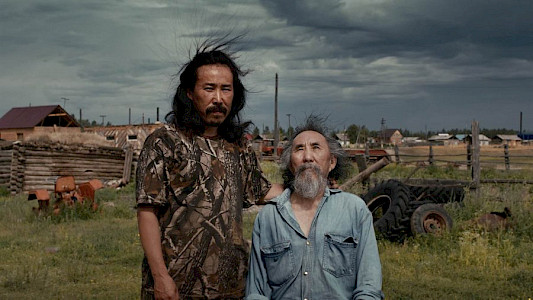
Black comedy meets dark history along a 2,000-km Siberian road literally built on the bones of Stalin's prisoners. Survivors live alongside those who've never heard the word "Gulag" in this sweeping trip into a not-so-distant past.Black comedy meets dark history along "the Road of Bones," a 2,000-kilometre stretch of Siberian highway that's literally built on the bodies of Stalin's prisoners. Millions of political dissidents and innocent villagers were sentenced to die mining the gold of the des
Kolyma - Road of Bones
Germany 2011, 92 minby Paul Hadwiger
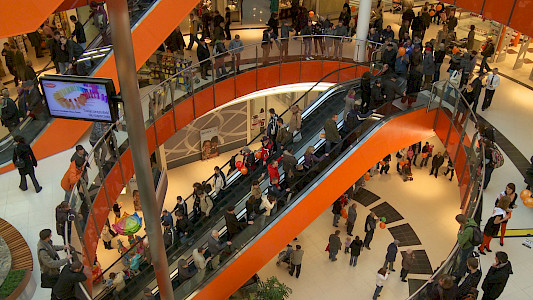
KÜMMEL GOES EAST - living five years for a shopping centre. Five years with its developers and local residents. Five years between Germany and Poland. Five years until the dawn of the NEW WORLD. Hermann Kümmel building a school house in Nicaragua. That was in the ‘80s. Today the born Hessian is working in Rzeszów, east Poland. He’s building the NEW WORLD shopping centre. At Kümmel’s side stands Polish manager Viola Wojnowski, who negotiates with trade partners and financiers. But she doesn’t wa
Kuemmel goes east
You can contribute updates for the current person (Tim Stanzel).
Bitte aktivieren Sie Javascript, um auf unsere Website zugreifen zu können.