Films by Tim Altrichter

Sound
(M)OTHER

2018, 90 min
by Antonia Hungerland

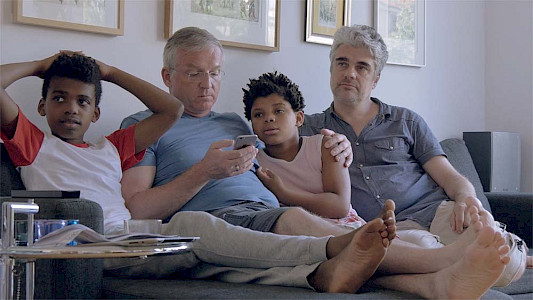
On her quest to find out what motherhood means for herself, director Antonia Hungerland encounters all kinds of people, none of whom seem to correspond to our traditional notion of a mother. What is a ‘real mother?Motherhood is the most natural thing in the world. Or so it’s said. Yet the demands on women with children have rarely been as challenging and contradictory as they are in the Western world today. Hopes of happiness are often followed by discrimination, excessive demands and feelings of guilt. The role of mother has become a glorified ideal, but one that is still often legitimised as “woman’s true nature”. We live at a time where three people could claim to be the same child’s mother: the donor who donates her eggs to enable another woman to conceive, the surrogate mother who bears a child on behalf of someone else and the woman who ultimately raises the child. But men, too, frequently bring up children – without the support of a woman – for example,in homosexual relationships or if children stay with the father after a divorce. What makes a human being a real mother? Director Antonia Hungerland embarks on a personal quest to find out what motherhood means to her personally. She encounters all kinds of people, none of whom seem to correspond to our traditional notion of a ‘real mother’. What is their vision of motherhood? A personal and poetic documentary that raises socially pertinent and forward-looking questions.

(M)other

KOLYMA - ROAD OF BONES

Germany 2017, 85 min
by Stanislaw Mucha (mopsfilm GmbH)

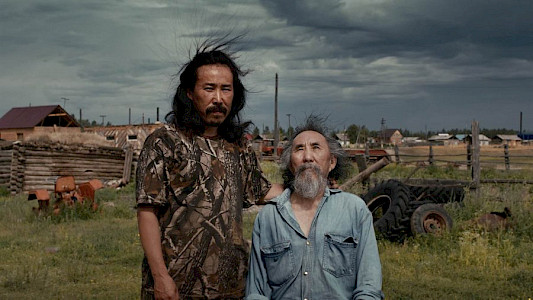
Black comedy meets dark history along a 2,000-km Siberian road literally built on the bones of Stalin's prisoners. Survivors live alongside those who've never heard the word "Gulag" in this sweeping trip into a not-so-distant past.Black comedy meets dark history along "the Road of Bones," a 2,000-kilometre stretch of Siberian highway that's literally built on the bodies of Stalin's prisoners. Millions of political dissidents and innocent villagers were sentenced to die mining the gold of the desolate Kolyma region in Stalin's infamous prison camps. Spurred by his grandfather's stories, filmmaker Stanislaw Mucha travels the road, starting at Magadan's "gate to hell" and ending at Yakutsk, the coldest city in the world, capturing harsh landscapes through all four seasons. Literally stumbling over bones along the way, Mucha discovers a bizarre mix of eccentrics who have either never heard the word "Gulag" or have a terrifying firsthand experience of them. From a clueless hotdog vendor to an electrocution hobbyist, former guards and surviving prisoners live alongside one another on the world's longest burial ground. Irreverently comical and historically revelatory, this unique travelogue uncovers painful truths frozen in a not-so-distant past. (hotDOCS, Myrocia Watamaniuk)“Goulash?,” the young woman looking out of the hatch of a combined hot dog and pizza stand on the side of the windy Kolyma route asks again. No, Stanislaw Mucha did ask for “Gulag”. And he is astonished to find that here, where the Soviet penal and labour camp system shaped the natural and living environment for decades, the term isn’t commonly used. Actually, for all intents and purposes, the filmmaker’s journey seems to be more of a trip through wordscapes. It begins in Magadan Bay, which earned its nickname “gate to hell” as the port of entry for the forced labourers. It continues along the “longest graveyard in the world”, as the long distance road from the Sea of Okhotsk to Yakutsk is occasionally called. But it also crosses the paths of the living, those who stayed here or were born here, who more often than not have better things to do than to revolve around that genius loci. Encounters as inspiring electric discharges on the horizon of expectations – like those electric pulses an amateur physician picked up along the way wants to use to rejuvenate his old father.When the present overwrites the past, when the Putin era superimposes the Soviet era, when the eternal periphery is allowed to actively participate in the snapshots made of it, the result are bone dry punch lines: for example that slow motion pop music video Mucha treats a girls’ dancing troupe to as he drives by. (DOK Leipzig, Sylvia Görke)

Kolyma - Road of Bones