Germany 2021, 89 minby Antje Boehmert, Dominik Wessely
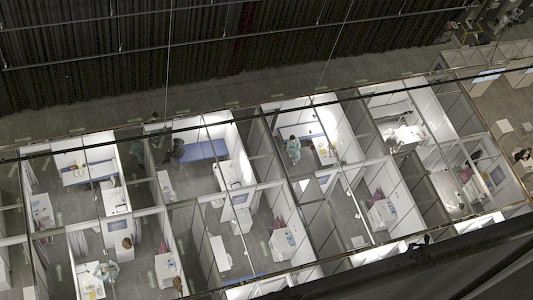
The vaccination campaign against Covid-19 represents a challenge of unprecedented proportions for the whole of society and, at the same time, our only way out of the pandemic. Sooner or later, the virus will reach everyone who has not been immunized by vaccination, according to the assessment of leading experts. Over a period of nine months, the documentary film Germany's Race to Vaccinate tells the story of this vaccination campaign: from the initial debate surrounding which population groups should be vaccinated first, up until the vaccination of the general population in Germany after the end of prioritization in June 2021.Beyond daily news snippets, Grimme Award winners Dominik Wessely and Antje Boehmert chronicle the vaccination campaign's central processes and settings in close and vivid everyday observations, portraying men and women who – in very different ways – drive forward the vaccination campaign every day. They are all frontline workers on our journey out of the pandemic.The filmmakers accompany, among others, the staff of the vaccination centres in Duisburg and Stendal and a family doctor in Rhineland-Palatinate. They take an exclusive look at the work of Germany's Standing Commission on Vaccination (STIKO) and consult scientists involved in the struggle to increase vaccination acceptance: Prof. Dr. Christian Drosten and Prof. Dr. Cornelia Betsch. Through the life and work of a photographer in Pforzheim, a crematorium worker in Plauen and a paramedic from the Lower Rhine, the hardships of lockdown and the ethical questions surrounding vaccination are made visible.The film offers a far-reaching look behind the scenes at those tackling the mammoth task of the nationwide vaccination campaign in Germany. In doing so, Germany's Race to Vaccinate presents a documentary panorama of our world in a state of emergency, something often articulated merely in the form of news headlines or statistics.
Germany's Race to Vaccinate
Germany, Spain 2020, 81 minby Dominik Wessely
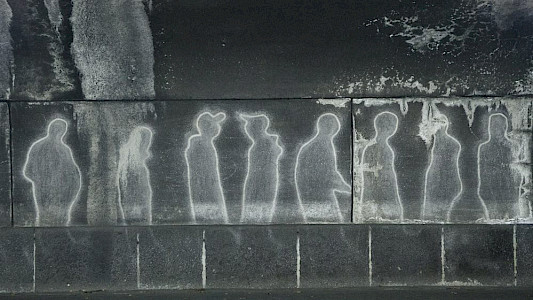
What began 1989 as a tiny street parade in Berlin has long since grown into a million-strong spectacle garnering international attention. In 2010, the “Love Parade” left Berlin for a tour of the Ruhr valley, German’s former industrial stronghold, a region weak in infrastructure and youth appeal. Hundreds of thousands of electronic music lovers took pilgrimage to Duisburg to celebrate, but the day tragically ended in a fatal stampede. What went wrong?The location of the parade was a former freight yard and the only entrance and exit to the venue was a narrow ramp. There, the crowd squeezed. 21 attendees died and 652 more were injured and traumatized. The Trial reveals the corporate greed and public negligence at the expense of young people from around the world gathering for a music festival. With unprecedented access, the film unravels the worst disaster in counter-culture history.• “Outstanding” — Frankfurter Allgemeine Zeitung• “Important and valuable” — Sueddeutsche Zeitung• “Thrilling” — Münchner Merkur• “Extremely dense and unbelievably close to its protagonists“ — Der SPIEGEL
Love Parade – The Trial
Germany 2013, 89 minby André Schäfer
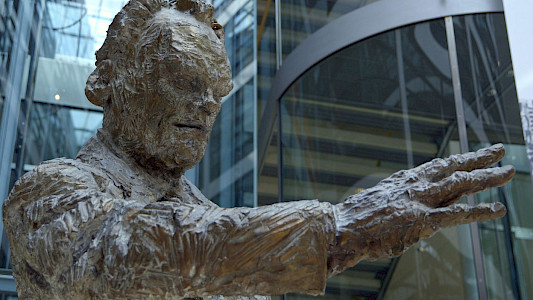
Willy Brandt, who would have been 100 on the 18th December, was one of the greatest German and European political figures. He was a person who was crucial in shaping post second world war history, firstly as mayor of Berlin during the Cold War, then as foreign minister in a major coalition government, next as Federal Chancellor of the Bonn Republic and finally as a long-serving SPD leader with a major international reputation. For this 100th anniversary, André Schäfer’s film tells the story of the important stations in Willy Brandt’s political life. The filmmaker allows this charismatic politician to speak for himself in rare and intimate footage from his years in exile, his time as Mayor of Berlin and his short but formative time as chancellor. Friends and close companions reminisce about him and together portray a very personal picture of Brandt. Among them are his son Peter Brandt, his fellow campaigner and close colleague Egon Bahr, the journalists Gerd Ruge, Gunter Hofmann, Werner Perger and Wibke Bruhns, Wolf- Dietrich Schilling, Klaus Harpprecht, Albrecht Müller and Harry Walter, the Bonn photographers Josef Darchinger and Konrad R. Müller, and last but not least 98 year old Elizabeth Fisher-Spanjer, a friend from his time in exile as a young man.
WILLY BRANDT – REMEMBERING A POLITICIAN
Bitte aktivieren Sie Javascript, um auf unsere Website zugreifen zu können.