Austria, Germany, Romania 2020, 98 minby Monica Lazurean-Gorgan, Michaela Kirst, Ebba Sinzinger
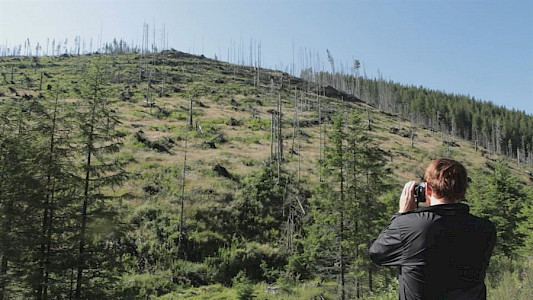
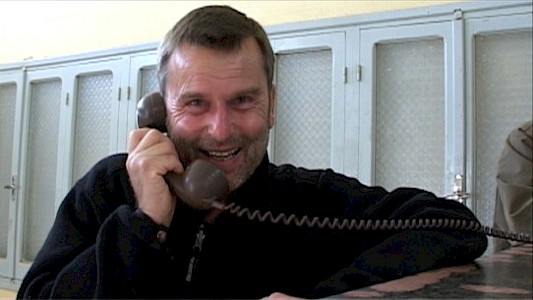
Illegal logging is a global business worth billions. Alexander von Bismarck, descendant of the Iron Chancellor and head of the Environmental Investigation Agency in Washington D.C., successfully pursues the machinations of the timber mafia worldwide – with dyed hair, a concealed camera and sound recording equipment. His primary concern isn't to expose a scandalous situation, but rather to promote a change in the consciousness of politics and civil society and to bring about a new code of conduct
WOOD
2018, 88 minby Thomas Tielsch
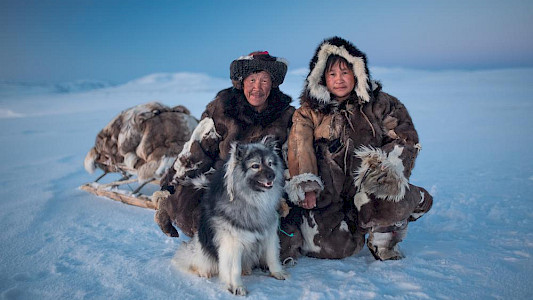
They live at the fringes of the known world, the last indigenous communities – far away from civilisation but affected by its consequences nonetheless. The photographer Markus Mauthe visited these last indigenous peoples to capture the inherent beauty of their cultures, before they too fall victim to ever-advancing globalisation. The journey leads from South Sudan and Ethiopia to Malay sea nomads and Brazilian Indians in Mato Grosso, who have started to defend themselves against the destruction
At the Fringes of the World
2018, 91 minby Bettina Borgfeld
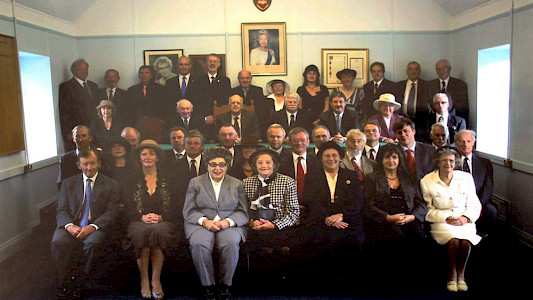
Two billionaire brothers buy themselves into the island of Sark, where only 600 inhabitants live - till then in harmony with nature and with a strong sense of community. A battle begins that unfolds a conflict in an idyllic setting. The brothers remain phantoms in the film as they never enter the battlefield themselves.
The Price of Paradise
2018, 90 minby Boris Missirkov, Georgi Bogdanov
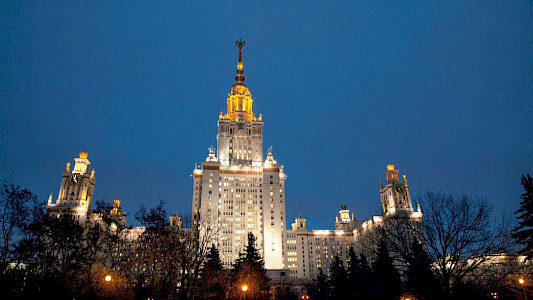
PALACE FOR THE PEOPLE tells the stories of the most emblematic four buildings of socialist times - highly representative for the epoch and witnessing the historical turbulence in Eastern Europe in the second half of the XX century. The National Palace of Culture in Sofia, Moscow State University, Palace of the Parliament in Bucharest, Palace of Serbia in Belgrade, Palace of the Republic in Berlin are unique architectural creatures made with a lot of courage and a bit of lunacy to remind the peop
Palace for the People
Germany 2017, 90 minby Niels-Christian Bolbrinker, Thomas Tielsch
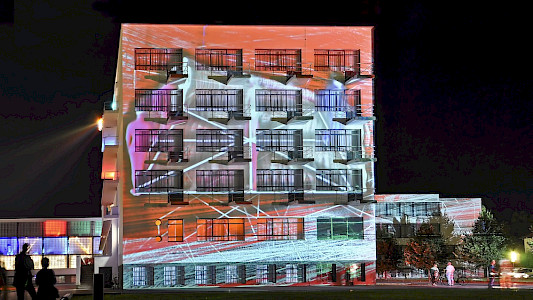
The film describes the fascinating story of the Bauhaus as statement, failure and renewal of a social utopia. And it tells of artists, scientists and architects today, who, in their examinations of current challenges also relate to the Bauhaus. That way, the story of this unfinished utopian project with its manifold exciting cross-references unfolds before our eyes while always keeping in touch with the questions still topical today: How do we want to live, where do we want to go?
Bauhaus Spirit
Germany 2014, 86 minby Andre Siegers
Alfred D. is fond of travelling, a veritable collector of countries. While on his travels, he films the world and himself. Alfred D. is a member of the Social Democratic Party too and represented the Friedrich Ebert Foundation in Nepal, Warsaw and elsewhere during the 90s, carrying out democratisation campaigns and making educational films about the role of money in market economies. He also took acting lessons, reported on the Berlinale for a Swabian newspaper and ran for office in the 2009 Eur
SOUVENIR
Germany 2013, 85 minby Niels-Christian Bolbrinker
Ever since radio and television were invented, paranoid people have been startling us with their detailed descriptions of imaginary technical apparatus, which, according to their theories, is being employed for surveillance and manipulation purposes. At the same time, however, this kind of technology was, in fact, being researched and built. This film is about the interplay between madness and method.
REALITY CHECK
Germany 2010, 89 minby Jan Peters
When Jan Peters' girlfriend accidently takes his wallet on a trip to foreign climes, she leaves the filmmaker standing in Frankfurt Airport without a penny to his name. The only capital he possesses is a group ticket for the public transport system. After hearing about people who supplement their inadequate incomes by “escorting” groups of tourists across the city, Mr. Peters decides to apply the same method to his own situation. The filmmaker starts a business as an "independent travel escort"
ALL FOR NOTHING!
Germany 2010, 80 minby Jörg Haaßengier, Jürgen Brügger
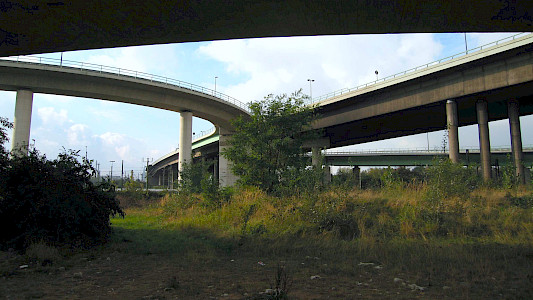
The film takes us on a journey through urban periphery, which, despite being right on our doorstep, is entirely unfamiliar territory for most of us. Think of the late afternoon drive to IKEA. It is a journey through a characterless and anonymous landscape that appears to express nothing whatsoever. It is as if we had just parked the car on the hard shoulder, climbed over the barrier and fought our way through the brambles to the white areas on our mental street map. The alleged no-man’s land b
THE GARDENS OF EDEN
Germany 2009, 93 minby Vadim Jendreyko
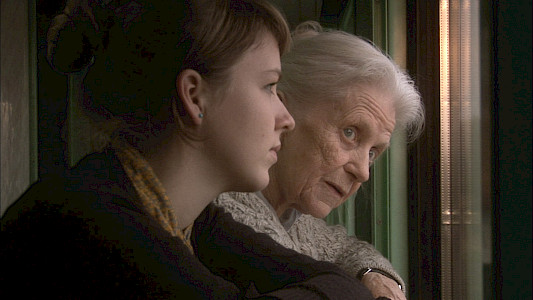
Swetlana Geier is considered the greatest translator of Russian literature into German. She has just concluded her lifework for Zurich’s Ammann publishing house - completing new translations Dostoyevsky’s five great novels - known as the five elephants. Her work is characterised by a great and sensual feeling for language and an uncompromising respect for the writers she translates. Her life has been overshadowed by Europe’s varied history. Together with the film director, the eighty-five-year
THE WOMAN WITH THE FIVE ELEPHANTS
Germany 2009by Christian Klinger, Thomas Tielsch
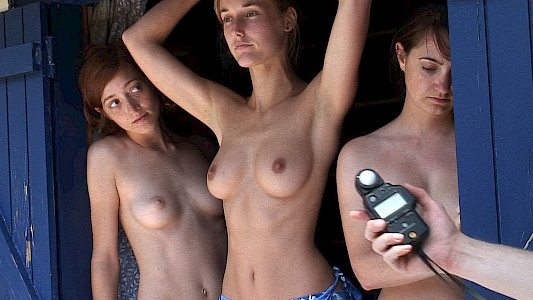
The American Jock Sturges is internationally considered one of the most important photographers working in portraiture. His enduring theme is girls from childhood and puberty up to early adulthood. The state of nudity that Jock Sturges photographs is not the nudity of being unclothed. His models are not disrobed; Sturges shows nakedness as a natural state. This is why he predominantly takes photographs where nudity might be called a natural condition: on the nudist beaches of Europe. Jock Sturge
BEAUTY WITHIN US - The Photographer Jock Sturges
Germany 2008, 73 minby Dominik Wessely
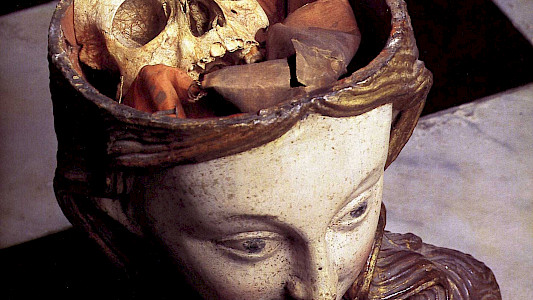
When the frail and staunchly catholic aunt Hedwig asks her nephew to accompany her to a decidedly mystical Catholic service, it turns out to be his initiation into a fantastical world of martyr worship. He meets relic collectors who are trying to preserve the dwindling world of Salvation in living rooms full of bones, and, whilst gathering information pertaining to relics he intends to purchase for his aunt on the internet, he stumbles upon one of the greatest forgeries of the Middle Ages. It is
HALLOWED BONES
Germany 2008, 92 minby Niels-Christian Bolbrinker, Dr. Kerstin Stutterheim
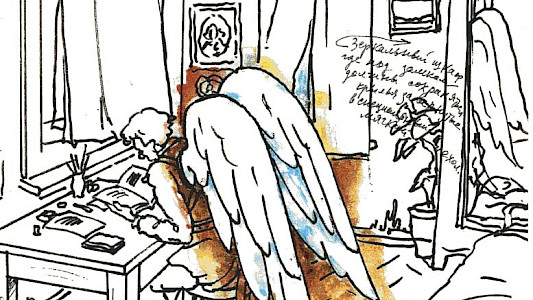
Ilya Kabakov was born in the Ukraine in 1933. Today he is considered one of the most important contemporary artists worldwide, and there is practically no significant museum of contemporary art around the world that doesn't show at least one of his installations. With his etchings, paintings and particularly with these installations he has for decades now created a phantastic world that serves as a counterpoint to the brutal reality and its many failed visions. These installations, executed with
FLIES AND ANGELS
Germany 2008, 65 minby Janek Romero
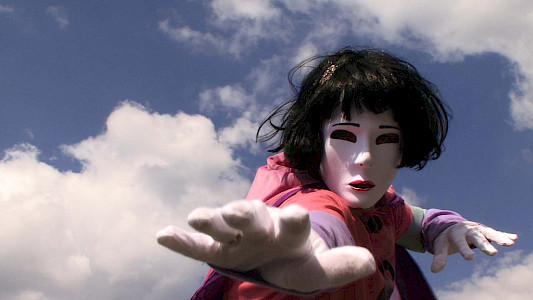
Figures disguised as comic-book heroes rob delis and distribute their plunder to kindergartens; a student holding down three part-time jobs empties the rubbish bin from the bio-supermarket so as to be able to give her children a proper meal: this film, set in Hamburg, tells the story of these superheroes; it is the story of the precarious lives of middle-class youths, a story of conformity and resignation, and one of visions and spectacular deeds.
SUPERHEROES
Germany 2008, 80 minby Niels-Christian Bolbrinker
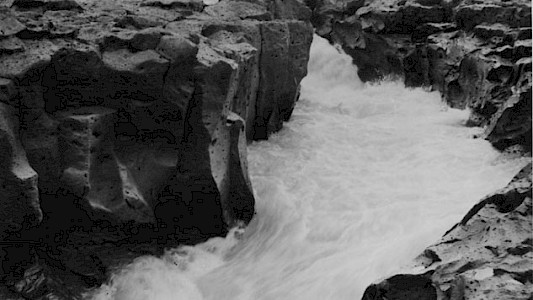
In the summer of 1938, German painter and landscape photographer Alfred Ehrhardt and his wife Lotte travelled to Iceland. Ehrhardt, a former Bauhaus student and one of the most important of the New Objectivity photographers, was looking for artistic form in nature and the fundamental forms of art. The film follows Ehrhardt's expeditions to Iceland, the Mudflats and the Curonian Spit and uses his wonderful photographs to address the question posed by Cees Noteboom: "Something in nature, and not b
NATURE BEFORE US
Germany 2008, 59 minby Thomas Tielsch
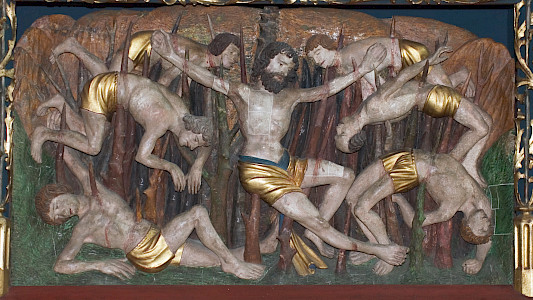
Nobody had expected his return. Still, in the face of the world publicity, he steps out from the dark of his past on September 11th in 2001. Since then, he has been back: the martyr. His history reaches far back into the ancient world, but only in Christ, he gets a face. By now the martyr has become a figure of many faces and shows up wherever conflicts are smouldering. Human sacrifices, massacres, mass suicides, tortures; Nuns whose asceticism is flooded by erotic fantasies. The film shows hist
DOWN TO THE BONE
Germany 2005by Andreas Geiger
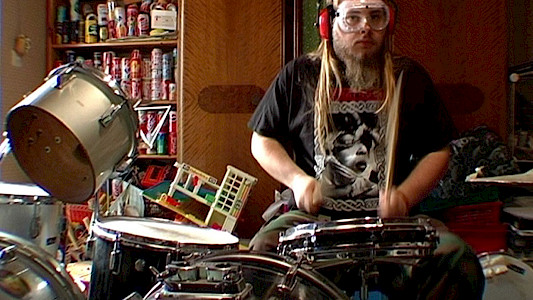
Donzdorf on the edge of the Swabian mountains in Southern Germany. A village just like any other, with a pointed church spire, a supermarket and a new housing estate. But Donzdorf is the seat of “Nuclear Blast Records”, one of the world’s most successful independent heavy-metal record companies. The company’s boss, Markus Staiger, grew up with heavy metal, like many young people in rural areas, and has turned his enthusiasm into an empire with branches in Los Angeles and other major cities. Hous
Heavy Metal in the Country
You can contribute updates for the current person (Thomas Tielsch).
Bitte aktivieren Sie Javascript, um auf unsere Website zugreifen zu können.