Germany 2021, 94 minby Helke Misselwitz
The paintings of the artist Güler Yücel tell about weddings and funerals, of almond blossom and olive harvest, of her husband, the poet, and of herself, her love of life and wisdom. “I can’t paint anything that I have not seen”, says Güler Yücel. She is a chronicler and a prophetess, because her pictures describe the cycle of life, which we find again and again in everyday life: on the Turkish peninsula of Datça, over which the wind of two seas blows and women are in charge.
The Poet's Wife
Germany 2019, 79 minby Annekatrin Hendel
Sven Marquardt might be the most famous bouncer worldwide. But beside standing in front of the legendary techno club Berghain in Berlin, he is also a well-known and skilled photographer. Long before the Berlin Wall came down, Marquardt portrayed the subcultural East-Berlin scene. His black and white photography illustrates it as voluptuous, laid-back, dirty and existential. Even if shot by daylight, his work is permeated by darkness, ecstasy and night.with: Sven Marquardt, Dominique Hollenstein
Beauty and Decay – Sven Marquardt
Germany 2013, 120 minby Volker Koepp
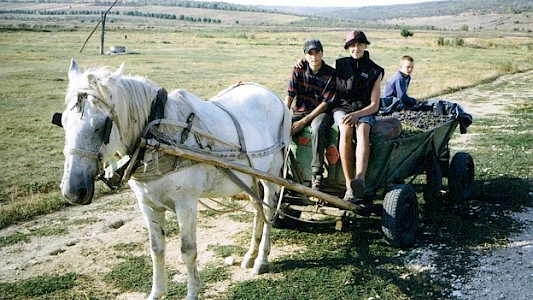
There are two contrasting ways to describe Sarmatia: as a region on the edge of the known world – that's how the old Greeks saw it -, or as the part of Europe where the once carefully measured geographical centre of the continent is. However, you will probably look in vain for Sarmatia in your school atlas, it doesn’t exist as an administrative unit, and Google Maps won't help either. Yet Sarmatia is not a chimera. Volker Koepp travelled there for his new film, generously allowing us to share hi
IN SARMATIA
Germany 2012, 90 minby div
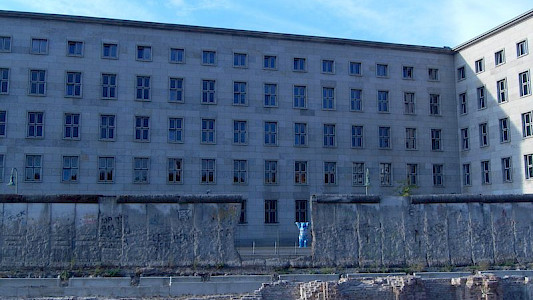
GOLDRUSH tells the story of the Treuhandanstalt - the most expensive experiment and the greatest white-collar-crime since Worldwar II. It’s a film about greed as the driving force of economic development. The trust agency 'Treuhand' was established to privatise the state owned enterprises of the GDR. Never before had there been an enterprise like the Treuhand that temporarily ran and speedily privatised 8,500 companies. With four million jobs at stake in East Germany, this was a novel and unique
GOLDRUSH - HOW TO SELL OFF A COUNTRY
You can contribute updates for the current person (Thomas Plenert).
Bitte aktivieren Sie Javascript, um auf unsere Website zugreifen zu können.