Switzerland, Germany 2024, 89 minby Heidi Specogna
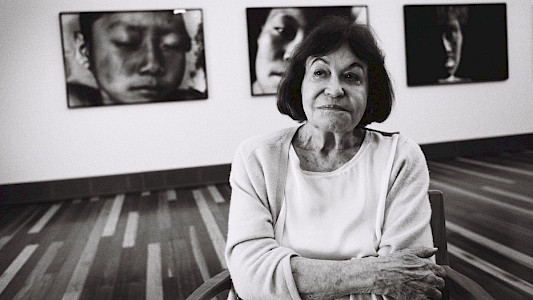
Claudia Andujar escaped the Holocaust as a child and became a multiple award-winning photographer. She travelled the Amazon since the 1960s, and developed a profound relationship with the Yanomami people. From Claudia, they learned to fight against the exploitation of the rainforest and their extermination. Former victims are now activists.
The Lady with the Arrows
2023, 90 minby Jan Schmidt-Garré
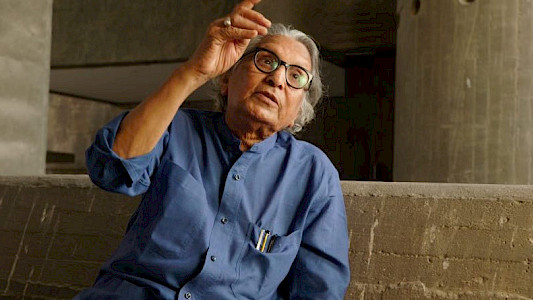
Balkrishna Doshi is one of India's most influential 20th century architects and recipient of the Pritzker Architecture Prize. Doshi and his practice Vastu-Shilpa has a portfolio spanning over 70 years, including collaborations with both Le Corbusier and Louis Kahn. The film introduces viewers to his famous buildings and offers an exclusive look into his work process. Doshi shares his sources of inspiration and motivation and is also a brilliant storyteller. His presence of mind, his humor and hi
The Promise – Architect BV Doshi
2023, 118 minby Regina Schilling
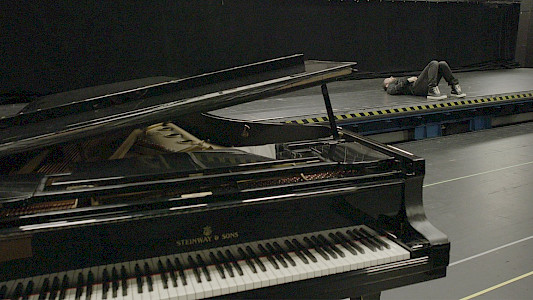
At 34, Igor Levit is an exceptional artist in the world of classical music. A young rebel, who - at the piano - transforms into a mature musician. At age nine he arrived in Germany, a Jewish immigrant of Russian descent. Having an opinion and publicly expressing it, is not a choice, it is a survival strategy. The film follows the artist over two years as Levit explores his “life after Beethoven“, as he searches for his next challenge, his identity as an artist. We observe him recording new piece
Igor Levit – No Fear
Germany 2020, 104 minby Jeanine Meerapfel
A WOMAN is a cinematic essay, a deeply personal look into the past of a woman. The story of Marie Louise Chatelaine, the director's mother, is the starting point, but several stories are added and told in parallel, in a fragmented reflection of yesterday and today. A family history that makes contemporary history recognizable, a deep search into the wounds of exile and a reflection on the function of memory. The images that follow the stations of this woman's life flow like a stream of conscious
A Woman
Germany 2018, 105 minby Hans-Erich Viet
Road movie with the 98 year old holocaust survivor Leon Schwarzbaum to the places of home and horror. Schwarzbaum, born in Hamburg 1921 travels with us to places of birth and childhood, to Bedzin/Poland and many times to Auschwitz, where all of his family where murdered.We acompany him to the last SS trial in Detmold where former SS officer Reinhold Hanning (95) was sentenced to 5 years in prison. We acompany Leon Schwarzbaum to a German talkshow, visit a prison as well as school classes, where
The Last of the Jolly Boys
Germany 2012, 100 minby Jan Schmidt-Garré
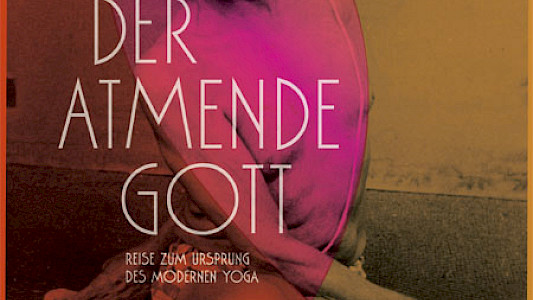
Modern yoga, that is, the form practised daily by tens of millions of people around the world, goes back directly to the god Shiva according to Indian tradition. At the same time, however, modern yoga originated in the early twentieth century, a creation of Indian savant T. Krishnamacharya (1888-1989). That story is far less known and what this film is all about. Krishnamacharya’s life and teachings are seen through the eyes of the director Jan Schmidt-Garre on his search for authentic yoga. His
BREATH OF THE GODS - A JOURNEY TO THE ORIGINS OF MODERN YOGA
Switzerland, Germany 2011, 91 minby Heidi Specogna
They don’t wear uniforms or carry weapons. They have no bodyguards. They are equipped with laptops, cameras and sound recorders. They work along dusty roads and in overcrowded refugee camps. They listen to hundreds of testimonies of rape, murder and torture; so gruesome they themselves sometimes come close to breaking point. Despite impossible working conditions, they collect the evidence for indictments against those who ordered some of the most serious crimes of our time - committed in Darfur,
CARTE BLANCHE
Germany, France 2010, 54 minby Jürgen Ellinghaus
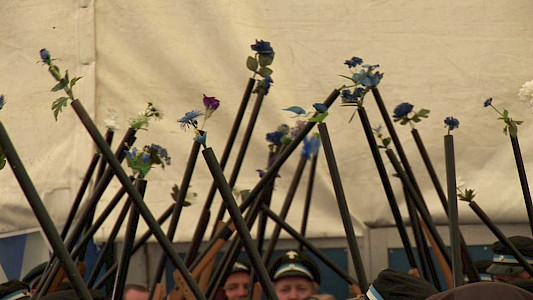
Every two years, the small town of Beverungen, in the middle of Germany, celebrates with particular vigour its traditional Marksmen's Festival. Festivities are focused on numerous parades with marchers in uniform and a shooting contest, where the winner is declared "King". Throughout the Germanic regions, marksmen's guilds are known since the 10th century. They protected cities and rural areas against troubles, wars and looting. In Beverungen, about a quarter of the active male population is inv
Cross and Banner
France, Germany 2006, 86 minby Jürgen Ellinghaus, Hubert Ferry
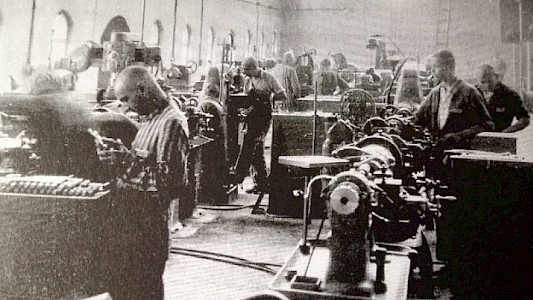
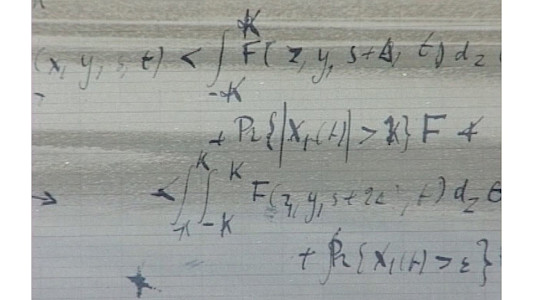
When France surrendered in 1940 and German soldiers showed up in the small village of Housseras (Vosges, Région Grand Est, Northeast of France), an unknown French infantryman burned his papers and killed himself in a farmer's barn. Four years later he was identified as "soldat Doblin, Vincent". In fact, he was none other than the mathematician Wolfgang Doeblin, son of the famous German novelist Alfred Döblin ("Berlin Alexanderplatz") who was forced to flee Germany with his family in 1933 because
The Last Equation of Private Doblin
You can contribute updates for the current person (Thomas Keller).
Please enable JavaScript to access our website.