Germany 2011by Tamara Wyss
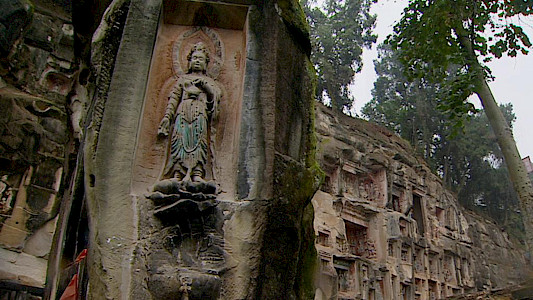
In the spring of 1914 a French archaeological expedition, led by the French poet and medical doctor Victor Segalen, entered the Province of Sichuan in order to do research on burial mounds of the Han era (206 BCE-220 CE) and early Chinese Buddhist iconography and epigraphy. Research in this realm still continues in Sichuan today, but the means and techniques of the archaeologists and art historians are more complex and advanced compared to those of a century ago. Segalen, who lived in China from
VICTOR SEGALEN – ON THE TRAIL OF BUDDHA
Germany 2010, 123 minby Tamara Wyss
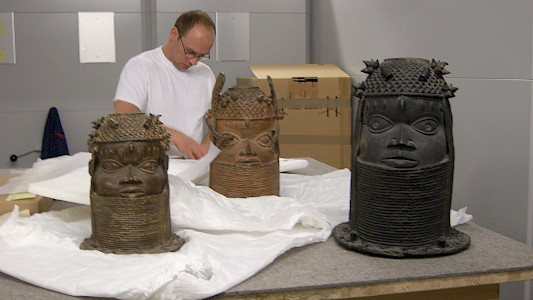
After 4 years of renovation in the Grassi Building in Leipzig the collection of the ethnographic museum is moving back. The long term observation follows the daily work in the museum during the move and the rebuilding of a new exhibition. During this process we get to know some of the staff and are confronted with some principal questions as the origin of the objects, the gathering of collections, exhibition concepts, the raison d'etre of an ethnographic museum and the GDR past. The spectator ge
COLLECTING, REMEMBERING
You can contribute updates for the current person (Tamara Wyss).
Bitte aktivieren Sie Javascript, um auf unsere Website zugreifen zu können.