Germany 2010, 98 minby Tamara Trampe, Johann Feindt
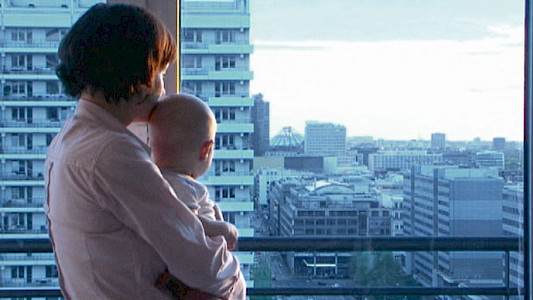
The documentary LULLABY recounts dreams and longings of the childhood years. And it deals with the remains of those yearnings, after years of facing the daily struggles of adult life. The first lullabies are sung in the intimacy of home, surrounded by loved ones, sheltered and warm. It is the memory of those moments that open the door to a journey into human destinies. The journey also leads through Berlin. We happen upon people at very different stages of their life. Sometimes it’s a brief encounter, a glance in passing, a few sentences or a song. Another time it’s the complete story of a life.There is Chechen poet Apti Bisultanov, who says of himself: “I was once a pure and happy child.” Today he lives in exile in Berlin; once he had been Vice Premier of Chechnya. Detlef Jablonski, born in jail and raised in a foster family, has longed for his mother all his life. He has found comfort in music, writes his own songs and sings in the laymen choir „Different Voices of Berlin“. The choir is conducted by the American jazz musician Jocelyn B. Smith. As the son of deaf parents, Helmut Oehring learned to speak at the age of four. Today he is a renown German composer, awarded with the ArnoldSchoenberg Price in 2008. Santos grew up in a foster family but was passed onto an orphanage. After doing time in jail he tried to inject his feelings into his music, into the lyrics of his songs. And he tries to develop a steady relationship with his son, to be the father he never had.Tamara Trampe’s and Johann Feindt’s work is a cinematic declaration of love to people of all ages and cultures who live in the German capital. Regardless of money, age or whatsoever: they all travel back in time to their childhood and along the way they speak of love and loneliness. Of dreams that have come true... or not. Of longings that stay. Slow songs and the rough rhythm of the city - togetherthey create a very special tone.original version with German or English subtitles available
LULLABY
Germany 1990, 83 minby Johann Feindt, Jeanine Meerapfel, Helga Reidemeister, Dieter Schumann, Tamara Trampe
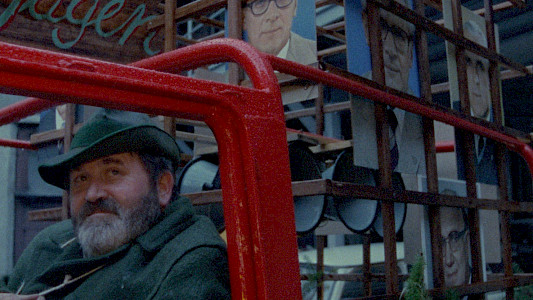
Rhine wine in Saxony! It is being served at an information stand set up by West Germany’s Christian Democratic Union party (CDU) just before the first and only free elections to East Germany’s People’s Assembly; the ballot will give the CDU almost 41% of the vote. But while the East Germans appear entirely sober about it all despite the sweet swill on offer, during the election campaign in February/March of 1990 the West Germans seem drunk on the new order. “Socialism is over. Nobody wants it anymore”, exults Helmut Kohl. Meanwhile, his finance minister is speaking of an “expanded economic territory”. And very soon, a Nazi banner is proclaiming the “east regions” of Germany as the next goal for a “reunification”.“How do various generations experience the uncertainty, the disorientation and the reconsideration of East Germany’s old values?”, asked the East-West German documentary film collective Blick ins Land. In their questioning of workers, schoolchildren, border guards and police, a teacher and an East German state security (Stasi) officer about their experiences and feelings, the collective provided an unvarnished look at the downsides of the “splendid happiness”. Source of Synopsis
In the Splendour of Happiness
Bitte aktivieren Sie Javascript, um auf unsere Website zugreifen zu können.