Germany, Libanon, Qatar 2022, 90 minby Lea Najjar
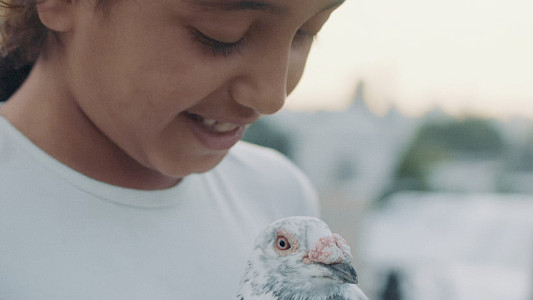
Above Beirut flies an unexpected bearer of hope: the pigeon game "Kash Hamam". During the recent dystopian political collapse, we embark on a journey from roof to roof and observes a city in turmoil from the perspective of three pigeon players and a young girl fighting to release her own birds.Under the golden sun of Beirut, men stand on rooftops and shoot oranges at the sky. They do this to scare their pigeons, make them fly further, and make them stronger. They play the game Kash Hamam, where you have to lure the other players’ pigeons into your own pigeon loft. If you succeed, there’s Kash. And then you cut the feathers off the pigeon. Or feed it to the cats. Lea Najjar’s cinematic debut is a vital portrait of her hometown Beirut. A city hit by a corrupt elite, popular protests and one of the biggest explosions of the 21st century. But also a city where its hard-pressed citizens come together and form communities despite the chaos. On the flat rooftops high above the labyrinthine streets, we meet three men who have bonded over their love of pigeons – and a girl who dreams of entering the masculine game, Kash Hamam. A vivid, impressionistic snapshot from an already eminent director. [CPH:DOX]“From a tiny anecdote this film expands its cinematic universe and unveils the disillusionment of an entire city – an entire country. From the opening scene’s claustrophobic setting, to the final wide eye of an artificial pigeon, witnessing the place it took flight from. We, the jury, wish to give this year’s Next:Wave Award to a piece of delicate yet vigorous cinema: ‘Kash Kash – Without Feathers We Can’t Live’” [Jury CPH:DOX]
Kash Kash - Without Feathers We Can't Live
Germany 2014, 98 minby Viola Shafik
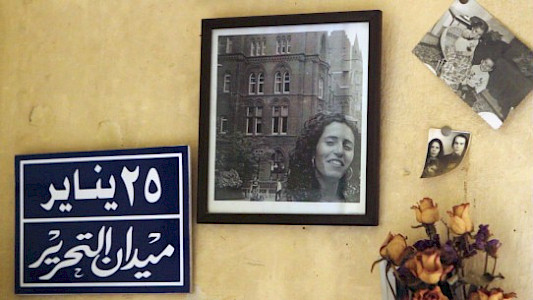
A Coptic political activist and an Upper Egyptian collector reconstruct the story of their hometown Luxor that was destroyed during the rule of Mubarak due to state corruption and neo-liberal economy; in Cairo a socialist writer compares the 1952 and the January 2011 revolution, reflects on his own political disillusionment by telling about one of his most beautiful novellas written in the beginning of the Mubarak era. His depression is juxtaposed to the enthusiasm of a young female Islamist cyberspace designer who is asked to design an avatar for a Salafist friend who at least wants to join the political protest online. Lingering between past and present these stories represent collective grief work about an incomplete revolution and a country in ruins. Its four protagonists are caught in different phases of grieving, such as anger, depression, or adaptation, and display therefore different strategies in dealing with their bereavement face to the country’s situation and its incomplete revolutions.
ARIJ - SCENT OF REVOLUTION
Bitte aktivieren Sie Javascript, um auf unsere Website zugreifen zu können.