Germany 2021, 90 minby Andrei Schwartz
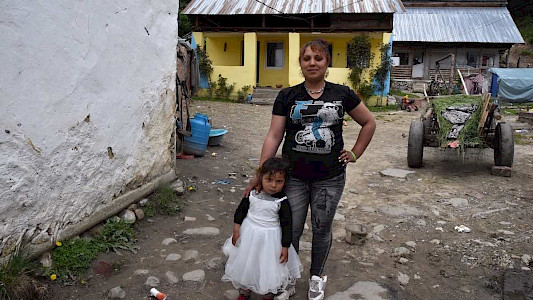
The film covers the double life of a group of Roma who have been shuttling between Hamburg and their Romanian village for years. They earn their meagre income through begging and spend nights in improvised shacks alongside train tracks or in the thickets of public parks. Four to five times a year they return home to Nămăiesti, a village about 100 km west of Bucharest, to take care of their children. Only Maria and Țirloi managed to build a bit of normality for themselves in Hamburg; they have a
Europa Passage
Switzerland 2020, 82 minby Aldo Gugolz (revolumenfilm)
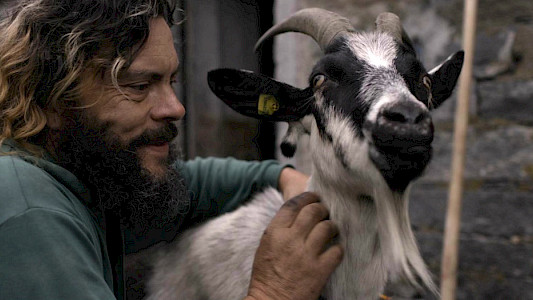
Fabiano has a simple dream: making goat cheese in an alpine hut located in the mountains an isolated valley in the mountains of southern Switzerland. That's the way his hippie parents used to live and that is also his dream. A dream shared by Eva, his wife, who will soon be a mother. But times have changed and the harsh reality of the global economy transforms his alpine utopia into an ordeal. Furthermore, Fabiano is haunted by nightmares and guilt feelings. He thinks he is responsible for the d
Cows on the Roof
Germany 2012, 120 minby Gerd Kroske
The German painter and cabaret artist Heino Jaeger was once a celebrated radio star. The radio recordings 'Fragen Sie Dr. Jaeger/ Ask Dr. Jaeger' achieved cult status in the 70s. Nevertheless, this popularity seemed to 'hurt' Jaeger as a painter. After ten years, he abruptly discontinued his broadcasting work and began to drink. Weight down by a trauma from World War II and characterized by anarchic madness, but far being an eccentric, arrogant artist, Heino Jaeger died in a psychiatric ward in
HEINO JAEGER-look before you kuck
Germany 2011, 85 minby Diana Näcke
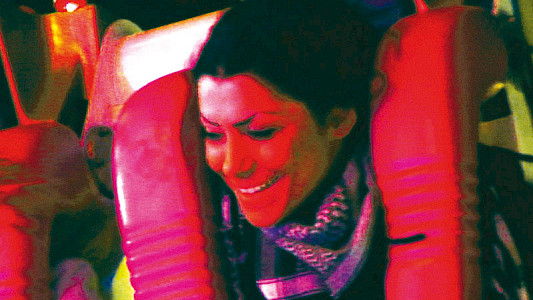
Kuebra is an infestation. As the only female intensive delinquent in Berlin, the most serious category of juvenile offenders within the local youth prison regime, she has been plagued and hated since the age of 14. But in reality she just longs to be an ordinary girl, a girl that someone will care of, and hold her in their arms. She will take us on a journey into her past, to a place where she has grown up and knows like no other: the woman’s prison in Berlin where she served for almost four a
My Freedom, Your Freedom
Switzerland 2009, 56 minby Aldo Gugolz (revolumenfilm)
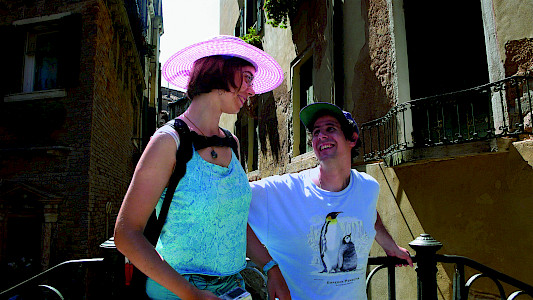
Eliane and Christof are lovers.They have both been disabled since birth.Eliane dreams of moving in with her boyfriend.But her wish meets with unexpected obstacles.
US TWO
Germany 2008by Andrei Schwartz
The people on the pier of Sevastopol Bay are a symbol of the inextricable dilemma in which the city finds itself: too impoverished for splendour and glory, and much too alive for the scrap-heap. People such as handsome 14-year-old Push, who finds mopeds much cooler than girl, or shy 13-yearold Nastja, still mourning her lost first love, spend their summer together on the pier. Even 80-year-oldGalina still has a few tears to spare for the bass voice of her erstwhile lover, but not before she comp
THE PIER OF APOLONOVKA
You can contribute updates for the current person (Susanne Schüle).
Please enable JavaScript to access our website.