Germany 2016, 82 minby Sung-Hyung Cho
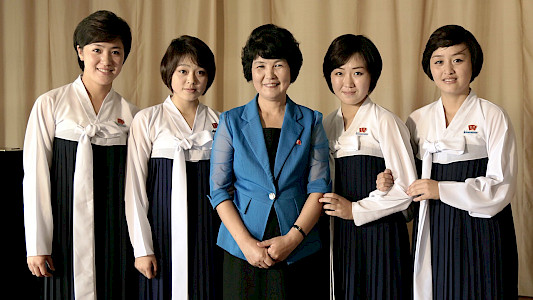
While Bang Gye Yong starts singing the song "Beloved Leader and his endless love of his people" at a socialist concert hall in Pjöngjang, 200 kilometres south, in a dingy basement in Seoul, a loud "Grrrrrhhh" is resounding simultaneously. Hu Sun-Gyung is screaming into the microphone: "Dad, it's your fault that I have become slut!"One with the collar of her white blouse buttoned up, a badge with the face of the North Korean Leader Kim Jong II pinned onto it, her hair cut short and neatly, wearin
Two Voices from Korea
Germany 2016, 90 minby Sung-Hyung Cho
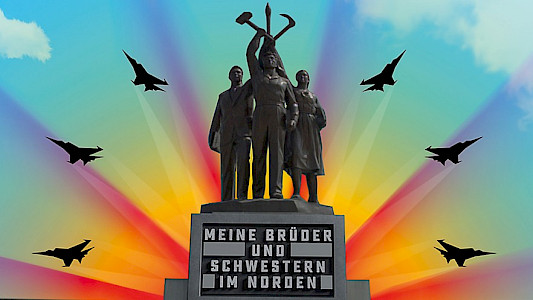
Who really knows anything about North Korea beyond its borders? Whatever we see or hear about this isolated land is always the same: Military parades with tanks and rockets, male and female soldiers marching like robots, threats of war, famine, obedient children and not least of all, three generations of dictators and their hysterically adoring followers. Award-winning filmmaker Sung-Hyung Cho pursues this question from right within its midst – in North Korea.MY BROTHERS AND SISTERS IN THE NORTH
My Brothers and Sisters in the North
2013, 93 minby Sung-Hyung Cho
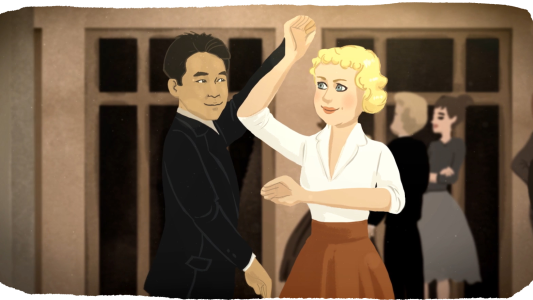
In 1952, in the midst of the Korean War, North Korea sent selected students to socialist sister countries with the intention that they should be trained there and then at some point return with their newly accrued knowledge in order to rebuild their ruined homeland. The GDR received a large number of these Korean students.In addition to the German language, these polite young men soon mastered all the local dance moves. It was during this time that they were to have such fateful encounters with
FAR EAST LOVE - My Beloved from North-Korea
Germany 2009, 95 minby Sung-Hyung Cho
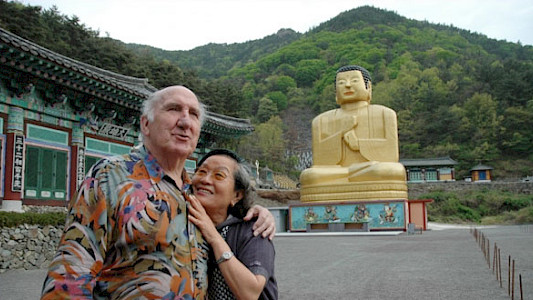
Three women return to South Korea after spending over thirty years in Germany. Together with their German husbands they live in the "German Village", a quirky tourist attraction replete with red tiled roofs, Bockwurst and Pumpernickel. Korean director – Hyung Cho plumbs the depths of this balancing act between two cultures with humour and sensitivity.
HOME FROM HOME
Germany 2006, 90 minby Sung-Hyung Cho
Just as the church choir pipe up the chorus of "We praise you, dear Lord", a few hundred metres away on the Black Metal Stage, a loud rumble can be heard. The lead singer of "Kreator" is bellowing "Enemy of God" into his microphone, roaring out his visions of death and the immortality of evil, brimming over with hatred. At first glance, the cultural chasm that exists between the inhabitants of Wacken and the heavy metal fans who have travelled from all over the world to be here could not be gre
FULL METAL VILLAGE
You can contribute updates for the current person (Sung-Hyung Cho).
Bitte aktivieren Sie Javascript, um auf unsere Website zugreifen zu können.