Germany 2024, 115 minby Andres Veiel
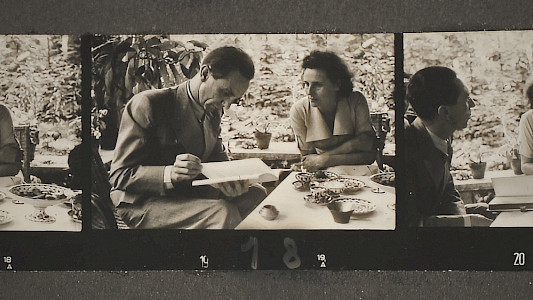
A captivating insight into the private estate of Leni Riefenstahl, who became world-famous with her Nazi propaganda film TRIUMPH OF THE WILL but kept denying any closer ties to the regime.Leni Riefenstahl is considered one of the most controversial women of the 20th century as an artist and a Nazi propagandist. Her films TRIUMPH OF THE WILL and OLYMPIA stand for perfectly staged body worship and the celebration of the superior and victorious. At the same time, these images project contempt for the imperfect and weak. Riefenstahl’s aesthetics are more present than ever today - but is that also true for their implied message? The film examines this question using documents from Riefenstahl's estate, including private films, photos, recordings and letters. It uncovers fragments of her biography and places them in an extended historical context. How could Riefenstahl become the Reich's preeminent filmmaker and keep denying any closer ties to Hitler and Goebbels? During her long life after the fall of Nazism, she remained unapologetic, managing to control and shape her legacy. In personal documents, she mourns her "murdered ideals". Riefenstahl represents many postwar Germans who, in letters and recorded telephone calls from her estate, dream of an organizing hand that will finally clean up the "shit-hole state". Then, her work would also experience a renaissance, in a generation or two this time could come - what if they are right?
RIEFENSTAHL
USA, Israel, Germany, France 2022, 141 minby Dror Moreh
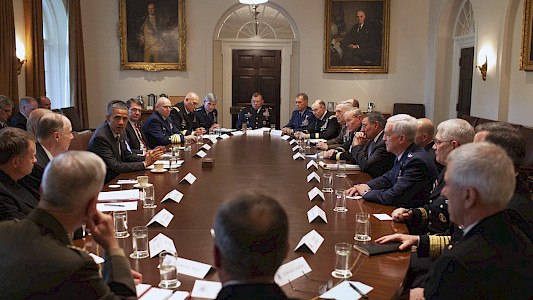
A thorough and sober examination of the US response to genocide and war crimes over the past 40 years. From the corridors of power in the White House and with Henry Kissinger, Hillary Clinton and Madeleine Albright as expert witnesses.After the collapse of the Soviet Union, the US stood as the sole global superpower. With that title came the burden of being the moral guardian of the planet. But how does a power decide whether to intervene in conflicts beyond its borders? Dror Moreh’s immensely thorough film brings together the political elite – Henry Kissinger, Hillary Clinton, Madeleine Albright, Condoleezza Rice and others – to examine the motivations behind US interventions (and lack thereof) from the 1990s genocides in Rwanda and Bosnia, to the wars in Iraq and Syria in the 21st century. Contributing as a moral beacon in an extremely complex and sometimes terrifying field is the formidable Samantha Power, who was Obama’s personal adviser. A film for anyone interested in politics on a grand scale. [CPH:DOX]Oscar® nominated director Dror Moreh (THE GATEKEEPERS) returns with an examination of US foreign policy of the past 40 years in this striking documentary filled with insights of more than 30 political heavyweights including Henry Kissinger, Hillary Clinton, Madeleine Albright and Condoleezza Rice.Quotes: utterly engrossing'- Deadline, 'a deeply disturbing examination of genocide during recent decades' - The Hollywood Reporter
The Corridors of Power
Germany 2018, 111 minby Gerd Kroske
In 1970, Dr. Wolfgang Huber and a group of patients founded the anti-psychiatric (Sozialistische PatientenKollektiv - SPK) 'Socialist Patient’s Collective' in Heidelberg. Controversial therapy methods, political demands, and a massive interest in the movement from patients deeply distrustful of conventional “custodial psychiatry,” led to run-ins with the University of Heidelberg and local authorities. The conflict quickly escalated and resulted in the radicalization of the SPK. Their experiment in group therapy ultimately ended in arrests, prison, and the revocation of Huber’s license to practice medicine.From a historical perspective, the SPK court cases seem to anticipate the Stammheim trials, with the exclusion of defense attorneys, the total non-compliance of the defendants, and harsh penalties for both Huber and his wife. The severity of the sentences handed down appears hardly proportional to the actual deeds of the accused. The allegation of having supported the RAF, and thus of being complicit in their terrorism, still clings to the SPK and overlies what the movement was originally about: the rights of psychiatric patients, resistance, and self-empowerment—issues that are still relevant today.SPK COMPLEX focuses on the untold story of events before the 'Deutscher Herbst' (German Autumn) and their consequences up to the present day. A story of insanity, public perception, and (un)avoidable violence. (Berlinale Catalogue)
SPK Complex
Germany 2017, 107 minby Andres Veiel
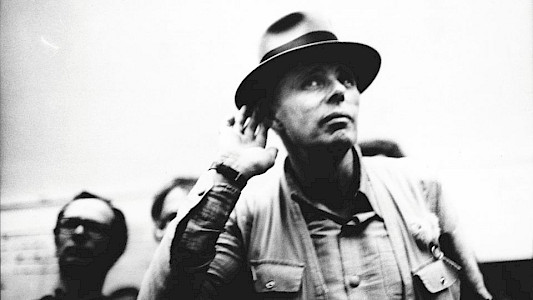
Joseph Beuys, the man with the hat, the felt and the ‘fat corner’. Thirty years after his death he feels like a visionary who was, and still is, ahead of his time. He was the first German artist to be given a solo exhibition at the Guggenheim Museum in New York whilst at home in Germany his work was often still derided as the ‘most expensive trash of all time’. Once asked if he was indifferent to such comments he retorted: ‘Yes. I want to expand people’s perceptions.’Andres Veiel lets the artist speak for himself. From previously unpublished audio and video footage Veiel creates an associative, porous portrait which, like the artist himself, opens up spaces for ideas rather than proclaiming statements. Beuys boxes, chats, lectures, explains art to a dead hare and asks: ‘Do you want to instigate a revolution without laughter?’ But we also experience the man, the teacher and the Green Party candidate. Once, shortly before his death, he consents to being photographed without his hat. Veiel’s film makes visible the contradictions and tensions which gave rise to Beuys’ Gesamtkunstwerk. Beuys’ expanded concept of art feeds directly into today’s social, political and moral debates. (68th BERLINALE)
BEUYS
Germany, Belgien 2017, 89 minby Reiner Holzemer
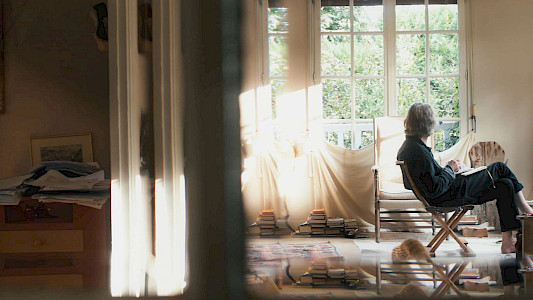
An insight into the life, mind and creative heart of a Dries Van Noten, who, for more than 25 years, has remained independent in a landscape of fashion consolidation and globalization.For the first time fashion designer Dries Van Noten allows a filmmaker to accompany him in his creative process and rich home life. For an entire year Reiner Holzemer documents the precise steps that Dries takes to conceive of four collections, the rich fabrics, embroidery and prints exclusive to his designs. As well as the emblematic fashion shows that bring his collections to the world and have become cult “must sees” at Paris Fashion Week. This film offers an insight into the life, mind and creative heart of a master fashion designer who, for more than 25 years, has remained independent in a landscape of fashion consolidation and globalization.
DRIES
2016, 89 minby Corinna Belz
A film about words and about a luminary of modern literature: about Peter Handke, with Peter HandkeIn her new documentary, filmmaker Corinna Belz explores the enigma that is Peter Handke. His book titles read like the tunes on a jukebox, like the watchwords of several successive generations of readers: ‘Offending the Audience’, ‘The Goalkeeper’s Fear of the Penalty’, ‘A Sorrow Beyond Dreams’, ‘Short Letter, Long Farewell’, and ‘The Weight of the World’. In the ‘60s, Peter Handke showed how to walk the walk of the author-cum-popstar. Yet the moment he made the bestseller lists, he turned his back on all that. He went traveling, taking his readers along with him, into the rhythm and precision of his language, the long, pulsating sentences, the invention and examination of reality. The film shows Mr. Handke as a young man and in his daily life today, always devoted to language, posing the burning questions: Where are we now? And, to quote one of his early films: How to live?
Peter Handke - in the woods, might be late
Germany 2014, 78 minby Johann Feindt, Tamara Trampe
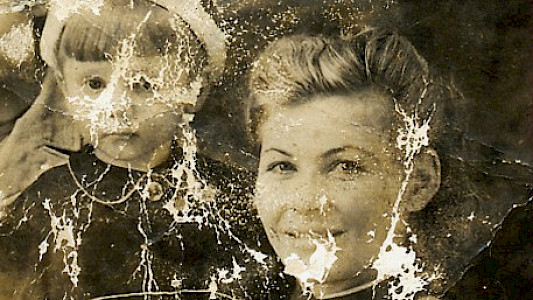
December 1942. A snowfield behind the russian lines in WW II. This where my mother gave birth to me. She was a nurse in the Red Army back then. 70 years later I go back to find out. (Tamara Trampe)
MY MOTHER, A WAR AND ME
Germany 2013, 78 minby Anne Thoma
Today’s wars and conflicts are increasingly complex and incomprehensible. Often, they are caused by local civil conflicts with global repercussions in the power struggle over territories and resources. This is why politicians employ those who understand the language, have access to expert knowledge and know how to be discrete. They employ experts, who turned 'making peace' into a new, private business model. “If you want to put an end to war, you have to talk to the fighters!” An exclusive group of international consultants are dedicated to this idea - it is their business, and their mission. In her film, director Anne Thoma portraits three private mediators and their work, which they conduct in hotel lobbies, during business class flights and in secret conference rooms. The film follows the protagonists on their mission to put an end to armed conflict in the world. We learn to understand their motivation, share hopes and disappointment, the loneliness and their short, rare moments of triumph. We also get a glimpse into the every day chores of the job alongside war theatres – surprising and emotional insights into the private peace industry. With Dennis McNamara, David Gorman, Martin Griffiths
MILES & WAR
Bitte aktivieren Sie Javascript, um auf unsere Website zugreifen zu können.