Germany 2024, 77 minby Daria Kuschev
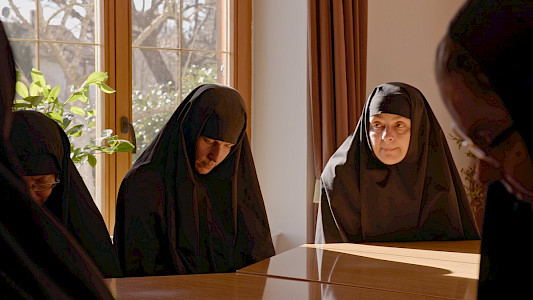
Germany's only Russian Orthodox women's monastery is located in a small town near Munich. Under the lead of Abbess Maria, 13 sisters of international origin live there, following a strict hierarchical order. As servants of God, the nuns increasingly disappear from the normal world, almost as if they had already 'died'. Symbolically, they always wear black clothes.Nevertheless, the sisters also have to attend to worldly matters, such as everyday work in and around the building, receiving pilgrims
As in Heaven so on Earth
USA, Germany 2023, 72 minby Gudrun Gruber
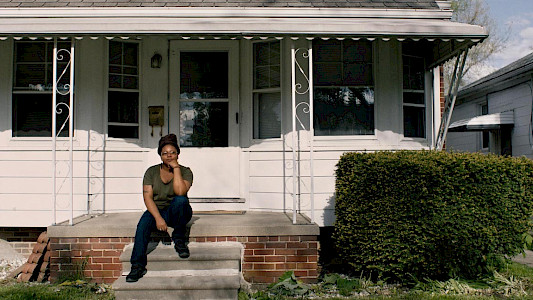
More than a decade after a sexual assault in her teen years, Detroit resident Sabrina struggles to get by. Non-epileptic seizures and other post-traumatic symptoms deprive her of her mobility and her freedom. Her father, Darnell, who owns an auto repair shop in the city, is one of her closest confidants. Every day he makes himself available to drive his daughter where she needs to go. Together with her husband Tim, the two men form a cocoon around the young woman, but questions of guilt surround
RESTORATION
Germany 2022, 94 minby Vera Brückner
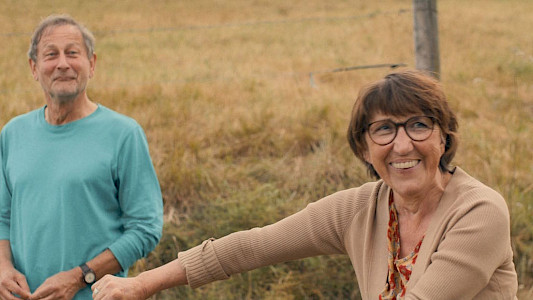
Germany 1970: Students Karl-Heinz and Hedi try to find a way to be together from across the Iron Curtain, with her in the East and him in the West. Under pressure of the GDR's secret police, Karl-Heinz can't move to East Germany and eventually Hedi has to leave the country. Her escape, disguised as a holiday trip to Romania, goes wrong in many ways.
Sorry Comrade
Germany 2021, 29 minby Luigjina Shkupa
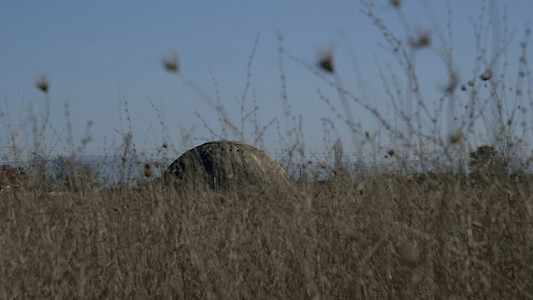
From 1944 to 1990 Albania suffered from the dictatorship of Hoxha, which turned Albania into an extremely isolationist, Stalinist, anti-revisionist and communist state. At that time, the communists, currently three million people, built 750,000 bunkers. The bunkers are everywhere: in cities, yards, cemeteries and playgrounds across the country. After communism, the bunkers were used in different ways by the albanian citizens: they became pizzerias, bars, museums and hostels. The bunkers are used
Sigurimi
Germany 2020, 30 minby Fariba Buchheim, Hilarija Laura Locmele
We were called to promote God’s name - why shouldn't we use Instagram?Four adolescent social media influencers have one goal: to glorify the word of God.
Work for Him
You can contribute updates for the current person (Sophie Oldenbourg).
Please enable JavaScript to access our website.