Germany 2024, 111 minby Katharina Pethke
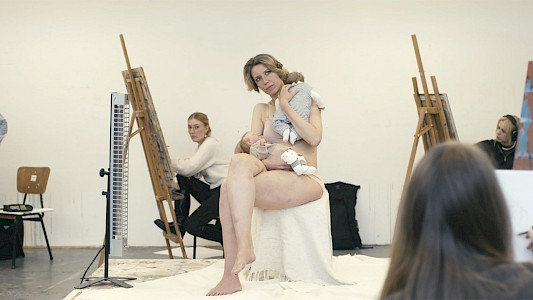
The ensemble of buildings that makes up the maternity clinic and art school in Hamburg where the director taught is the starting point for this sober interrogation of how motherhood and career can be combined based on three generations of German women.How much does a place reveal about its history? How much can forbears and their descendants know about one another? And how much continuity is contained within progress? When Katharina Pethke became a professor at Hamburg’s University of Fine Arts,
Reproduction
Germany 2021, 90 minby Serpil Turhan
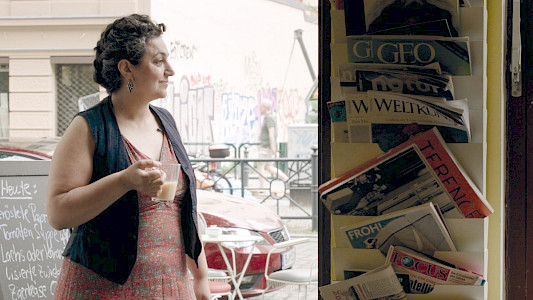
KÖY (Turkish for village) is about the longing for home, for belonging and the freedom of the self. Three women from three generations are united by their Kurdish roots. All of them originate from villages in eastern Turkey and live in Berlin. Against the background of the political changes in Turkey, Serpil Turhan held intense discussions over a period of three years. KÖY captures each woman’s emotional world and shows fragments of the ordinary. Hêvîn, Saniye and Neno do not meet, but their sto
KÖY
Germany 2019, 154 minby Bernd Schoch
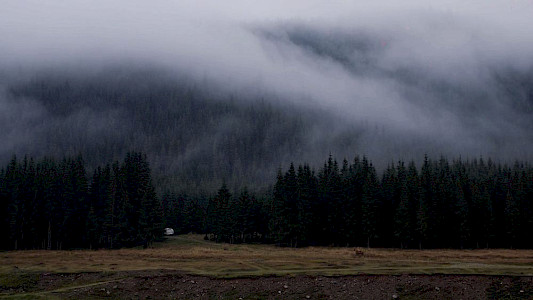
A sprawling mycelium. The starry sky over the Romanian Carpathians. The first two images introduce the dimensions that are at the core of Olanda: Details and fine structures on the one hand, constellations and the bigger picture on the other. The focus is on a seasonal asset of the area - the mushroom. Amongst people it is the foragers who are nearest to them and the focus of the film is on them: on walks through the forest, in the tent camp, during car rides and conversations. From here it foll
Olanda
Germany 2017, 84 minby Marco Kugel, Simon Quack
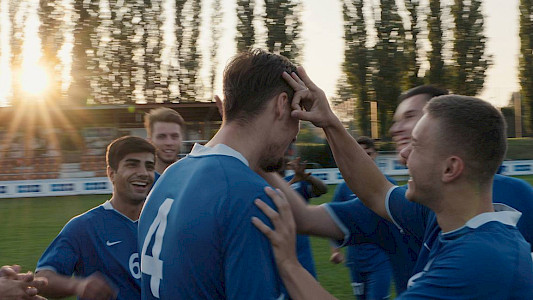
Every summer, when the major football teams fly their star athletes to training grounds in sunny locations, some other players meet on a football field in Duisburg. Even though there are professional footballers, they are all unemployed. And they look desperately for a job. The Other Fields sheds a new and completely different light on the mythologies of contemporary football. The achievement-oriented society does not allow too many dreams even though it is exactly dreams that are sold to audien
The Other Fields
Germany 2011by Bernd Schoch
The Schlippenbach Trio (Paul Lovens, Evan Parker, Alexander von Schlippenbach) exist since forty years and they are part of the european Freejazz history. Each year in december they go on the 'Winterreise' to play their sound of divergence, catharsis & explosion. The film BUT THE WORD DOG DOESN'T BARK is shoot over the period of four years at the Jazzclub Karlsruhe. Each year the camera focuses in a single frame shot on one of the players.In 2007 on Paul Lovens (drums), in 2008 on Evan Parker (r
BUT THE WORD DOG DOESN'T BARK
You can contribute updates for the current person (Simon Quack).
Bitte aktivieren Sie Javascript, um auf unsere Website zugreifen zu können.