2023, 22 minby Jana Rothe
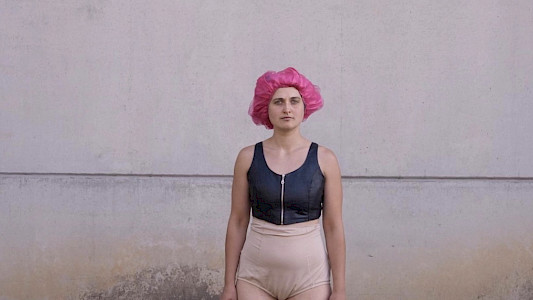
Clown*esses are more than jesters; they hold a mirror up to society. They move between the worlds and like to break rules, albeit with a wink. At the same time, clown*esses are contradiction experts by nature, because they know on the one hand that life is far too short to be sad, and on the other hand use their art not only to entertain us but to make oppression and violence visible and attackable.The artists portrayed in this film, for example, look closely at patriarchal structures and learne
CLOWN*ESSES
Germany 2023, 17 minby Dorothea Carl (doro carl)
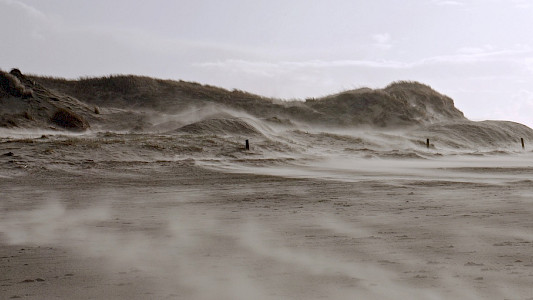
The surf tosses sand on the beach, the wind blows it inland. Nothing remains as it is, or where it was. Everything is in motion: the 200-million-year-old sand, the dunes, the sea, and the countless creatures that make their home amongst its grains. Yet human interventions such as dikes, coastal protection measures, and sand filling have made the dynamic line between water and land inelastic and stiff.With: Prof. Dr. Karsten Reise, Dr Annkatrin Weber, Sabine Gettner, Björn Mehrtens, Monika Povel,
Sand Flight
Germany 2019, 154 minby Bernd Schoch
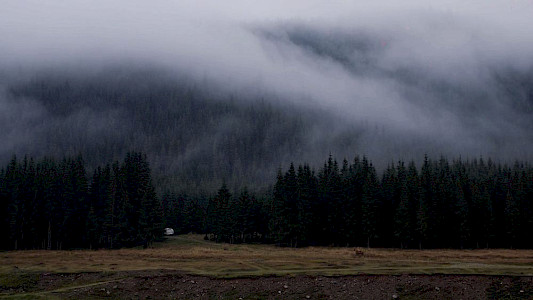
A sprawling mycelium. The starry sky over the Romanian Carpathians. The first two images introduce the dimensions that are at the core of Olanda: Details and fine structures on the one hand, constellations and the bigger picture on the other. The focus is on a seasonal asset of the area - the mushroom. Amongst people it is the foragers who are nearest to them and the focus of the film is on them: on walks through the forest, in the tent camp, during car rides and conversations. From here it foll
Olanda
Germany 2018, 67 minby Luise Donschen
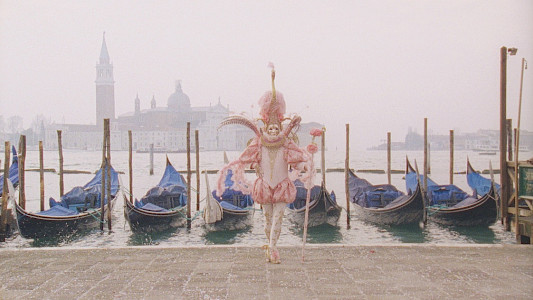
A person enters the frame dressed up as a bird. In a dressing room, John Malkovich sheds the costume of Casanova. A young woman‘s skirt is just as orange as the beak of a zebra finch singing in a cage. White lilies stand at the foot of a statue of the Virgin Mary, red roses in front of the window of an SM studio. There the quiet game of submission in exchange for money, in a museum an embrace, a poem whispered in the ear. Children playing in a forest in autumn. A forest in summer, framed by ligh
Casanova Gene
Germany 2018, 95 minby Claudia Lehmann
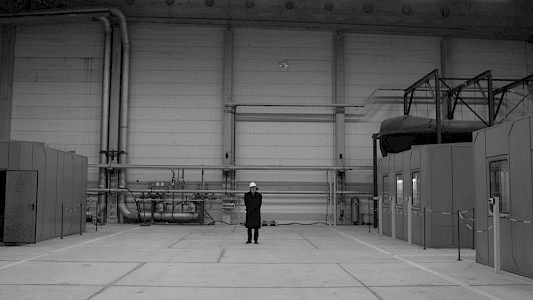
The German Electron Synchrotron in Hamburg, DESY for short, is home to some of the largest particle accelerators in the world and, as an international research centre, is already a world of its own. This is where elementary particles clash. This is also where filmmaker Claudia Lehmann lets her former doctoral supervisor, physics professor Gerhard Mack, clash with other scientists as well as with a shaman, his partner or filmmaker Hark Bohm. They all confront him with questions about our very exi
The Symphony of Uncertainty
Germany 2014, 82 minby Dorothea Carl (doro carl)
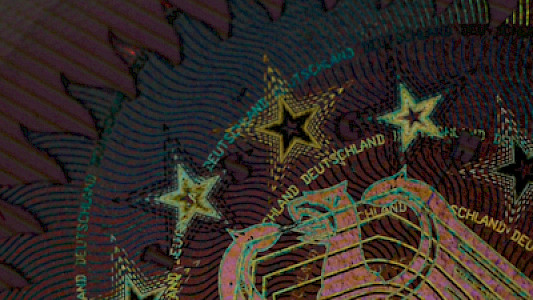
Fourteen people share their stories of fleeing from their native countries. By foot, on boats or with the help of escape agents, they were chased away by war, toxic gas, torture, fear and hunger. Some are still kids, strong only through the courage of despair, led by their hopes and wishes. Their personal stories of and experiences with their arrival in Hamburg, in the county of Pinneberg, in container camps, sleepless nights and the struggle with paperwork intertwine with a “banning space”, whi
persona non data
Germany 2010, 100 minby Dieter Schumann
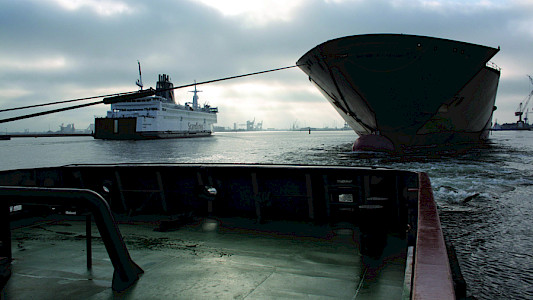
The film accompanies the Wadan employees throughout their 18-month struggle for the preservation of their shipyard. A film about the value of work in a globalized world. Wismar, 45,000 inhabitants. The income of every third family depends on the Wadan shipyard, the only major company in the region. In August 2008 a Russian investor takes over the old, traditional business and its future seems secured. But then the financial and economic crisis hits the Hanseatic City at its very centre: more tha
WADAN'S WORLD
You can contribute updates for the current person (Roman Vehlken).
Bitte aktivieren Sie Javascript, um auf unsere Website zugreifen zu können.