Films by Roland Wagner

Director, DoP
ISLAMIC ECONOMICS I – From Bazar to Wall Street

2012, 104 min
by Jörg Bundschuh, Matthias Heeder, Nigel McCarthy

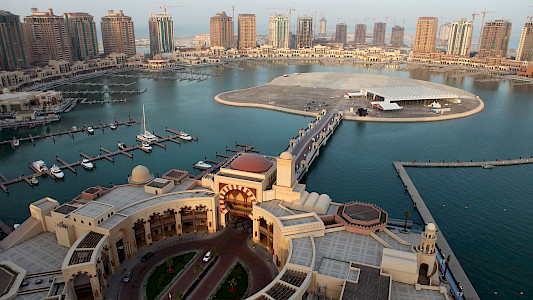
From Bazar to Wall Street:After the financial crisis and the events of the Arab Spring the Western world has been exposed to an alternative, religion-influenced system of economics called Islamic Finance. Indeed, in the shadows of our conventional financial system, Islamic states have developed another option that appears to have been less affected by the crises of recent years. But what is really behind this concept, how did it emerge, and what makes it different from the standard system? From the corporate law firms of London, Europe's centers of Islamic Finance, to the experts and key figures in Turkey, Bahrain, Qatar, Dubai and Abu Dhabi, we find out more about the differences, similarities, and problems within a system that Western economists believe will have a decisive influence on the 21st century.The Price of Paradise:The world’s highest concentration of Muslims is in Southeast Asia, Indonesia alone has about 200 million believers. In Malaysia, Indonesia but also in Singapore Islam is far more liberal than its counterpart in the Arab states, and as such it seems to play a smaller role in daily life, but it is here that a religion-based Islamic Banking concept is showing its most robust growth – figures that Western banks could only dream of. The basics of the system forbid interest charges, and proscribe dealings in industries related to pork products, weapons, gambling or pornography. With its promise of backing all banking transactions with real values, can Islamic Finance and Banking provide the security that Western banks and their increasingly speculative methods no longer guarantee?

ISLAMIC ECONOMICS

Hearst Tower, New York

Germany 2009, 78 min
by Sabine Pollmeier (PARNASS FILM)

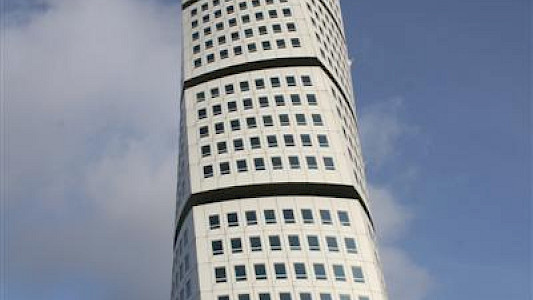
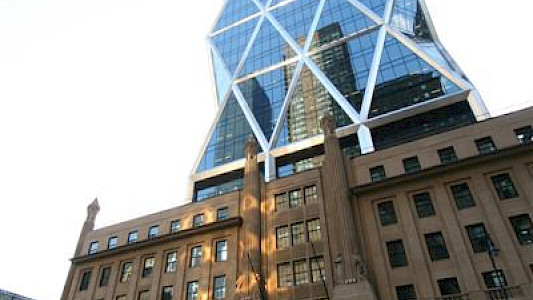
3x26min or78 minPart one: Hearst Tower, New York Part two: Turning Torso, Malmoe Part three: Torre Agbar, Barcelona This is architecture for the 21st century. The series Up to the Sky presents three of the latest and outstanding skyscrapers. Three new towers in New York, Malmö and Barcelona that have set new standards in world architecture.Never before have so many skyscrapers have been built like in the first decade of the 21st century. Thanks to computer technology, today calculations and constructions have been made possible that were unthinkable some years ago. World-famous European architects like Norman Foster, Jean Nouvel and Santiago Calatrava know how to handle these new technologies. With their new buildings, the look of skyscraper has changed forever. Their new towers have nothing in common with the rectangular high-rise building in Bauhaus design. Playful, sculptural and exciting – what used to be an abstract sculpture in a museum, today is rising up hundreds of meters into the sky.Meet Sir Norman Foster, Santiago Calatrava and Jean Nouvel. And see the Hearst Tower in New York, the Turning Torso in Malmö and the Torre Agbar in Barcelona.• HEARST TOWER, NEW YORKNew York, the city of skyscrapers. In the midst of this skyline one new tower is creating a furore. It is the Hearst Tower, built by the British architect Norman Foster. Norman Foster’s high-rise has been standing on the edge of Central Park since the end of 2006. The Hearst Tower rises 182 meters into the sky. A rather modest height. And soon this small-scale skyscraper may be overlooked on the dense New York skyline. If it were not for its facade! It looks like a polished diamond in the middle of the skyline. The Hearst Tower is New York’s first green skyscraper. The facade’s diagonal grid pattern, the so-called diagrid structure, consumes 20 per cent less steel than a comparable construction. The structure is efficient – and it is also extremely elegant.“The most beautiful new skyscraper in Manhattan since 1967”, praised him the “New Yorker”.• TURNING TORSO, MALMOEThe Spanish architect Santiago Calatrava is a man of many talents. Painter, sculptor, architect and engineer, he switches effortlessly between the forms of expression. All of his talents came together when he designed his first skyscraper. The Turning Torso has been standing on the edge of the southern Swedish city of Malmö since 2005. It turns 90 degrees around its own axis and, in doing so, screws itself up to a height of 190 meters. Everything is curved and oblique. The laws of gravity seem to be cancelled. From the beginning the Turning Torso was planned as a residential building. Anyone can move in here, for it contains perfectly normal rented flats. But inside the Turning Torso there is no such thing as a right angle. Sculpture, movement, statics, construction. Everything comes together in the Turning Torso. A skyscraper for the 21st century. And the new landmark of the city of Malmö.• TORRE AGBAR, BARCELONAThe Torre Agbar looks like a rocket that is about to take off into space. A simple geometric gesture – and a design by the French architect Jean Nouvel.A skyscraper which seems to come out of the future. Its silhouette has dominated the cityscape of Barcelona since 2005. Jean Nouvel designed a tower which seems to shoot up expressively. At night the Torre Agbar becomes a luminous work of art, a glowing fixed point in the pulsating metropolis. 4500 light-emitting diodes bathe it in artificial blue and red, visible from afar.The poetry of this nocturnal lighthouse dominates the whole city. The Torre Agbar has become an urban event which long since seems to be inseparably joined with Barcelona, by day and by night.

UP TO THE SKY – Hearst Tower

Germany 2006, 92 min
by Christa Graf

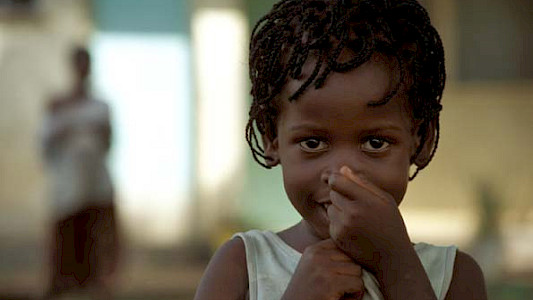
In Uganda, AIDS-infected mothers have begun writing what they call Memory Books for their children. In front of the small brick house Dennis and Chrissi brush their teeth every evening in the dim glow of the oil lamp. The 10-year-old watches his little sister conscientiously as they get ready for bed. Since their mother died of AIDS two years ago they are both orphans, two of more than two million of their kind in Uganda. There are few countries in Africa that have more households run by orphaned children and, despite extensive efforts by the government to raise awareness, experts on the subject predict that nearly 35% of Uganda's population is infected with HIV. When the parents die, the children are forced to look after themselves. A very special project has emerged in Uganda as a result: Memory Books, written by infected parents, mostly mothers, and their children. Aware of the illness, it is a way for the family to come to terms with the inevitable death that it faces. Openly, honestly and compassionately, the books give the children a chance to prepare themselves for life on their own. Values and traditions are passed on in the form of stories, fairytales and songs and the family's history is recorded with the children\'s favorite memories or their parent\'s wishes for the future. The books not only capture immeasurably valuable memories, but also allow members of the family to process some gruesome realities and prepare for the future. Hopelessness and desperation are confronted through the collaborative effort of remembering and recording, a process that inspires unexpected strength and even solace in the face of death. These books will likely be the most important guidelines that these orphans have to lead them through life. German, English, French (dubbed versions), Spanish, Italian (original version with subtitles)

Memory Books