Germany 2024, 91 minby René Frölke
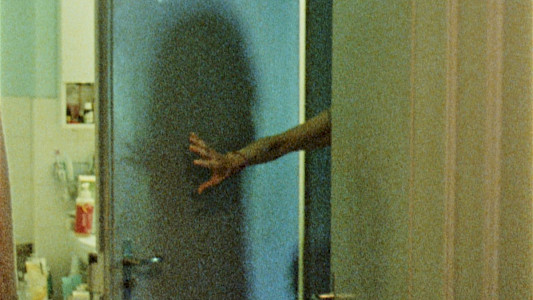
Twenty years after Swiss publishing house Pendo closed its doors, the descendants of its founders repeatedly circle, examine and lose sight of its legacy. Frölke’s film gives structure to this archive via media experimentation.The film gives brief glimpses into rooms bathed in light. The Bolex camera whirs. Twenty years after the closure of Swiss publishing house Pendo, which was founded in 1971, its story is revealed by way of personification: heir Theresia Weigner and her partner, who repeated
Traces of Movement before the Ice
Germany, Uruguay 2018, 237 minby Kristina Konrad (weltfilm gmbh)
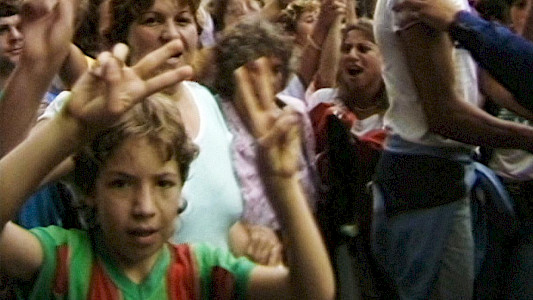
Uruguay 1987-89. The filmmakers are on the streets of Montevideo, and in the country with farmers, talking with the people and asking them about their opinion of the referendum and plebiscite on the law of impunity for the human rights abuses committed by the military and police over the past 20 years, a law adopted by Parliament in 1986 during the transition from dictatorship (1973-85) to democracy. They listen to and observe the people as they contemplate what peace and democracy means to them
Unas preguntas – One or Two Questions
2017, 83 minby Ann Carolin Renninger, René Frölke
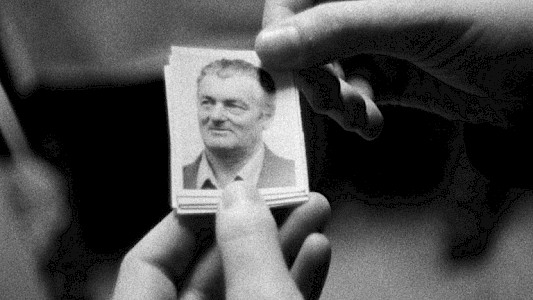
Willi is nearly 90 years old and lives alone on a farm in northern Germany. He likes to talk to his cat, he feeds his chickens and makes his rounds with the aid of a squeaky walker. The garden is overgrown. His house is full of all the things that have accumulated there over the course of a long life, relics of bygone times. Occasionally someone comes to visit, or a moped passes by, but not much happens otherwise. As the seasons change, the film paints a portrait of the everyday life of this res
From a Year of Non-Events
Germany 2014, 100 minby René Frölke
Le beau danger is a cinematic arrangment between documentary portrait and literary text. Interwoven with the moving image and divided into one hundred and seventy black and white text screens we read the work of the Romanian author Norman Manea. It is the attempt to have image and text question eachother and respond to eachother. Arising from the observation of the present of the author, which is also our present, the inner conflict of our time becomes visible, a conflict in which information be
Le beau danger
Germany 2011by René Frölke
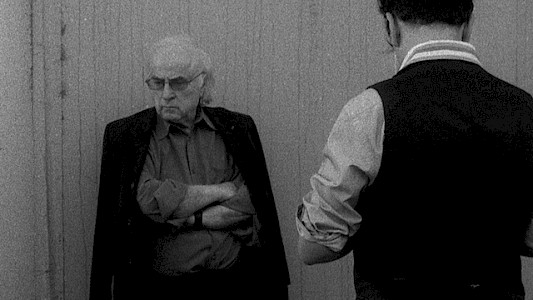
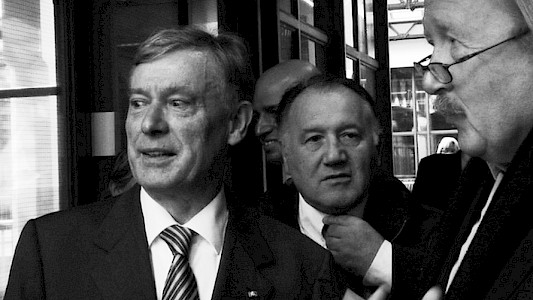
What’s in this movie? It is but a small sequence – a 37minute excerpt of an encounter. A universal event: The statesman, the representative, the dignitary meets a group of representatives. There is talk of the arts and repeatedly of economy. It is also the attempt at communication under pressure. All those involved appear somewhat tense. Details are getting lost, simplifications occur. But underneath the rubble heap of text the movements of our time, our epoch become visible. Maybe something tha
GUIDED TOUR
Germany 2010, 94 minby René Frölke
A film about a young man. His name is Jürgen Stenzel. He paints. An artist who never went to art school. His mother, Edeltraud, recounts a journey that started a long time ago and has etched itself into the story of her life. And Günter, the father, always the silent companion in the background. Father, mother, son. The film feels its way into the lives of these three people. And then it follows the subtle ramifications of their stories. The images arising won't be complete. The portrait of a fa
OF THE SALAMANDER'S ESPOUSAL WITH THE GREEN SNAKE
You can contribute updates for the current person (René Frölke).
Bitte aktivieren Sie Javascript, um auf unsere Website zugreifen zu können.