Germany 2017, 96 minby Barbara Lubich, Michael Sommermeyer
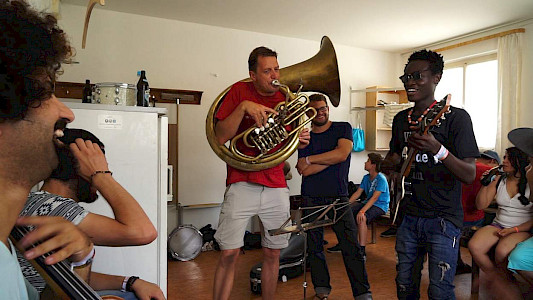
Dresden in summer 2015: Patriotic Europeans against the Islamisation of the West – PEGIDA – march through the center of the city while in the outskirts thousands of refugees move into makeshift camps. Banda Communal, a brass band from Dresden, started to give welcoming concerts there and to welcome refugee musicians. Banda Communal becomes Banda International.The documentary follows the musicians throughout one year – from being an integration project to a band celebrated throughout Germany.DOK LEIPZIG catalogueEver since Pegida sprang up there has been resistance – colourful, loud and sometimes rhythmic. The rhythms of the counter-protests were often set by the local protest brass band “Banda Comunale”, who formed when the aim was to re-conquer the streets of Dresden, Freital or Clausnitz. But soon the musicians were no longer satisfied with being always “against”. They emancipated themselves from the manic defenders of the occident, started to play more gigs in refugee reception camps and shelters, and it didn’t take long until musicians from Syria, Burkina Faso, Palestine, Iraq and Iran joined the original combo of eleven and it became the “Banda Internationale”.Barbara Lubich and Michael Sommermeyer followed the band at gigs and rehearsals, but also in their daily life between flat shares and reception camps. The result is a film that shows that an “against” can yield something new, strong and original. It’s only logical then that “Banda Internationale” are no longer just accompanying protests and asylum seekers but also performing in prisons (whose inmates are predominantly German) and at the renowned Heimatsound festival in Oberammergau. One of the band’s greatest hits, by the way, is the German 1970s pop song that gave the film its title, performed by Ezé Wendtoin from Burkina Faso. (Luc-Carolin Ziemann)
Waiting for the Summers Return
Germany 2013, 88 minby Stephanie Weimar
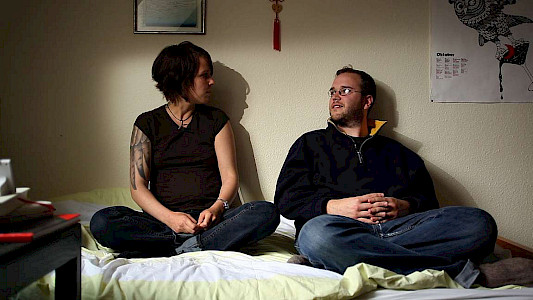
Gregor and Stephanie are siblings who couldn’t be more different. She jets across the world, living with women. It’s not even worth her while to rent a flat because she is so committed to being on the road and getting away from the narrow confines of home. Her top priority is self-fulfilment. Her brother Gregor, on the other hand, looks for contemplation, steadiness and a vocation in this world. A monastery, in a nutshell. To understand his choice, Stephanie Weimar takes up the camera and accompanies him from his first instructions to the day he makes his final vows with the Steyler Missionaries in the monastery of St. Augustin. How can a person voluntarily submit to obedience, poverty, and chastity – and do without sex his whole life? Her perplexity and anger at a church that condemns homosexuality in the name of God, bans condoms, and bears part of the blame for Aids drive this film and determine its perspective. We share Gregor's – whose decision is a radical one – doubts and reflections on this road to enlightenment. But it’s the director who learns what real tolerance means. Because the fact is that we are all seekers for meaning. (DOKLeipzig, CorneliaKlauß)
MY BROTHER'S VOWS
Bitte aktivieren Sie Javascript, um auf unsere Website zugreifen zu können.