2025, 17 minby Rainer Komers
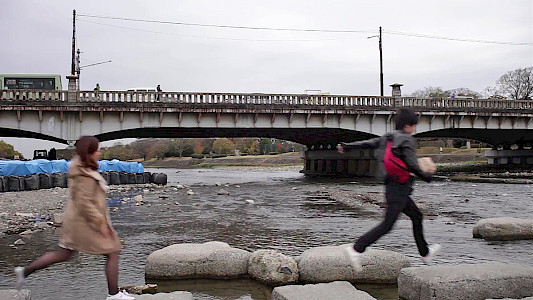
„Kamogawa“ is a composition of scenes of peaceful life along an autumnal river, orchestrated by the sounds of rattling trains, traditional musical instruments and looms, and the fragile voice of an elderly opera singer. It's a place where time seems to have stood still, yet subtly conveys a sense of unease. The film concludes with a train ride through modern Kyoto and a Rückenfigur by a large lake.
Kamogawa
Germany 2022, 97 minby Rainer Komers
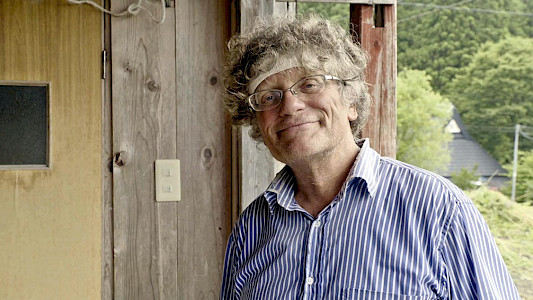
The follow-up film to “Barstow, California” takes us to the mountains of Miyama, a remote forest and tourist area north of Kyoto. Uwe Walter, a shakuhachi player from Germany, lives there with his wife Mitsuyo for 30 years. Together with the villagers he prepares the annual Gion Festival. On the eve of the festival, the village representatives tell him that his self-built studio is to be demolished. This brings back memories for him of earlier times and his first steps as a Nō actor.In the manne
Miyama, Kyōto Prefecture
2022, 113 minby Peter Nestler
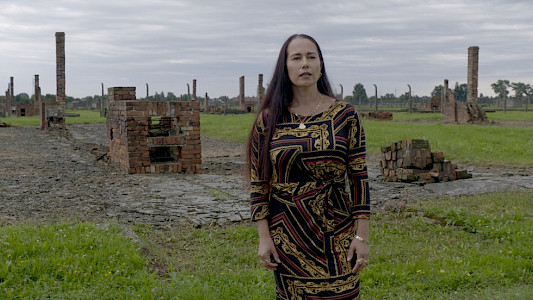
The film is about the German Sinti and Roma’s different forms of resistance spanning eight decades. It’s about revolt against injustice and about insistence on dignity and justice. A story of courage and resolve of individuals who desperately defended themselves. And the story of suffering of a minority caught between trauma and self-assertion: an ongoing unprecedented injustice throughout all of the post-war years to this very day. It is based around Romani Rose, his family and fellow campaigne
Injustice and Resistance
Germany 2018, 76 minby Rainer Komers
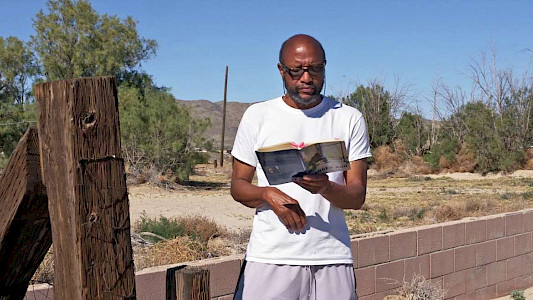
‘Barstow, California’ is the third film in the trilogy ‘The American West’ (the other two films are: ‘Nome Road System’ and ‘Milltown, Montana’) about places in the relatively sparsely populated areas of the American West. It is an artistic documentary recording life & landscape in the California southwestern desert. The trilogy’s style of ‘landscape listening’ (ambient audio only) will be altered somewhat with Barstow to add the voice of Stanley ‘Spoon’ Jackson (an internationally-acclaimed, Ba
Barstow, California
Germany 2017, 30 minby Rainer Komers
A whistling fence, tamed landscape: people, couples, animals, plants, machines, moving and waiting. Water, fire, earth, wind, the stars. A white dog bites hard straw, the white machine eats soft chalk. Pilots coming and going, a screaming roller coaster, fugue by Bach, fingers writing into the water: "We are alone." ‘Kursmeldungen – Position Reports’ is an essayistic journey through close-to-nature coastlines and places, which are shaped both by closeness to the earth and cosmopolitism – and the
Position Reports
Germany 2012, 5 minby Rainer Komers
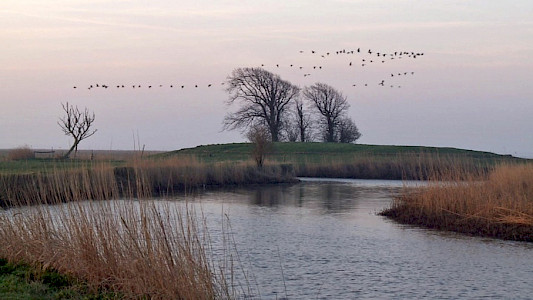
Trees seaming the river, mobile homes, an industrial zone surrounded by chemical plants and power stations; in their midst, a memorial for the dead soldiers of the World Wars. The film ends with Ulrike Almut Sandig’s poem [meine heimat] about foreignness, loss and destruction.
25572 BUETTEL
Germany 2012, 78 minby Kay Ilfrich, Fredo Wulf
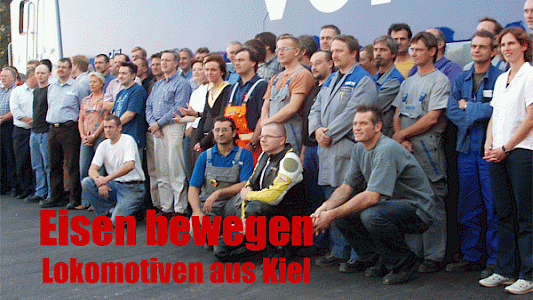
Nowhere in the world produce the same two factories, Vossloh and Voith, successfully modern diesel locomotives as in Kiel. Why is that has to do with political ideas, and people who put them into reality. As in the eighties in the metalworking industry thousands of jobs were destroyed, established made up of workers and engineers from the IG Metall in Kiel MaK Maschinenbau company the Working group Alternative production. Based on these initial political and environmental activists, the film tol
MOVING IRON
Germany 2010, 5 minby Rainer Komers
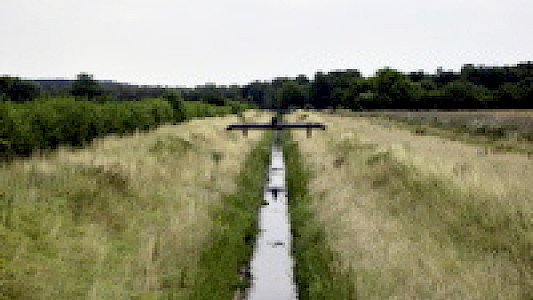
A former waste-water canal running through a former mining area is transformed into a natural river - a piece of 'naturalized' industrial history: "Who would've thought that we'd move so quickly to a postindustrial world dominated by virtual products and cyber-realities? A world with no use for the physical objects of the recent past, and no place for the makers and consumers of formerly quaint and useful materials. We now live in an age where we must sentimentalize our trash in order to save ou
SESEKE CLASSIC
Germany 2009, 30 minby Rainer Komers
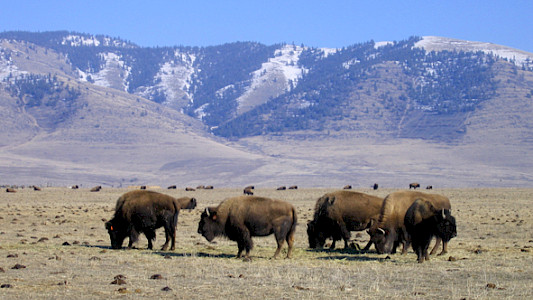
Meticulously composed images, impressive collages of sound, no dialogue: „Milltown, Montana“ is an elegiac excursion across a magnificent landscape deeply scarred by man. Applying the same majestic imagery as in his prize-winning films, „Kobe“ and „Nome Road System“, Rainer Komers documents what was once the largest mining region in the United States, now contaminated by toxic substances and heavy metals, and seemingly trapped in a post- industrial phase of standstill.
MILLTOWN, MONTANA
You can contribute updates for the current person (Rainer Komers).
Bitte aktivieren Sie Javascript, um auf unsere Website zugreifen zu können.