2022, 80 minby Heinz Emigholz
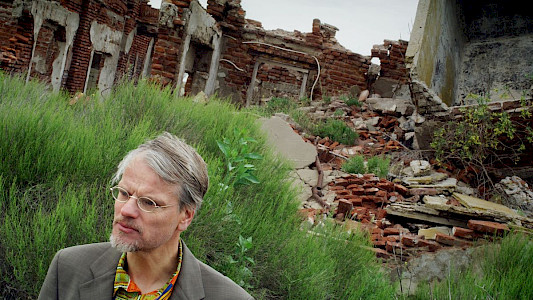
The quasi-fascist architecture of Francisco Salamone's slaughterhouses in the Argentine pampas, the utopian buildings by Freddy Mamani Sylvestre in El Alto, Bolivia, and the restorative "City Palace" in Berlin are the cornerstones of an analytical documentary film that explores the dual character of architectural modernism in the field of tension between avant-garde and political propaganda.The actor Stefan Kolosko acts as a diver in the sunken city of Epecuén, where he paraphrases a text by Jor
Slaughterhouses of Modernity
Germany 2021, 88 minby Christian Bäucker
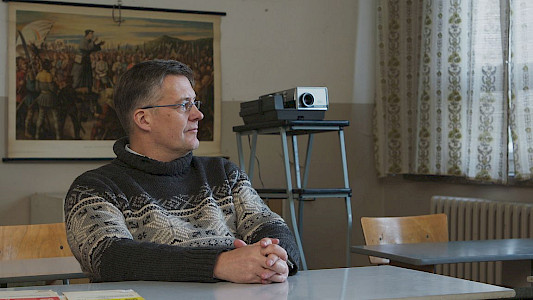
In his film HEIMATKUNDE, the director returns to the school building of his childhood in East Germany. For almost 25 years it lay empty, seemingly waiting to be revived. The remains of socialist education are pasted over, hidden, forgotten.In tentative interviews with contemporary witnesses we are gradually coming nearer to the systematic manipulation of the child’s mind. In this way, it becomes understandable how the dictatorship functioned and turned into the commonplace “that’s just the way i
The Lasting Formation
Germany 2014, 40 minby Georg Nonnenmacher
Hand-luggage is packed in a cloth shopping bag, one last cigarette before there is a knock at the door – inmate Rene is being transported. For a court hearing, he is traveling in a prison bus to another institution in another city. SPACEMEN accompanies him and shows the tedious procedure of the transport from his point of view – an exhausting route full of controls, constant stop-and-go at locked doors and gates, and endless waiting. When the bus is en route, the world passes by through the wind
SPACEMEN
You can contribute updates for the current person (Rainer Gerlach).
Bitte aktivieren Sie Javascript, um auf unsere Website zugreifen zu können.