Switzerland, Germany, Georgia 2021, 91 minby Salomé Jashi
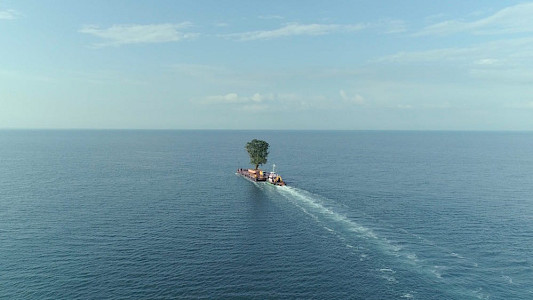
The opening shot of filmmaker Salomé Jashi’s striking environmental tale captures a tree as tall as a 15-story building floating on a barge across the vast Black Sea. Its destination lies within a garden countless miles away, privately owned by a wealthy and anonymous man whose passion resides in the removal, and subsequent replanting, of foreign trees into his own man-made Eden.With astonishing cinematic style,Taming the Garden tracks the surreal uprooting of ancient trees from their Georgian l
Taming the Garden
Japan, Germany 2021, 65 minby Arata Mori
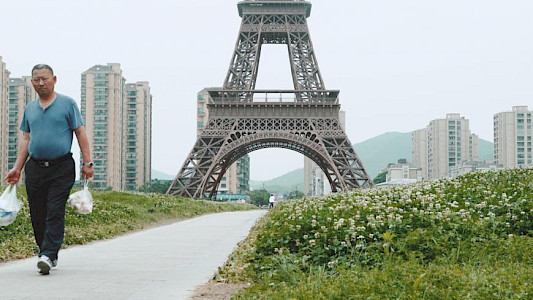
Emilione, a million lies – so people nicknamed Marco Polo. They doubted his astonishing journey to the east. “A Million” depicts an imaginary city on the real urban cities along the new silk road – revived by the Chinese initiative’s alternative globalization – through the eyes of a filmmaker from the east. The modern adaptation of Italo Calvino’s “Invisible Cities” confronts a fabricated, materialistic world in political transformation and wanders over the boundary between truth and fake.
A Million
Germany, Norway, Libanon 2018, 68 minby Jumana Manna
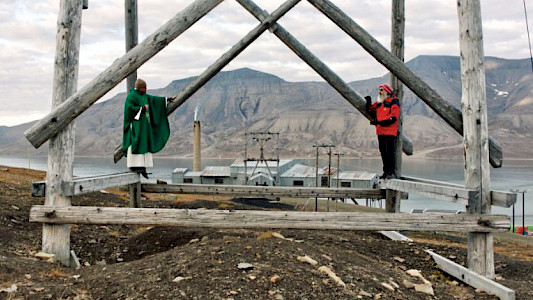
Deep in the earth beneath the Norwegian permafrost, seeds from all over the world are stored in the Global Seed Vault to provide a backup should disaster strike. For the first time ever, seeds held there from a major gene bank in Aleppo are now being replicated, after its holdings were left behind when the institution had to move to Lebanon due to the civil war. It is refugees from Syria who are carrying out this painstaking work in the fields of the Beqaa Valley. In the Levant, dry conditions a
Wild Relatives
You can contribute updates for the current person (Philippe Ciompi).
Bitte aktivieren Sie Javascript, um auf unsere Website zugreifen zu können.