Films by Peter Nestler

Director
INJUSTICE AND RESISTANCE

2022, 113 min
by Peter Nestler

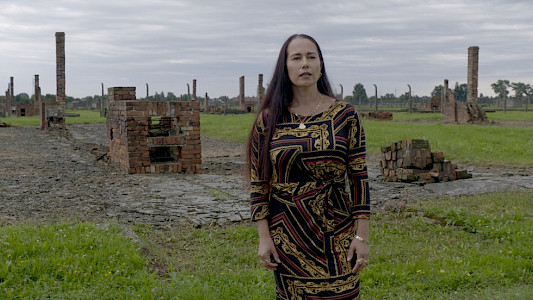
The film is about the German Sinti and Roma’s different forms of resistance spanning eight decades. It’s about revolt against injustice and about insistence on dignity and justice. A story of courage and resolve of individuals who desperately defended themselves. And the story of suffering of a minority caught between trauma and self-assertion: an ongoing unprecedented injustice throughout all of the post-war years to this very day. It is based around Romani Rose, his family and fellow campaigners. Thirteen close relatives of the Rose family were murdered in concentration camps. Romani Rose’s father Oskar went into hiding during the Nazi years and was wanted by the Gestapo. The film is about his courageous actions. And about his attempt in April 1943 to beg Munich’s Cardinal Faulhaber to protect the persecuted, and how he manged to free his brother from the concentration camp in Neckarelz. For Roma and Sinti who survived the genocide, discrimination, poverty and authorities’ chicanery were part of everyday life. The Porajmos, the genocide against this minority group, was only officially recognized in 1982. The film describes their long journey away from their lack of rights and discrimination and into a civil rights movement. Their untiring commitment is testimony to their moral courage and public spirit, their decisive advocacy of cooperation between various cultures and their ground-breaking vision of democracy. Is there anything more important in times of increasing marginalization and racist violence?

Injustice and Resistance

AN OPEN MIND

2022, 101 min
by Peter Nestler

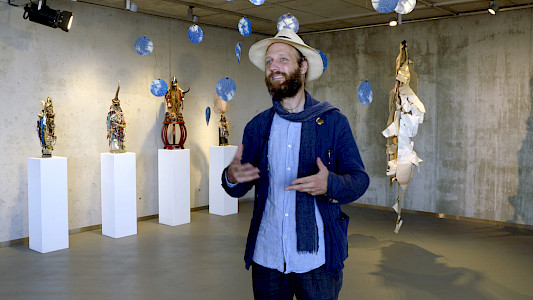
The Film presents artists of the Sinti and Roma who shape the trauma of persecution and very personal experiences in their works. They use a wide variety of forms of expression and means, but what they all have in common is an open view.  Peter Nestler succeeds in making this tangible by meeting them without cultural fixations and at eye level.Gitta Martl and her daughter Nicole Sevik read short texts in memory of the Sinti and Roma incarcerated in the Upper Austrian 'gypsy detention camp' in Weyer. All that remains of these people is a series of 32 colour slides. Dr Alois Staufer photographed them in the spring of 1941. Six months later, the detainees were deported to Poland, where they were executed. Author Ludwig Laher dedicated almost 20 years of painstaking research into meticulously reconstructing the victims’ and perpetrators’ lives. Ceija Stojka was an Austrian author, painter, dancer, activist and survivor of the Nazi concentration camps in Auschwitz, Ravensbrück and Bergen-Belsen. Her pictures are exhibited in museums and galleries all over the world and can be seen at this year’s documenta fifteen. Ceija Stojka created her own forms of expression, moulded memories and traumas into a picturesque oratory lest these peoples be forgotten. Movie-maker Karin Berger accompanied Ceija Stojka’s creations as a friend and mentor for two and a half decades. She commemorates this exceptional woman, also in her two documentaries “Ceija Stojka - Portrait of a Rom” (1999) und “The Green Green Grass Beneath” (2005).Young author and Roma activist Samuel Mago says, “For my generation, Ceija Stojka is a huge idol.” Lita Cabellut spent her childhood under dire conditions in Aragon, Spain. At the age of 12, she was adopted by an aristocratic Catalan family, moved to the Netherlands in 1980, studied at the Gerrit Rietveld Academy in Amsterdam and has since been living in The Hague. As a painter she uses a contemporary fresco technique, designed opera scenography and costumes, such as for “Karl V.” at the Bavarian State Opera. She talks about her work as an art director for Carmen Chaplin’s film about the presumably Roma background of her world-famous grandfather. In the last few years, some things have taken a turn for the better for artists from this minority group in terms of cultural self-assertion. For example, the “Kai Dikhas” gallery and foundation, headed by Moritz Pankok, has organized over a hundred exhibitions and runs a continuous forum.The Roma and Sinti Philharmonics gather musicians from all over Europe for concerts. These have included spectacular premieres, such as the “Requiem for Auschwitz” by Roger Moreno-Rathgeb. Conducted by Riccardo M Sahiti, the philharmonic orchestra took to the stage with performance artist Iva Bittová, cymbalist László Rácz and violin virtuoso Roby Lakatos at the Morgenland Festival in Osnabrück in autumn 2021. Jovan Nikolić tells poetic short stories about his childhood in a Yugoslav family of musicians. “Die Träne” (The Teardrop) is a tragicomic miniature about the memorial service for his deceased father, where they placed a saxophone to the dead man’s lips for the last time.The artists of this minority group avail themselves of various different forms and means of expression, but what they all have in common is an open mind.

An Open Mind