2024, 99 minby Enrique Sánchez Lansch
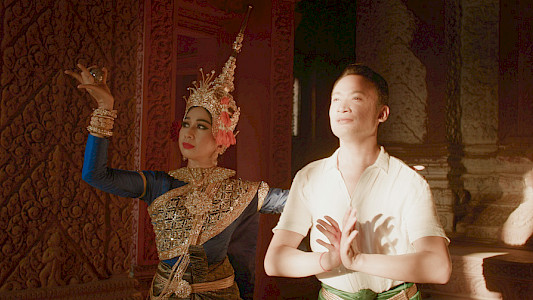
A star dancer at the Cambodian royal court lovingly raises her husband's little brother as her own son. Decades later, as a forced labourer under the Khmer Rouge, she discovers that her foster son is Pol Pot.Chea Samy was an outstanding soloist in the royal dance ensemble at the Cambodian Royal Palace in the 1930s. But she was also Pol Pot’s foster mother. After marrying Pol’s older brother, a low-level official at the royal court, she looked after the boy as if he were her own. They lost contac
Pol Pot Dancing
Germany 2022, 99 minby Tine Kugler, Günther Kurth
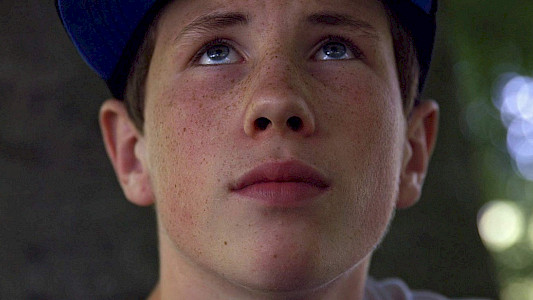
Boyhood in Berlin. KALLE KOSMONAUT accompanies Kalle, his family and their East Berlin neighborhood along the Avenue of the Cosmonauts over a shooting period of 10 years.16-year-old Kalle wanders through a wasteland in Berlin. He regrets a momentous act that will change his life significantly. „I really don’t know how it all started…“ We begin with Kalle at 10 years old. Alone at night in his ‘hood. His first love. His Jugendweihe (civic initiation ceremony). Dangerous dares on the city’s distri
Kalle Kosmonaut
Germany 2015, 93 minby Andrea Roggon
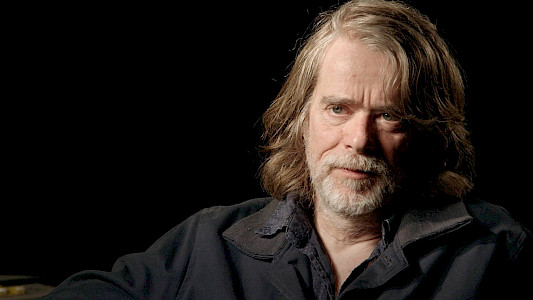
Helge Schneider is one of the most extraordinary German artists: Jazz musician, entertainer, film director, actor and clown. His exceptional talent is his improvisational skill. This is where he shows his bubbling creativity. “I make the everyday grey colorful,” is what he says about himself. In his world, the fantastic coexists with the everyday and it is difficult to define the boundaries between reality and fiction. Even in his communication with his audiences, this element of disguise is use
Mülheim Texas - Helge Schneider here and there
Germany, Switzerland 2015, 99 minby Miriam Jakobs, Gerhard Schick
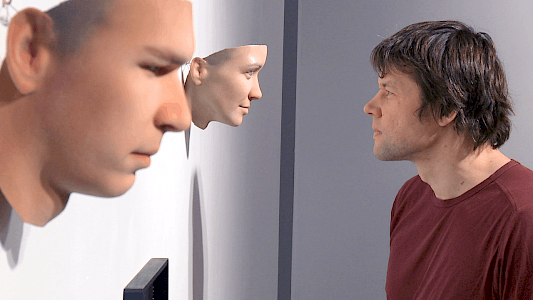
A sick doctor, a highly sensitive code and the solace of art: While our protagonist is going through the unemotional diagnostic algorithm of mainstream medicine in order to find the right medicine for his depression, he also seeks assurance and solace in the artistic perspective; hoping that at some point in time he will be able to make peace with his dark gene, which all but destroyed his life.The search for the origin of his depression confronts the protagonist with existential questions and
The Dark Gene
Germany 2012, 100 minby Jan Schmidt-Garré
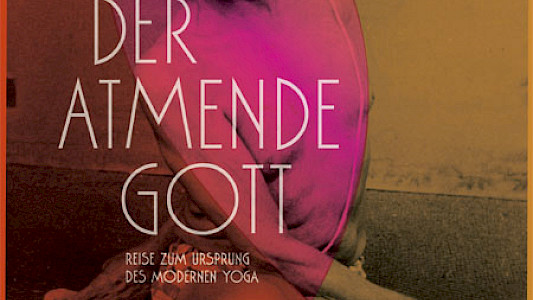
Modern yoga, that is, the form practised daily by tens of millions of people around the world, goes back directly to the god Shiva according to Indian tradition. At the same time, however, modern yoga originated in the early twentieth century, a creation of Indian savant T. Krishnamacharya (1888-1989). That story is far less known and what this film is all about. Krishnamacharya’s life and teachings are seen through the eyes of the director Jan Schmidt-Garre on his search for authentic yoga. His
BREATH OF THE GODS - A JOURNEY TO THE ORIGINS OF MODERN YOGA
Germany 2011, 79 minby Branwen Okpako
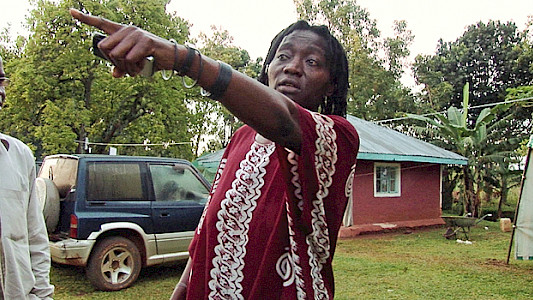
Branwen Okpako’s „The Education of Auma Obama“ is a captivating and intimate portrait of the U.S. president’s older half-sister, who embodies a post-colonial, feminist identity.An academic overachiever, she studied linguistics and contemporary dance in Heidelberg, Germany, before enrolling in film school in Berlin, where she met Nigerian-born director Okpako in the nineties. After living in the United Kingdom for a short period, Auma Obama eventually moved back to Kenya to mentor a young generat
THE EDUCATION OF AUMA OBAMA
You can contribute updates for the current person (Patrick Veigel).
Bitte aktivieren Sie Javascript, um auf unsere Website zugreifen zu können.