Germany 2024, 115 minby Andres Veiel
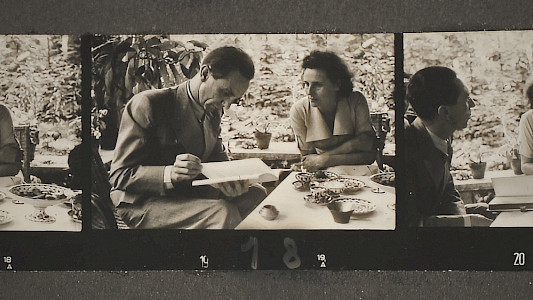
A captivating insight into the private estate of Leni Riefenstahl, who became world-famous with her Nazi propaganda film TRIUMPH OF THE WILL but kept denying any closer ties to the regime.Leni Riefenstahl is considered one of the most controversial women of the 20th century as an artist and a Nazi propagandist. Her films TRIUMPH OF THE WILL and OLYMPIA stand for perfectly staged body worship and the celebration of the superior and victorious. At the same time, these images project contempt for the imperfect and weak. Riefenstahl’s aesthetics are more present than ever today - but is that also true for their implied message? The film examines this question using documents from Riefenstahl's estate, including private films, photos, recordings and letters. It uncovers fragments of her biography and places them in an extended historical context. How could Riefenstahl become the Reich's preeminent filmmaker and keep denying any closer ties to Hitler and Goebbels? During her long life after the fall of Nazism, she remained unapologetic, managing to control and shape her legacy. In personal documents, she mourns her "murdered ideals". Riefenstahl represents many postwar Germans who, in letters and recorded telephone calls from her estate, dream of an organizing hand that will finally clean up the "shit-hole state". Then, her work would also experience a renaissance, in a generation or two this time could come - what if they are right?
RIEFENSTAHL
Germany 2018, 111 minby Gerd Kroske
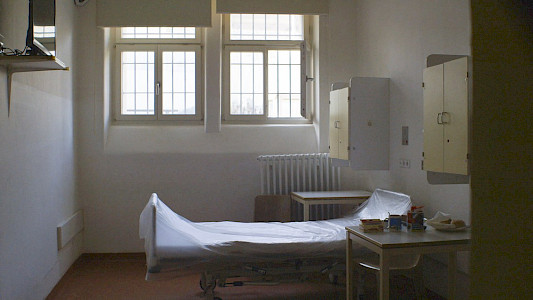
In 1970, Dr. Wolfgang Huber and a group of patients founded the anti-psychiatric (Sozialistische PatientenKollektiv - SPK) 'Socialist Patient’s Collective' in Heidelberg. Controversial therapy methods, political demands, and a massive interest in the movement from patients deeply distrustful of conventional “custodial psychiatry,” led to run-ins with the University of Heidelberg and local authorities. The conflict quickly escalated and resulted in the radicalization of the SPK. Their experiment in group therapy ultimately ended in arrests, prison, and the revocation of Huber’s license to practice medicine.From a historical perspective, the SPK court cases seem to anticipate the Stammheim trials, with the exclusion of defense attorneys, the total non-compliance of the defendants, and harsh penalties for both Huber and his wife. The severity of the sentences handed down appears hardly proportional to the actual deeds of the accused. The allegation of having supported the RAF, and thus of being complicit in their terrorism, still clings to the SPK and overlies what the movement was originally about: the rights of psychiatric patients, resistance, and self-empowerment—issues that are still relevant today.SPK COMPLEX focuses on the untold story of events before the 'Deutscher Herbst' (German Autumn) and their consequences up to the present day. A story of insanity, public perception, and (un)avoidable violence. (Berlinale Catalogue)
SPK Complex
Germany 2017, 107 minby Andres Veiel
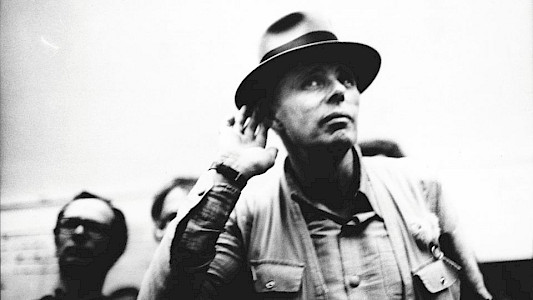
Joseph Beuys, the man with the hat, the felt and the ‘fat corner’. Thirty years after his death he feels like a visionary who was, and still is, ahead of his time. He was the first German artist to be given a solo exhibition at the Guggenheim Museum in New York whilst at home in Germany his work was often still derided as the ‘most expensive trash of all time’. Once asked if he was indifferent to such comments he retorted: ‘Yes. I want to expand people’s perceptions.’Andres Veiel lets the artist speak for himself. From previously unpublished audio and video footage Veiel creates an associative, porous portrait which, like the artist himself, opens up spaces for ideas rather than proclaiming statements. Beuys boxes, chats, lectures, explains art to a dead hare and asks: ‘Do you want to instigate a revolution without laughter?’ But we also experience the man, the teacher and the Green Party candidate. Once, shortly before his death, he consents to being photographed without his hat. Veiel’s film makes visible the contradictions and tensions which gave rise to Beuys’ Gesamtkunstwerk. Beuys’ expanded concept of art feeds directly into today’s social, political and moral debates. (68th BERLINALE)
BEUYS
Germany 2012, 28 minby Daniel Abma
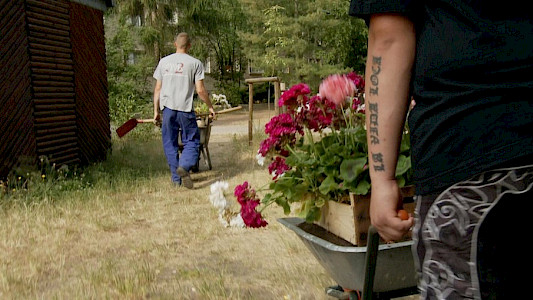
A portrait of four young unemployed people, who are part of a work-orientation project in Brandenburg. They do want to work, but they just can’t find a job. The film shows stories and faces of a group of people who don´t occur in the official unemployment statistics.
TRAJECTORIES
Bitte aktivieren Sie Javascript, um auf unsere Website zugreifen zu können.