Germany 2024, 115 minby Andres Veiel
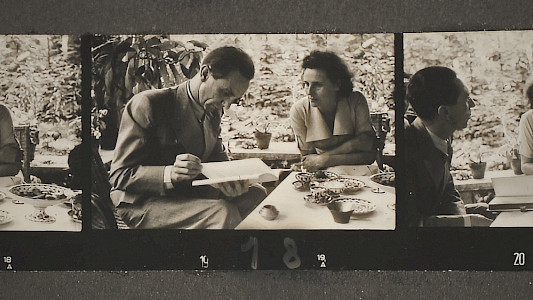
A captivating insight into the private estate of Leni Riefenstahl, who became world-famous with her Nazi propaganda film TRIUMPH OF THE WILL but kept denying any closer ties to the regime.Leni Riefenstahl is considered one of the most controversial women of the 20th century as an artist and a Nazi propagandist. Her films TRIUMPH OF THE WILL and OLYMPIA stand for perfectly staged body worship and the celebration of the superior and victorious. At the same time, these images project contempt for the imperfect and weak. Riefenstahl’s aesthetics are more present than ever today - but is that also true for their implied message? The film examines this question using documents from Riefenstahl's estate, including private films, photos, recordings and letters. It uncovers fragments of her biography and places them in an extended historical context. How could Riefenstahl become the Reich's preeminent filmmaker and keep denying any closer ties to Hitler and Goebbels? During her long life after the fall of Nazism, she remained unapologetic, managing to control and shape her legacy. In personal documents, she mourns her "murdered ideals". Riefenstahl represents many postwar Germans who, in letters and recorded telephone calls from her estate, dream of an organizing hand that will finally clean up the "shit-hole state". Then, her work would also experience a renaissance, in a generation or two this time could come - what if they are right?
RIEFENSTAHL
Germany 2021, 96 minby Corinna Belz, Enrique Sánchez Lansch
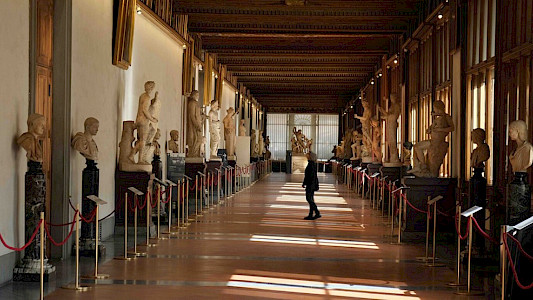
Hidden doors open in this film about the iconic Uffizi Gallery, home to the world's most prominent collection of Renaissance art. Guided by passion, German Director Eike Schmidt and his Italian team master the sensitive balancing act between conservation and renewal. We dive into famous masterpieces that captivate visitors of all ages and nationalities.
Inside the Uffizi
Germany 2017, 107 minby Andres Veiel
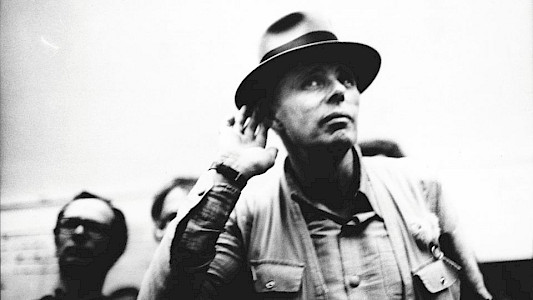
Joseph Beuys, the man with the hat, the felt and the ‘fat corner’. Thirty years after his death he feels like a visionary who was, and still is, ahead of his time. He was the first German artist to be given a solo exhibition at the Guggenheim Museum in New York whilst at home in Germany his work was often still derided as the ‘most expensive trash of all time’. Once asked if he was indifferent to such comments he retorted: ‘Yes. I want to expand people’s perceptions.’Andres Veiel lets the artist speak for himself. From previously unpublished audio and video footage Veiel creates an associative, porous portrait which, like the artist himself, opens up spaces for ideas rather than proclaiming statements. Beuys boxes, chats, lectures, explains art to a dead hare and asks: ‘Do you want to instigate a revolution without laughter?’ But we also experience the man, the teacher and the Green Party candidate. Once, shortly before his death, he consents to being photographed without his hat. Veiel’s film makes visible the contradictions and tensions which gave rise to Beuys’ Gesamtkunstwerk. Beuys’ expanded concept of art feeds directly into today’s social, political and moral debates. (68th BERLINALE)
BEUYS
2014, 94 minby Regina Schilling
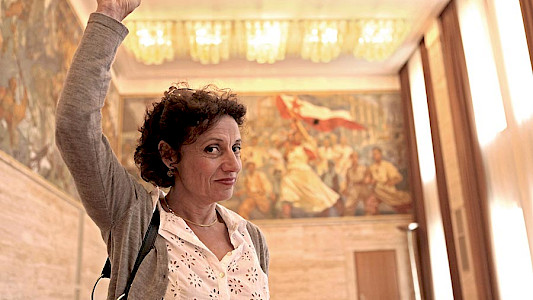
Portrait of actress, author and director Adriana Altaras. Adriana Altaras is a director, actress and writer. And she is from a country which no longer exists: Yugoslavia. The daughter of Jewish partisans who fought for Tito and later started a new life in post-war Germany, in this lovely film she tells the story of her ’high maintenance family’. Adriana’s domestic situation appears unusual at first glance, but can be seen as typical of the generation born after the War. Despite a high standard of living, the wounds from her parents’ past can be felt, even to this day, and the search for her own roots are her constant companion.
TITO’S GLASSES
Germany 2007, 105 minby Harald Bergmann
The German poet Rolf Dieter Brinkmann died at the age of 35 in an accident in London in April 1975. He left behind a voluminous, unfinished work-in-progress that included many hours of documentary film material, audio recordings and thousands of photographs. The film, Brinkmanns Wrath, incorporates portions of this existing material with new scenes shot in the city of Cologne, London and Cambridge. Considered to be in the seventies one of the most important poets of post-war Germany, Brinkmann’s work is definitely in the marginal outsider vein, approximating a sort of hybrid of Frank O’Hara, William Burroughs, and W.C. Williams, all of whom were important influences on Brinkmann’s work. His confrontational nature and volatile personality were feared at readings, and together with his huge creative output and his early death, earned him a reputation as the "James Dean of poetry,” a true enfant terrible of contemporary letters.
Brinkmanns Wrath
Germany 2004, 108 minby Andres Veiel
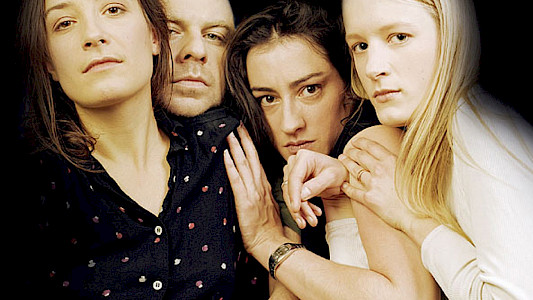
Four acting students are the focus of Andres Veiel’s long-term observational documentary. We meet Stephanie, Karina, Constanza and Prodromos while they are preparing for their acting school auditions. The selection procedure takes months; it is a trying, nerve-racking time spent vacillating between hope and anxiety. All four make it into the school, but their initial euphoria about commencing their studies – including group exercises, role play and obligatory fencing lessons – is soon followed by deflation in the face of merciless criticism of even the slightest shortcoming by their tutors. In this way, their passion for their chosen vocation is constantly put the test.The four students couldn’t be more different: Karina appears to have very few problems; Stephanie, however, has to endure several auditions. Constanze immerses herself in her roles, whilst Prodromos always seems to be at odds with himself, his roles and his dreams. Andres Veiel: “We observe the struggles of the protagonists; how they try not to get stressed out or lose sight of themselves by worrying about the discrepancy between their expectations and their abilities. We accompany them on their search for identity and an image, but we also follow their progress towards maturity as actors and as individuals. Then, at the end of their studies, comes the real test: trying to gain a foothold in the profession. All of a sudden, they find themselves faced with a new set of questions. What is the nature of success? How high is the price for achievement? And what has become of their original dreams and aims, seven years on?”
Die Spielwütigen - Addicted To Acting
Bitte aktivieren Sie Javascript, um auf unsere Website zugreifen zu können.