Films by Marion Schmidt

Director, Screenplay
YES WE CAN – CONTEMPORARY BLACK ART

Germany 2023, 52 min
by Marion Schmidt

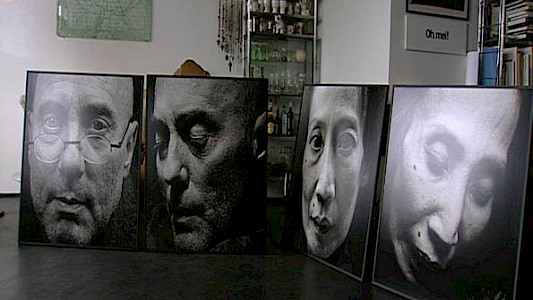
Throughout the western world, interest in the work of Black artists has increased significantly. How do they understand their work? Will museums be receptive to their art? Will they radically change our view of art history?With their portraits in the National Gallery, Michelle and Barack Obama have shaken up the world of art. Not only are they the first Black presidential couple to be represented at the gallery, but for the first time ever, a Black male and a Black female artist were commissioned to do the paintings: Kehinde Wiley and Amy Sherald. The Obamas have paved the way for a new generation of artists who have made portraiture their own and are now being championed. Throughout the western world, interest in the work of Black artists has increased significantly. In what way can representations of Black people in art contribute towards their emancipation and desire for equality? Jerrell Gibbs from Baltimore paints portraits that challenge typical clichés about Black men. Shannon T. Lewis, a Canadian of Caribbean descent, wants to make the representation of Black people ubiquitous and create beauty out of something historically abhorrent. The Kenyan-British painter Michael Armitage tells emotionally charged stories from East Africa, allowing his in-depth knowledge of European art history to shine through. How do these artists understand their work? Will museums, portrait galleries and other institutions be receptive to their art? Will they radically change our view of art history?

YES WE CAN – Contemporary Black Art

UNESCO WORLD HERITAGE – TREASURES FOR ETERNITY

Germany 2022, 208 min
by Marion Schmidt, Sven Rech, Grit Lederer, Inga Wolfram

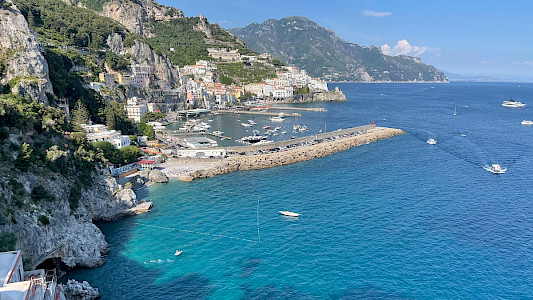
Mankind’s greatest buildings, cultural landscapes and areas of natural beauty must be preserved for the future. On the 50th anniversary of the UNESCO World Heritage Convention, we visit four World Heritage Sites in Europe.In 2022, UNESCO celebrates the 50th anniversary of its World Heritage Convention – the idea of a global heritage that belongs to all peoples and must therefore be protected by the world community. Its mission is to preserve the world’s most beautiful and valuable buildings, cultural landscapes, monuments and areas of outstanding natural beauty for generations to come. This agreement has been ratified by 197 states. The international World Heritage Committee is responsible for deciding what is of outstanding value to humanity. To be included on the World Heritage List, a site must be of exceptional universal significance and of irreplaceable value. Starting out as a short list of twelve 'treasures' from seven countries, it now includes over one thousand cultural and natural sites worldwide that are considered worthy of protection. We introduce four very different World Heritage Sites in Europe: Arles, the Amalfi Coast, Tallinn and Aachen Cathedral. Sensual, visually powerful and told from today's perspective, each part in the series illustrates just how decisively these cultural assets still shape our cultural memory and determine our perspectives today.

UNESCO World Heritage - Treasures for Eternity

So schläft die Welt - Deutschland

2016, 130 min
by Sibylle Smolka, Marion Schmidt, Gordian Arneth

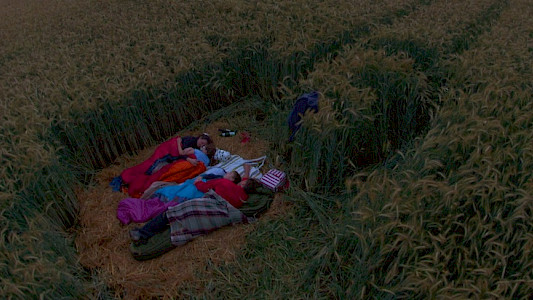
Each person spends about a third of his or her life asleep. Sleeping habits, however, differ, depending on age, life situation or nationality. Together with sleep expert Dr. Michael Feld, we examine how different cultures approach sleep and sleep disorders.GERMANYGermans are famous for their discipline and efficiency. But these virtues require concessions in regard to sleep. Germans get up especially early; in fact they are the earliest risers in all of Europe. At the same time, people tend to go to bed at later times. Permanent artificial light and smart phones prevent us from getting the rest we need. Night has become day. But what happens when we ignore the day-night rhythm nature demands and what repercussions does this have for our health?We visit Germany’s first “Nap Café”, where stressed urbanites recuperate during their lunch breaks, and test whether a night in a cornfield is really as romantic as most Germans think it is.JAPANThe Japanese are less demanding when it comes to selecting their sleeping spots. They sleep less during the night than Europeans do as well. But they also have a different attitude when it comes to sleep. In Tokyo, lack of sleep and chronic fatigue is part of every day life. However, the Japanese tend to take naps more often during the day: in the subway, in the office, in school.How tired are Japanese office workers, students and young parents? What do they need in order to sleep well? We visit one of the best futon masters in Japan, accompany young Tokyoites to a capsule hotel and let people show us where one can sleep for less than 10 Euro in the middle of Tokyo.SPAINAn important reason for the widespread sleep deficiency in Spain is the typical Spanish life style with its late lavish meals, an extensive nightlife and the habit of watching television late into the night. Eating, going out and sleeping at different times than most others do is part of Spanish identity.The Siesta, however, the traditional mid-day nap, is on the retreat and less and less Spaniards are able to enjoy it. Other factors, which deprive Spaniards of sleep, are economic worries, a repercussion of the recent economic crisis, or environmental factors like noise pollution. Spain is one of the loudest countries in the world.On our search for the causes of Spanish sleep deficiency we jump into the pulsating Spanish nightlife, visit a family in rural Chinchon, meet an office worker in Madrid for lunch and accompany an actress with a sleep disorder through the night.USANew York –the city that never sleeps.Indeed, New Yorkers don’t get a lot of sleep. However, this is not so much due to the extensive nightlife but rather due to the bright lights illuminating streets and billboards, which then find their way into the city’s bedrooms and disturb people’s sleep. And yet every other person in NYC is already in bed by 11pm. Americans work a lot. A 50-hour workweek is the norm. And many New Yorkers put a lot of emphasis on fitness and sports, often getting up for exercise as early as 5 am. The young generation attends morning raves and dances with soft drinks in hand into the morning hours, only to proceed to university or the office, wide-awake. But the hectic and stressful work life in the United States comes at a price: The U.S. has one of the highest rates of sleeping pill consumption in the world. Many get sick due to a permanently disturbed day-night rhythm.FRANCEAlso in France, the average amount of sleep a person gets has decreased over the past years. The French sleep only about 7 hours a night during workdays. Only during the weekends they get to enjoy a little more than 8 hours. Especially French youth appear to get too little sleep. Almost a third of 15 – 19 year olds are believed to be chronically fatigued - an alarming trend that doesn’t fit at all to France’s relaxed Savoir-Vivre reputation. After all, Paris is known worldwide as the City of Love. We check into a couples hotel and visit the former bedroom of Christian Dior, together with a wedding planer. In addition, we will examine the connection between sleep and alcohol, sleep and being overweight and children’s sleep.

THIS IS HOW THE WORLD SLEEPS - Germany, Japan, USA, Spain, France