Germany 2024, 93 minby Marc Wiese, Juan Camilo Cruz
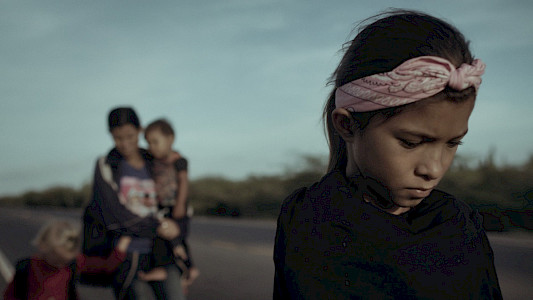
Corruption and mismanagement has turned Venezuela into a failed state. Over six million people have fled in recent years. Around one million children were left behind by their parents. This remarkable film follows two single mothers and their children over several months as they do what it takes to survive.In the barrio Santa Rosa de Agua, health care has collapsed and children are dying from hunger. Carolina has set up a foundation to help feed them. But the barrio is so violent, she’s had to send her own daughter, Victoria, to a children’s home. The home is an oasis in the midst of violence and deprivation but many of the children, who haven’t seen their parents for years, are traumatised. They struggle with feelings of rejection.Most people in the barrio survive by violence, prostitution, begging. “I’ve had to do lots of things for my kids,” confides Kiara. “Selling drugs, stealing, prostituting myself. Everything a woman can do for her children”. Her eldest son, Yorbenis, 14, has already joined a gang and is on the verge of his first kill. Desperate, Kiara decides to leave the country for Colombia. She takes her small children with her while Yorbenis’ remains behind. Now she’s terri!ed that he will be murdered in her absence. She knows he is being hunted by rival gangs, as well as the police….
Venezuela: Country of Lost Children
Germany 2022, 93 minby Marc Wiese
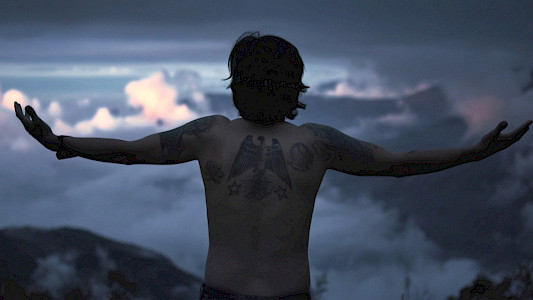
THIS STOLEN COUNTRY OF MINE takes us to Latin America, to a country with immense natural resources, pristine nature and a corrupt leadership: Ecuador.The film follows Paul Jarrin, leader of the indigenous resistance against their homeland's exploitation. Meanwhile, China uses the Ecuadorian government to turn the country into one of its new colonies. When journalist Fernando Villavicencio exposes these plots and gets access to the contracts between China and Ecuador, the government wants him silenced too. Both men are fighting for freedom in this battle against a superpower."...Alva Noto's music subtly lends intense power to the struggle of a mountain village, delicately and precisely accentuating the film's disturbing subject matter – and often bringing us closer than we'd like." [Jury German Documentary Film Music Award]
This Stolen Country of Mine
2020, 93 minby Marc Wiese
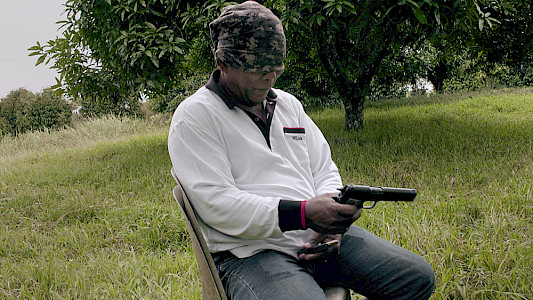
In many countries of the world democracies are eroding from within. In some countries they are dying. It is a death by a thousand cuts. In the Philippines, journalist Maria Ressa and her team from the news platform Rappler fight against a violent president who executes tens of thousands of people with death squads and turns the country into a dictatorship. The documentary gives a rare behind the scenes access to Maria and her staff and accompanies them over a year during threats to their work and life. Victims of the war, critical politicians in hiding and members of the death squads give insight into the real 'war on drugs' of president Duterte.
We Hold the Line
Germany 2017, 90 minby Marc Wiese
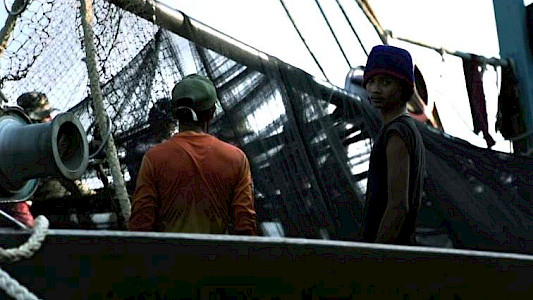
There are over 45 million people living in slavery around the world. More than ever before in human history. This film traces their stories.Modern slavery has many faces, more than 45 million of them. Work slaves, sex slaves, domestic slaves and child soldiers. This film traces their stories. And seeks out the perpetrators: Unscrupulous profiteers, for whom people are mere commodities.In Thailand, slaves aged up to 15 years old are forced to work on fishing trawlers without breaks. It is a brutal trade in human beings perpetrated on the high seas. Very few manage to escape. As a result of his research for this documentary, director Marc Wiese succeeded in bringing about the conviction of one of the main offenders in Bangkok. Also, in a world first, a high-ranking member of the Lord Resistance Army (LRA) speaks on camera. The LRA has been conducting a gruesome guerrilla war for the past thirty years in the tri-border region of Uganda, DR Congo and Sudan and has, according to UN estimates, kidnapped up to 100,000 children and enslaved them as child soldiers.And yet there are the heroes who are battling modern slavery. Australian billionaire, Andrew Forrest is investing 300 million dollars in an attempt to curb slavery in India. In Mexico City, author Lydia Cacho encounters a small girl, who escaped from a child sex slave ring. Cacho takes her in and ultimately helps free 200 children.
SLAVES
Germany 2013, 52 minby Marc Wiese
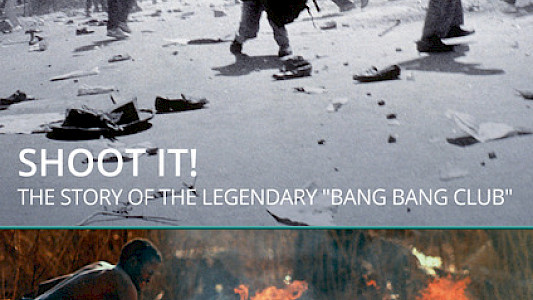
The Bang Bang Club were four fearless young photographers who set out to expose the reality of Apartheid in South Africa – a battle that changed a nation but wound up almost destroying them. This is the story of an unheard-of success and of a tragedy. It is also the story of a great friendship in the fight for freedom in South Africa. In their early twenties, Ken Oosterbroek, Joao Silva, Kevin Carter and Greg Marinovich went to the black townships to record the violence there, something no other white photographer had ever dared to do. Their images went round the world and appeared on the front pages of the New York Times, the Washington Post and Time Magazine. “Their photographs certainly accelerated the changes in this country, the end of apartheid. The images showed the whole world what was happening here and increased pressure on the regime”, recounts Peter Sullivan, then editor in chief of The Star in Johannesburg. “I told them every day: No picture is important enough or worth getting shot for. But they would laugh at me. I couldn't stop them. Every day they lived in danger. They were like wild horses“, says Sullivan. The four photographers were nicknamed Bang Bang Club by a magazine and became a legend. In 1991 Greg Marinovich won the Pulitzer Prize, the Oscar of photography, for his series of photos of a man getting burned. In 1994 Kevin Carter won the same prize for his controversial picture of a starving child and a vulture, which he shot during a journey to Sudan. Joao Silva stated “It was the photograph of Kevin’s lifetime, a photographer's dream. Yet, at the same time it destroyed him.” In the end the friends paid a high price; only two of them survived. This is the story of the Bang Bang Club. “These men were more than eyewitnesses to apartheid, but also adrenaline junkies who put themselves in harm's way; while bullets flew around them, they shot pictures that exploded like nuclear warheads across the world press.” (Variety)
SHOOT IT! – The Story of the legendary 'Bang Bang Club'
Germany 2012, 111 minby Marc Wiese
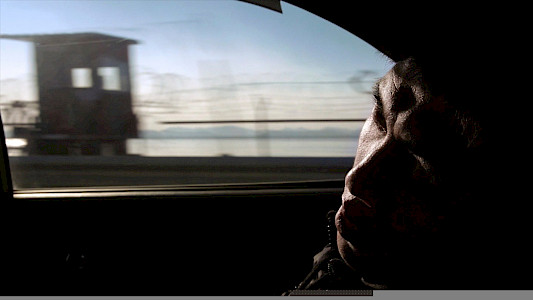
Shin Dong-Hyuk was born in one of the toughest prison camps of North Korea in 1983 and grew up there. All he knew was the hell of the camp. He only learned of the world on the other side of the barbed wire when a fellow prisoner told him about his life before detention. Shin decided to escape - but it wasn’t freedom he wanted, because he didn’t even know what that was. He wanted to eat his fill just once, even at the risk of being shot afterwards. At the age of 22, Shin successfully escaped. Today he lives alone in a small flat in South Korea, where Shin recounts his life in the penal colony in very intense interviews, his traumatisation obvious. But the director goes one step further by not limiting himself to the victim’s point of view. He also brings two perpetrators in front of his camera, people who tormented, tortured and killed. To illustrate life in the camp, he uses delicately drawn, restrained animations and original material. The quiet flow of the narrative and the unobtrusive but atmospheric soundtrack allow the protagonists and their stories the space they need. Gradually the inconceivable is taking shape, for even today 200,000 people in North Korea are living in internment camps. (Antje Stamer / DOKLeipzig)
CAMP 14
Germany 2009, 92 minby Marc Wiese
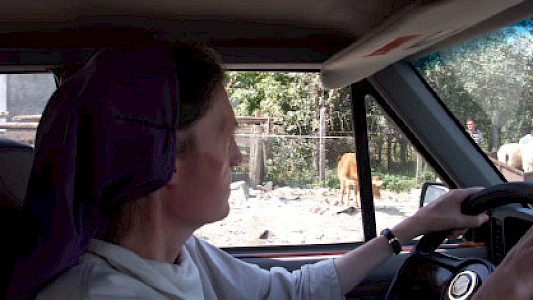
In northern Albania, people's lives are defined by the vendetta. Fearful of the avengers, thousands of people dare not leave their homes. Death awaits them the moment they cross the threshold of their door. A German nun is the only person resisting the bloodthirsty ritual of honor killings. Christian knows every crack and every bump on the wall in front of him. For twelve years, he has not left this room because his father murdered someone. His last hope is the German nun, Sister Christina Färber. She is a mediator and is trying to achieve the near impossible. She is hoping to get the two families, sworn enemies, to abandon their vendetta and seek reconciliation. Only a few times has she ever been successful. This is a film about families immersed in the culture of the vendetta, living – and dying – by the laws of honor. Only Sister Christina is struggling to overcome this violent ritual and the KANUN.
KANUN - THE LAW OF HONOUR
Bitte aktivieren Sie Javascript, um auf unsere Website zugreifen zu können.