Germany 2022, 106 minby Luzia Schmid
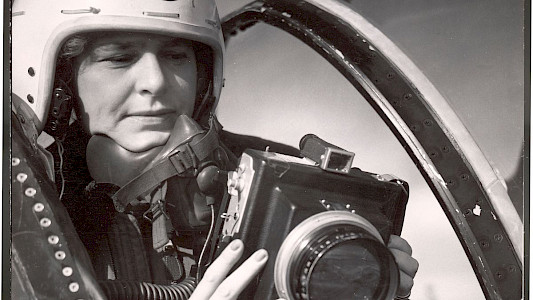
At the end of World War II, for the first time in history, women journalists are allowed to report directly from the front. Their accounts show a female subtext which forever changes our perception of war.When towards the end of 1943 the British government accredits almost 500 reporters and photographers to cover the Normandy invasion, there is not a single woman among them. The Americans, however, are more progressive. Convinced of the influence of their leading magazines, they give female journalists press credentials for the first time in history. On their way along and through the frontlines of WWII, war reporters Martha Gellhorn, Margret Bourke-White and Lee Miller repeatedly meet in press offices and bombed-out cities like Cologne, Leipzig or Munich. They witness the liberation of the Ravensbrück, Buchenwald and Dachau concentration camps. Committed to the cause for which their country has entered the war, they shape the still young genre of photojournalism with personal reports and photographs. Their style added a personal touch to war reporting. It is through their eyes that we see defeated and liberated Germany. For the first time in history war reporting has a "female subtext" which forever changes our perception of war as the "father of all things". Trained To See - Three Women and the War is the first documentary about this phenomenon: war from a new perspective. [NEW DOCS]
Trained to See – Three Women and the War
Switzerland, Germany 2020, 104 minby Luzia Schmid
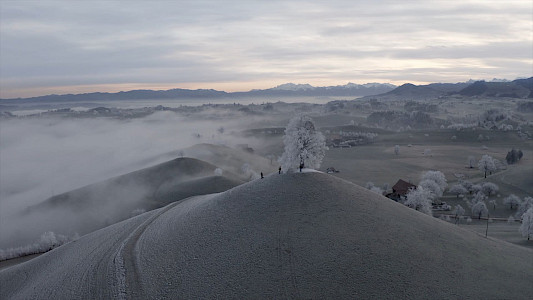
Prosperity on the one side, misery on the other: just how directly the two can be connected comes to light in Luzia Schmid’s film about the meteoric rise of her hometown of Zug upon becoming a tax haven.Swiss filmmaker Luzia Schmid traces the rise of her hometown of Zug and its townspeople, who have succeeded in becoming very rich by converting their town into one of the world’s leading tax havens. Even her immediate family is implicated in Zug’s politics and economy. And yet a tax haven is also part of the wider economy and thus we also learn about international rivalries in the tax game: the invention of the first shell company, the carefully guarded banking secrecy and the development of offshore tax shelters. “Race to the bottom” is a phrase often used to describe this destructive momentum, which, with tax scandals involving companies like Apple, Amazon and Starbucks, reached its low point in the financial crisis of 2008. In Zug, success came with its fair share of problems, too: shady commercial lawyers and commodities dealers settled down here, plundering Third World countries from their safe base in Switzerland. The town came to symbolise the injustices of this world. Luzia Schmid seeks out answers about morals and motivation and charts the town’s position in the international tax game. A business film with a personal take on the rise of a Swiss tax haven evolves into a radical and subtle reflection on double standards and collective repression.
The Branch I Am Sitting On - A Tax Haven in Switzerland
Bitte aktivieren Sie Javascript, um auf unsere Website zugreifen zu können.