2023, 94 minby Petra Mäussnest
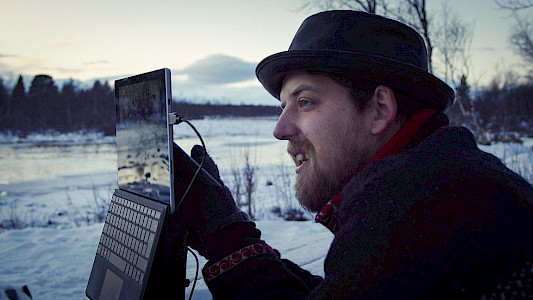
Jonny, a young teacher from Berlin cannot do his job during the coronavirus pandemic because he suffers from a chronic lung disease. He has to isolate himself and carries on teaching his class online from Sweden with the help of his brother. When the management team of the Waldorf school does not want to support this arrangement, he begins a passionate struggle against exclusion. [38 DOK.fest München, Ina Borrmann]
JONNY ISLAND
Germany 2021, 89 minby Antje Boehmert, Dominik Wessely
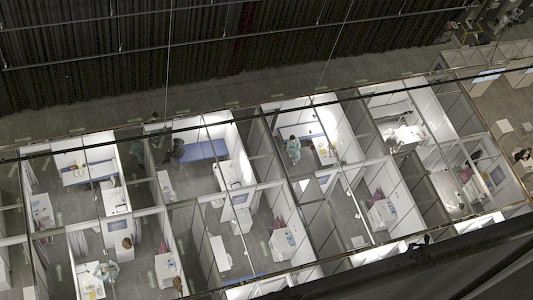
The vaccination campaign against Covid-19 represents a challenge of unprecedented proportions for the whole of society and, at the same time, our only way out of the pandemic. Sooner or later, the virus will reach everyone who has not been immunized by vaccination, according to the assessment of leading experts. Over a period of nine months, the documentary film Germany's Race to Vaccinate tells the story of this vaccination campaign: from the initial debate surrounding which population groups should be vaccinated first, up until the vaccination of the general population in Germany after the end of prioritization in June 2021.Beyond daily news snippets, Grimme Award winners Dominik Wessely and Antje Boehmert chronicle the vaccination campaign's central processes and settings in close and vivid everyday observations, portraying men and women who – in very different ways – drive forward the vaccination campaign every day. They are all frontline workers on our journey out of the pandemic.The filmmakers accompany, among others, the staff of the vaccination centres in Duisburg and Stendal and a family doctor in Rhineland-Palatinate. They take an exclusive look at the work of Germany's Standing Commission on Vaccination (STIKO) and consult scientists involved in the struggle to increase vaccination acceptance: Prof. Dr. Christian Drosten and Prof. Dr. Cornelia Betsch. Through the life and work of a photographer in Pforzheim, a crematorium worker in Plauen and a paramedic from the Lower Rhine, the hardships of lockdown and the ethical questions surrounding vaccination are made visible.The film offers a far-reaching look behind the scenes at those tackling the mammoth task of the nationwide vaccination campaign in Germany. In doing so, Germany's Race to Vaccinate presents a documentary panorama of our world in a state of emergency, something often articulated merely in the form of news headlines or statistics.
Germany's Race to Vaccinate
Germany, Spain 2020, 81 minby Dominik Wessely
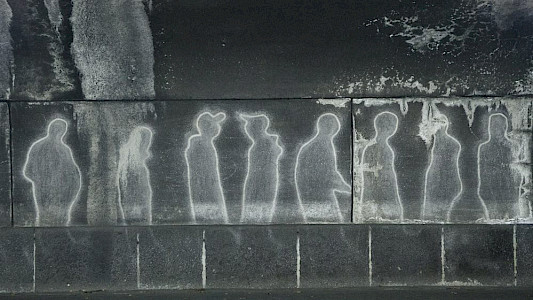
What began 1989 as a tiny street parade in Berlin has long since grown into a million-strong spectacle garnering international attention. In 2010, the “Love Parade” left Berlin for a tour of the Ruhr valley, German’s former industrial stronghold, a region weak in infrastructure and youth appeal. Hundreds of thousands of electronic music lovers took pilgrimage to Duisburg to celebrate, but the day tragically ended in a fatal stampede. What went wrong?The location of the parade was a former freight yard and the only entrance and exit to the venue was a narrow ramp. There, the crowd squeezed. 21 attendees died and 652 more were injured and traumatized. The Trial reveals the corporate greed and public negligence at the expense of young people from around the world gathering for a music festival. With unprecedented access, the film unravels the worst disaster in counter-culture history.• “Outstanding” — Frankfurter Allgemeine Zeitung• “Important and valuable” — Sueddeutsche Zeitung• “Thrilling” — Münchner Merkur• “Extremely dense and unbelievably close to its protagonists“ — Der SPIEGEL
Love Parade – The Trial
Germany 2010, 73 minby Sonja Baeger
As we get to know the internationally reknowned, Berlin based, German artist Thomas Zipp, we discover the background of his installations, which refer to the human urge of hubris and selfdestruction and are dark and humourous at the same time. His interest in psychonautics – the research of the psyche and the subconscious – is the angle from which he questions the supporting pillars of our culture and education. As he connects acknowledged values and historical characters beyond logic, he uses the freedom of art to create and claim a playfully anarchistic monument of thought. Another important part of Thomas Zipp's way of expressing himself is music. In various constellations with artist-friends they improvise a kind of psychedelic noise-rock, enriched with self-developed instruments, like a cast- iron bell (with the inscription: mind over matter) and air-raid sirens. The film has no voice-over and interweaves looking and thinking about art within the flow of storytelling. It consists of a broad variety of situations and moods: from daytoday life to being the star of his shows, up to all-night music-sessions in a country house, where art-production and rock 'n' roll come together. In chronological order of events, the scenes become a contemporary document (2006-2009), which turns the introduction to the art of Thomas Zipp into a film experience.
ACHTUNG: PSYCHONAUTS – The Artist Thomas Zipp
Germany 2008, 73 minby Dominik Wessely
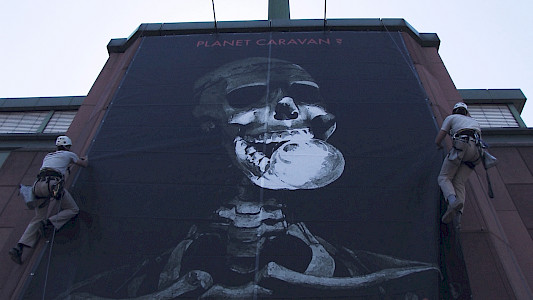
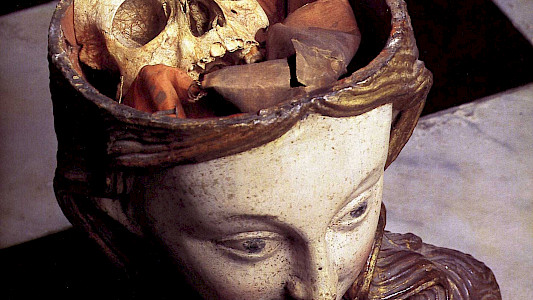
When the frail and staunchly catholic aunt Hedwig asks her nephew to accompany her to a decidedly mystical Catholic service, it turns out to be his initiation into a fantastical world of martyr worship. He meets relic collectors who are trying to preserve the dwindling world of Salvation in living rooms full of bones, and, whilst gathering information pertaining to relics he intends to purchase for his aunt on the internet, he stumbles upon one of the greatest forgeries of the Middle Ages. It is the legend of Saint Ursula and the eleven thousand accompanying maids who were slain, together with their mistress, in Cologne. Aunt Hedwig's nephew is not only confronted with the enchanting blossoms of popular piety, but also with a way of life that suddenly seems far less aberrant than initially expected. This is a jovial film about the gravity of life before death.
HALLOWED BONES
Bitte aktivieren Sie Javascript, um auf unsere Website zugreifen zu können.