Germany 2023, 52 minby Rosie Koch, Roland Gockel
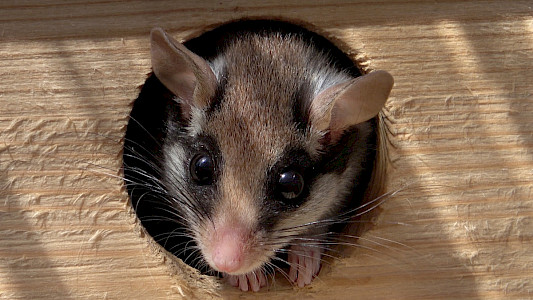
Although garden dormice are at home in large parts of Europe, hardly anyone really knows these rodents with their Zorro mask and those beady eyes. Hence, only few people initially noticed when the animals began to suddenly and inexplicably disappear throughout the entire continent. But when even classic garden dormouse strongholds, like the Bavarian Fichtelgebirge, reported them missing, researchers and conservationists sounded the alarm. Hurriedly BUND Friends of the Earth, the Senckenberg Rese
Dormouse Detectives – A Science Mystery
Germany 2022, 52 minby Annette Scheurich, Klaus Scheurich
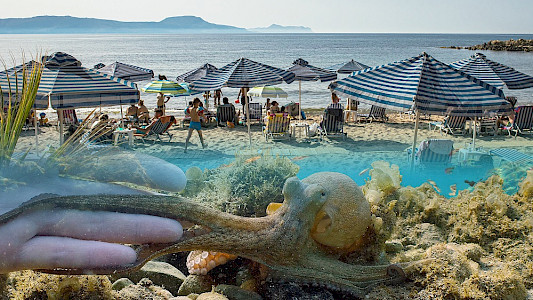
Sun, sand and sea - for us humans, beaches are the epitome of holidays and relaxation. But they are also habitats for animals and plants. An amazing microcosm of nature unfolds between parasols and deckchairs - if you look closely. The actual inhabitants of the beach have developed different strategies to adapt to the tourist hustle and bustle. Whether beach cat, seagull, sand flea, octopus or crab - they all cope well with the annual occupation of their habitat. The film tells beach stories fro
The Beach
Germany 2022, 50 minby Tim Visser, Sander van Iersel
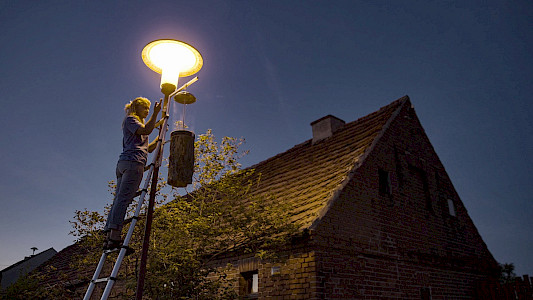
When light pollution causes the night to disappear, a fundamental clock for life on earth is thrown out of balance. Animals and plants are threatened by artificial light. Many organisms have found their evolutionary niche in the dark of night and must now adapt to bright nights. Some succeed, but for many the brightness becomes a death trap - and causes species to die. Dedicated researchers now shed a new light on the effects of this nocturnal light on nature. Will science find solutions to the
The Dark Side of the Bright Nights
2021, 156 minby Herbert Ostwald
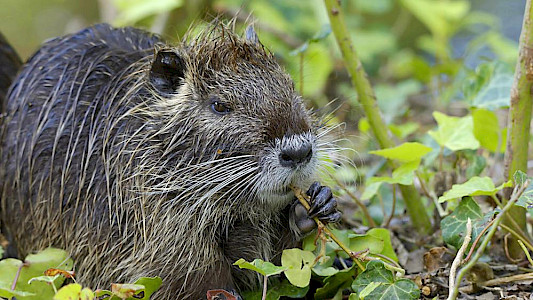
Ostrich-sized rheas tramp on shoots of fields in Northern Germany. Flocks of bright green parrots screech along Cologne Cathedral. And beaver-like nutrias with orange teeth gnaw on Dutch dikes. All these animal nags are alien and are suspected of causing ecological and economic damage. Do the invaders have to be fought? Or is it just prejudice against hitherto unknown species?This small series of three films gets to the bottom of the accusations against alien species. For this purpose, the immig
We Came to Stay - Our Alien Animal Neighbours
2020, 260 minby Mi-Yong Brehm, Almut Faass, Daniela Pulverer, Rosie Koch
The lakes of Northern Italy are considered as places of longing. The series "Beyond the Alps" shows the five largest of them as natural habitats and at the same time introduces people who are closely connected to the lakes. Narrated by Eva Mattes, the world of the lakes is portrayed in high-class pictures. Five camera teams were on the road for 150 days, helicopter shots show the special features of this landscape from a bird's eye view.
Jewels of the Southern Alps - The Great Lakes of Italy
Germany 2020, 52 minby Daniela Pulverer, Boris Raim
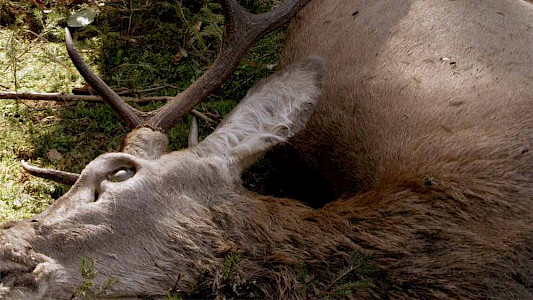
What happens when an animal perishes in the depth of the forest? Who clears up the remains? Why aren’t we surrounded by carcasses? After all, death is a constant and universal visitor …Every death means life for zillions of other living organisms: it is the initiator of a complex cycle we all depend upon. But despite its importance, we know relatively little about the animals that move in after a body has died, the organisms that radically change the body’s chemistry, and the plants that recycle
Banquet of the Beasts
Germany 2020, 52 minby Annette Scheurich, Alexandra Sailer, Steffen Sailer, Klaus Scheurich
Our seasons shape the cycle of life in dramatic ways. Spring, summer, autumn or winter – every season is unique, each presenting nature with new challenges. The constant change in living conditions demands extraordinary feats from animals and plants throughout the year. And the survival strategies of the squirrel, fox and many others could hardly be more fascinating.
The Magical Four – Our Seasons
2018, 52 minby Annette Scheurich
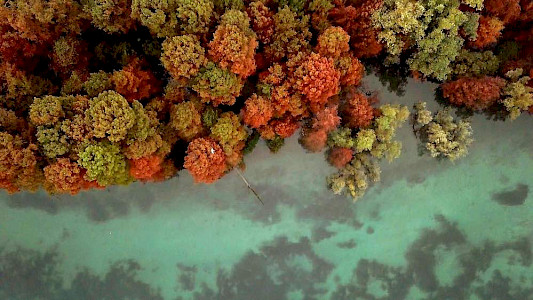
Life and death, partings and new beginnings – hardly any other season finds these extremes as close together as they are in autumn. Fallen leaves strew vibrant colour on the ground and there is abundant food available for the animals. But winter, with all its hardships, lurks around the corner, and a race against time begins. The film depicts the tension of this period that can rarely be so clearly observed in other seasons. From forests, meadows and fields to gardens and parks – it’s a time of
Autumn - World of Colours
2018, 104 minby Annette Scheurich, Klaus Scheurich
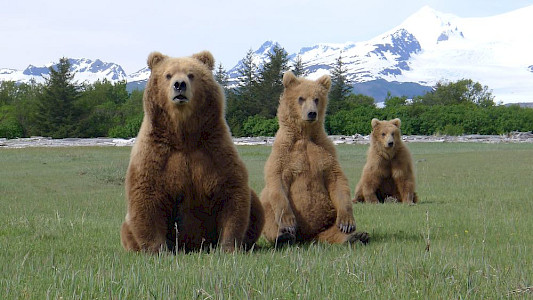
Grizzly bears – up to 2.5 metres tall with top weights of 550 kilos, equipped with sharp claws and predators’ jaws to match. We’ve all heard stories of aggressive bear attacks and close encounters… But what are brown bears really like? Renowned bear biologist Chris Morgan is passionate about uncovering their true nature and has studied them for years. In this stunning two-part documentary, Chris is on the trail of the brown bears on the Katmai Coast in Alaska, where he can get closer to them tha
Grizzly Encounters with Chris Morgan
2018, 104 minby Herbert Ostwald, Steffen Sailer
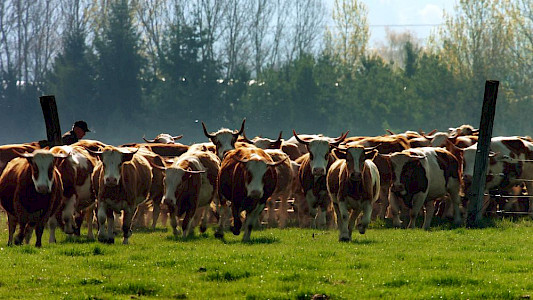
Most people think they know everything about cows: They stand around in fields. They eat grass, moo every now and then and of course they give milk. They are the archetypal symbols of a rural scene, of everlasting tranquility. But cows are much more than that. Cows are generally held to be peaceful and a bit stupid. However, that's actually a big misunderstanding. Because cows have personalities, they are sensitive, able to learn and socially oriented, but also quite able to defend themselves. I
The Secret Life of Cows
Germany 2016, 52 minby Klaus Scheurich
Spring is a time of new beginnings and new life. The world is bursting with joie de vivre, and the sheer force of nature is never more tangible than during this season. Birds chirp at the top of their lungs, insects buzz through the air and blossoms magically touch the landscape with colour. Creatures of all kinds – starlings, squirrels and frogs – begin to have their young.In forests, fields, meadows and gardens, nature awakens from her winter sleep: buds swell, fresh green leaves begin to spro
Springtime Stories
Germany 2015, 52 minby Herbert Ostwald
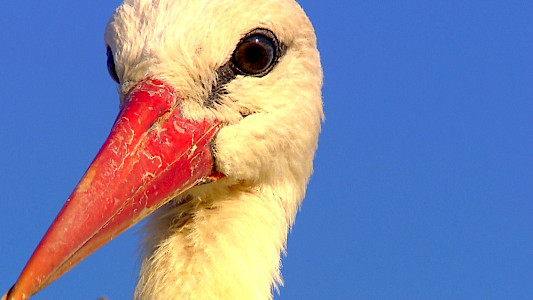
Widely known as heralds of good luck and happiness, storks are very popular animals. This is especially true for Ruehstaedt, a tiny picturesque village in Germany. Every year the rooftops here are home for up to 40 pairs of White Stork, which in turn attract about 30.000 visitors per year to the remote village.For one breeding season the film portrays the fascinating coexistence of man and storks in Ruehstaedt.
Storks - A Village Rooftop Saga
Germany 2015, 52 minby Klaus Scheurich
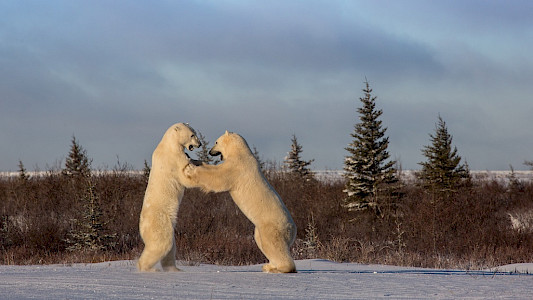
What do polar bears do during the summer? Where do they live when there is no ice? What do they eat when they cannot hunt seals? Do they suffer or do they thrive? This film follows the polar bears of Hudson Bay throughout the summer and portrays their trials of life and their fight for survival at a time when other denizens of the Arctic enjoy a season of overabundance.
Polar Bear Summer
Germany 2014, 52 minby Klaus Scheurich
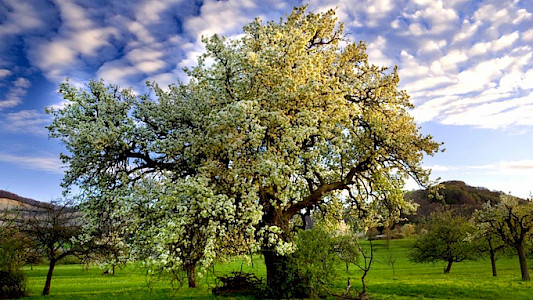
The carousel of life - constantly turning. Just as the seasons follow one another inevitably, life too takes its course. Every creature must struggle on its own for survival. Hunter and hunted, plant and tree. And yet, all living things are dependent on each other. Each needs the other. And this interplay of species is demonstrated strikingly in the orchard. Because even man has a place here: he intervenes, creates and takes - and has a vital impact on the diversity of life. There is no beginnin
CAROUSEL OF LIFE - THE TRADITIONAL ORCHARD
Germany 2013, 52 minby Klaus Scheurich
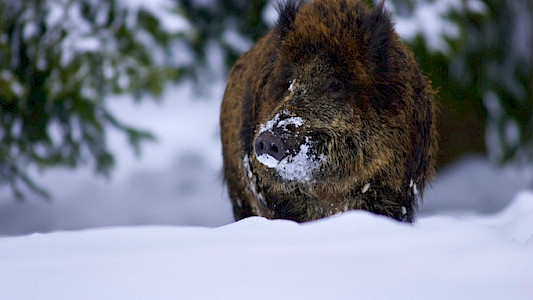
Winter casts a very special, magical spell. It’s a time for traditions and customs: snowmen come to life, Santas wander through brightly-lit Christmas markets, much to the delight of the children. But indigenous animal life pays no heed to this human idyll. For them, winter is a time of austerity. Squirrels, boars and lynx all have their own strategy for surviving the winter. But despite an amazing ability to adapt, the fight for survival is hard. The film takes us on a journey through a wintry
CHRISTMAS WINTER WONDERLAND
Germany 2011, 52 minby Herbert Ostwald
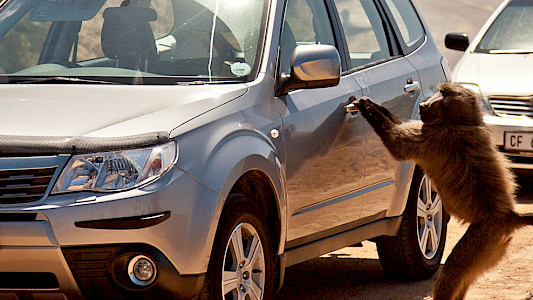
They steal handbags, open cars and have no respect for humans. The last baboons of the Table Mountain region have become a real plague. The resident population is split into sympathetic protectors and fierce opponents. The animals are deliberately run over by cars, shot and poisoned. According to scientists the baboons have to relearn that humans are a threat in order to survive. Thus a special force has been recruited from the townships: the „Baboon Police“. Day and night the „offi
BABOON BANDITS - Monkey Alert in South Africa
Germany 2010, 90 minby Annette Scheurich
The Black Forest and the Vosges Mountains are like twins; separated by the Rhine Valley millions of years ago. Today, they form two different habitats: in the Vosges Mountains bright deciduous woodlands prevail. Rare animals like the Lynx roam the forests and storks fly in flocks around the valleys and nest in the towns. The Black Forest with its coniferous woods and secret animals seems darker, except when thick snow in the winter lights up the mountains with brilliant covers. An emotional port
THE BLACK FOREST AND THE VOSGES
Germany 2008, 43 minby Tim Förderer, Annette Scheurich
DEEP SEA Deep sea: 1000m below the surface – there is no light, instead an immense pressure and icy temperatures. The deep sea encompasses more than 90% of the planets habitat. Yet we know less about the depths of our oceans than we do about the surface of the moon. This film documents the technical, scientific, and ecological challenges faced by deep sea researchers. One of the largest scale projects to date is called ARGO. Scientists around the globe work together in an effort to gather data
DEEP SEA
Germany 2006by Marcel Steuermann, Annette Scheurich
July 1946. Bikini. An Atoll of the Marshall Islands, somewhere in the vast blue of the Pacific Ocean, between the Philippines and Hawaii. A place that could hardly be more remote. But it was its remoteness from all Western civilization which doomed it for destruction, as it was for exactly this reason that the American forces chose it as the site of the first atomic explosions after Hiroshima. A formidable fleet of discharged battleships was gathered in order to sink them all in the most specta
BIKINI ATOLL - PARADISE RESTRICTED
You can contribute updates for the current person (Klaus Scheurich).
Bitte aktivieren Sie Javascript, um auf unsere Website zugreifen zu können.