Germany 2022, 117 minby Pepe Danquart
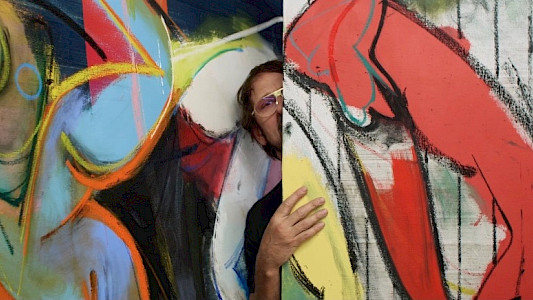
Few portraits of artists give us the privilege of getting as close to a painter as if we had free access to his studio. Pepe Danquart was allowed to accompany the painter Daniel Richter for three years. He watched him paint with his camera, negotiate with his gallerist, talk with his publisher, and joke with his companion Jonathan Meese. He interviews collectors, attends auctions, and even visits record stores. In this way, the complex picture of a visual artist emerges, who is as inclined to th
Daniel Richter
Germany 2020, 90 minby Sharon Ryba-Kahn
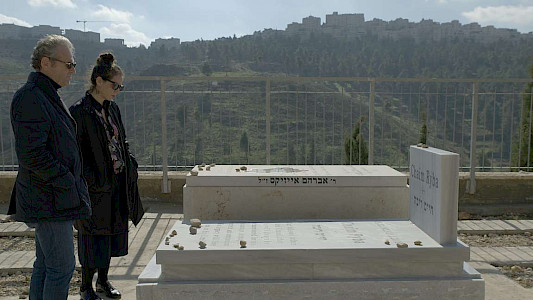
Sharon's relationship with Germany has always been conflictual to say the least, at the same this was something she had just accepted. This is true although, she was born in Munich and currently lives in Berlin. Sharon is Jewish and a third generation Shoah survivor. When her estranged father Moritz contacts her again after 7 years, it becomes an impetus for her to reconstruct her father's family history. From here on a journey begins in which Sharon, tries to understand who her father is and w
Displaced
Germany 2018, 135 minby Volker Koepp
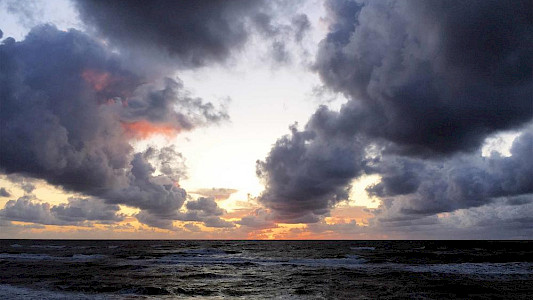
With SEESTÜCK, Volker Koepp concludes a series of documentaries that he began in 2010 with BERLIN-STETTIN. In this film, the director mixed autobiographical references with his description of East German film and living spaces for the first time. IN SARMATIA, 2013 he expanded the view of the region east of the Weichsel (Vistula) and between the Black Sea and the Baltic Sea. With LANDSTÜCK, 2016, Volker Koepp returned to the Uckermark in the north of Berlin. SEESTÜCK - a film about the Baltic Sea
SEESTÜCK
You can contribute updates for the current person (Kai Ziarkowski).
Bitte aktivieren Sie Javascript, um auf unsere Website zugreifen zu können.