2023, 118 minby Regina Schilling
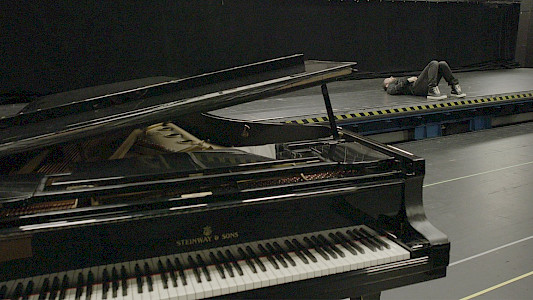
At 34, Igor Levit is an exceptional artist in the world of classical music. A young rebel, who - at the piano - transforms into a mature musician. At age nine he arrived in Germany, a Jewish immigrant of Russian descent. Having an opinion and publicly expressing it, is not a choice, it is a survival strategy. The film follows the artist over two years as Levit explores his “life after Beethoven“, as he searches for his next challenge, his identity as an artist. We observe him recording new piece
Igor Levit – No Fear
Germany 2023, 94 minby Corinna Belz
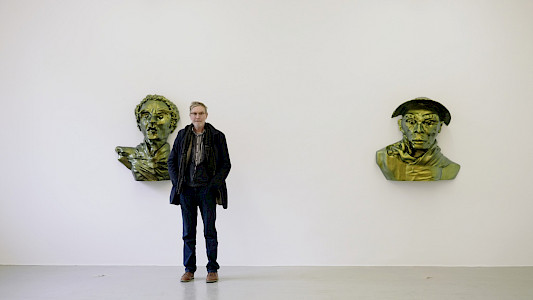
Setting: a workshop. When it comes to Thomas Schütte’s larger than life sculptures, the work is hands on – and on an impressive scale. Sanding, sawing and milling are the order of the day. The artist, with a cigarette hanging out of his mouth, moulds the eyes of a figure with his own hands or sometimes uses computer simulation. Regardless of the machinery, technology or material, it becomes clear: art is hard work. [38 DOK.fest München, Anja Klauck]
Thomas Schuette, I Am Not Alone
Germany 2021, 72 minby Yana Ugrekhelidze
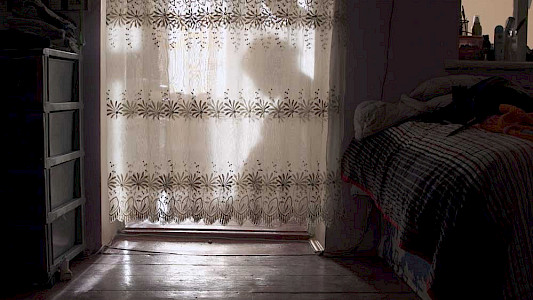
The film is about love story of one couple Alexandre and Marie. Alexandre is a transgender and lives with his girlfriend Marie. Because of his trans identity and mark 'female' in passport, Alexander has to lead a secret life. Such people like him are threatened with persecution and death in his homeland.In order to escape this hopeless situation, Marie decides to make a surrogacy. With this money, the couple wants to flee to Europe and finally live in freedom.With the time their pragmatical pl
Instructions for Survival
Germany 2019, 93 minby Luisa Bäde
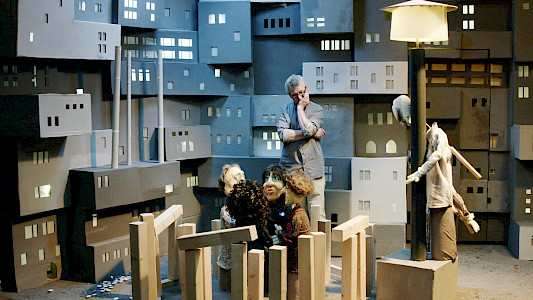
A studio room. Puppets. Frank Karbstein.Reminiscent, reflective, playful, narrating. The 1980s of the GDR - the group around the puppeteer Frank is arrested for distributing pacifistic leaflets. After being sentenced to imprisonment, the defendants are offered the opportunity to go to the West through a secret buy out of political prisoners. Frank stays. But the question remains: Who betrayed them?Different truths and memories stand side by side. In the centre of this is a person who never tries
As Long As You Still Have Arms
2018, 6 minby Lara Rodríguez Cruz, Jule Katinka Cramer
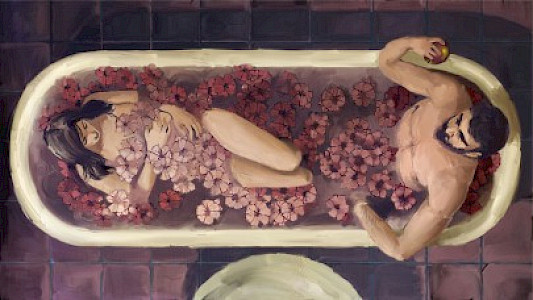
A group of women are leading a revolution in Valencia, Spain. With the help of their gods and goddesses, they are fabricating weapons for liberation, with their own hands. A MYTHOLOGY OF PLEASURE is a short documentary film. Shot in the BS Atelier in Valencia in 2016, it is a portrait of the workshop in which these women design, manufacture and package the sex toys that they successfully sell around the world.
A Mythology of Pleasure
2018, 90 minby Beryl Magoko
As a child in Kenya, the filmmaker Beryl Magoko was subjected to a life-threatening ritual of which many girls become victims even today. At the time, “female circumcision” – a friendly, barely adequate term for the genital mutilation she endured with horrible pain – seemed to her like something that was an integral part of growing up. Today she knows that it doesn’t have to be that way. Knowledge alone doesn’t help her, so she meets other victims who, like her, waver between anger and shame and
In Search…
Germany 2014, 78 minby Johann Feindt, Tamara Trampe
December 1942. A snowfield behind the russian lines in WW II. This where my mother gave birth to me. She was a nurse in the Red Army back then. 70 years later I go back to find out. (Tamara Trampe)
MY MOTHER, A WAR AND ME
Germany 2014, 90 minby Annekatrin Hendel
He was the charismatic pop star of East Berlin’s oppositional literary scene in Prenzlauer Berg in the eighties, a close acquaintance of Christa Wolf, Franz Fühmann and Heiner Müller. He was also a zealous informer working for the GDR’s secret police: Sascha Anderson, born 1953. Twenty years on, the pain he inflicted on friends and colleagues is as deep-seated as ever and the finely woven web of lies, half-truths and legends he unfurled around him still raises tempers. Annekatrin Hendel sits S
ANDERSON
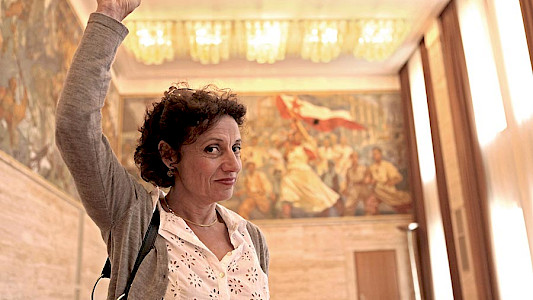
2014, 94 minby Regina Schilling
Portrait of actress, author and director Adriana Altaras. Adriana Altaras is a director, actress and writer. And she is from a country which no longer exists: Yugoslavia. The daughter of Jewish partisans who fought for Tito and later started a new life in post-war Germany, in this lovely film she tells the story of her ’high maintenance family’. Adriana’s domestic situation appears unusual at first glance, but can be seen as typical of the generation born after the War. Despite a high standard o
TITO’S GLASSES
Germany 2013, 78 minby Anne Thoma
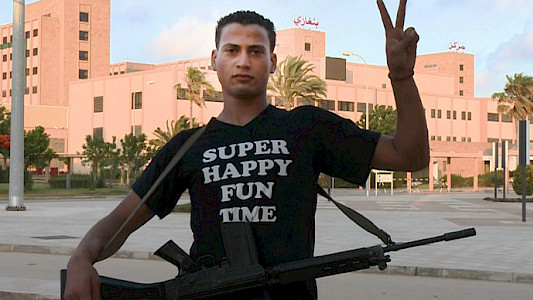
Today’s wars and conflicts are increasingly complex and incomprehensible. Often, they are caused by local civil conflicts with global repercussions in the power struggle over territories and resources. This is why politicians employ those who understand the language, have access to expert knowledge and know how to be discrete. They employ experts, who turned 'making peace' into a new, private business model. “If you want to put an end to war, you have to talk to the fighters!” An exclusive group
MILES & WAR
Germany 2012, 52 minby Karin Jurschick
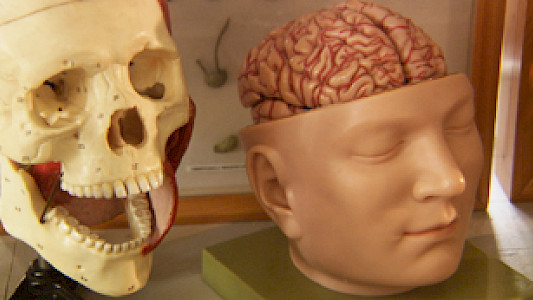
They are charming, they lie without scruples and are capable of manipulating their environment. Psychopaths murder and rape without remorse and can still come across as disarmingly pleasant. What’s going on in their minds? As can be seen in films, art and literature, evil - seemingly devoid of morals and law - exerts a fascination over us. Centuries ago, anatomists tried to open human skulls and penetrate the brain. Today, state-of-the-art appliances enable us to scan brains to make inner proces
ON THE TRIAL OF EVIL - A Journey to the Center of the Brain
Germany 2011, 97 minby Annekatrin Hendel
Once with the Stasi, always with the Stasi? Once you were in the agent controller's grasp you could never escape - that's what they say, anyway. Writer Paul Gratzik was an unofficial informer for the GDR State Security Service for twenty years, broke with them in the 80's and exposed his identity. "Vaterlandsverräter" ("Traitors to the Fatherland") is a portrait of an exceptional man. On one hand it is a psychological profile of one of an extraordinarily paradoxical figure, a "man of extrem
VATERLANDSVERRAETER
You can contribute updates for the current person (Jule Katinka Cramer).
Bitte aktivieren Sie Javascript, um auf unsere Website zugreifen zu können.