Switzerland, Germany 2024, 89 minby Heidi Specogna
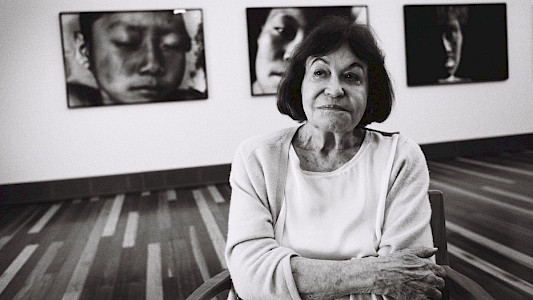
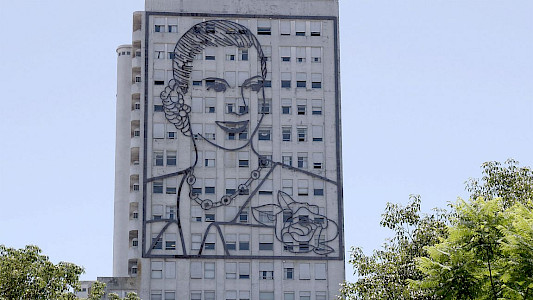
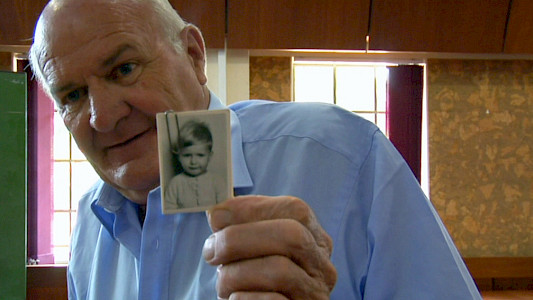
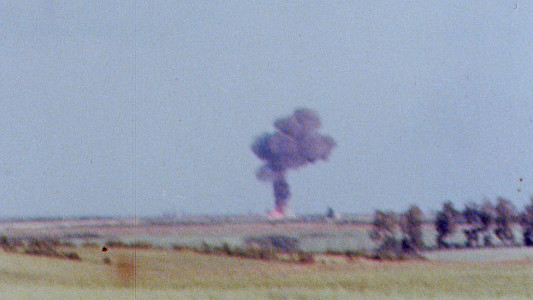
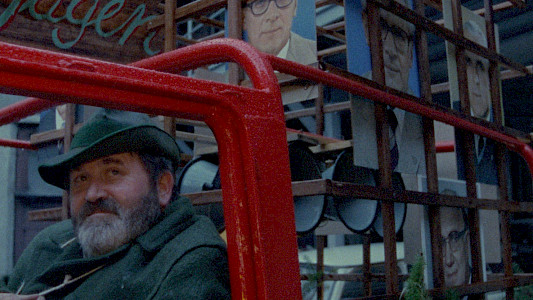
Claudia Andujar escaped the Holocaust as a child and became a multiple award-winning photographer. She travelled the Amazon since the 1960s, and developed a profound relationship with the Yanomami people. From Claudia, they learned to fight against the exploitation of the rainforest and their extermination. Former victims are now activists.
The Lady with the Arrows
2023, 118 minby Regina Schilling
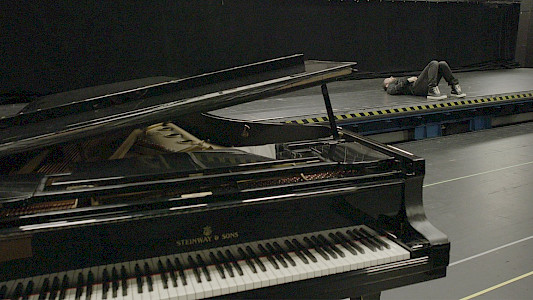
At 34, Igor Levit is an exceptional artist in the world of classical music. A young rebel, who - at the piano - transforms into a mature musician. At age nine he arrived in Germany, a Jewish immigrant of Russian descent. Having an opinion and publicly expressing it, is not a choice, it is a survival strategy. The film follows the artist over two years as Levit explores his “life after Beethoven“, as he searches for his next challenge, his identity as an artist. We observe him recording new piece
Igor Levit – No Fear
Germany 2021, 96 minby Corinna Belz, Enrique Sánchez Lansch
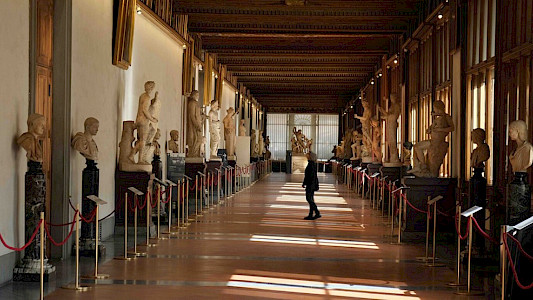
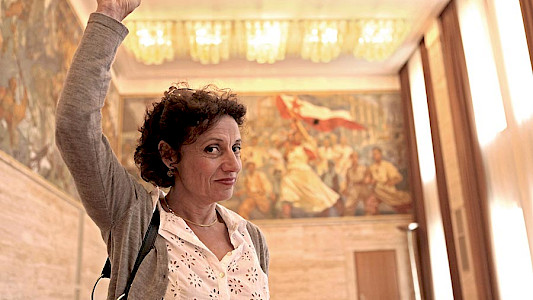
Hidden doors open in this film about the iconic Uffizi Gallery, home to the world's most prominent collection of Renaissance art. Guided by passion, German Director Eike Schmidt and his Italian team master the sensitive balancing act between conservation and renewal. We dive into famous masterpieces that captivate visitors of all ages and nationalities.
Inside the Uffizi
Switzerland, Germany 2021, 110 minby Heidi Specogna
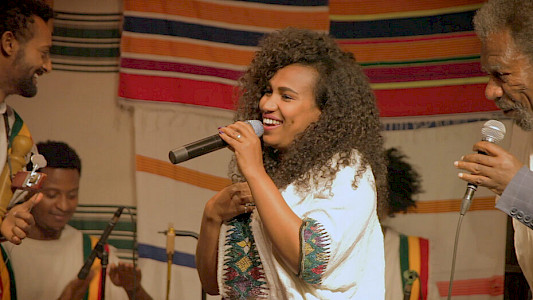
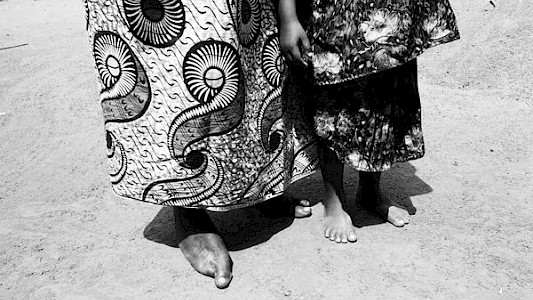
Nardos, an Azmari singer from Addis Ababa, dreams of telling stories about the lives of ordinary people through her music. In her search of stories for her songs, she meets Gennet, a poet who lives on the streets with her children. As Nardos puts the lives of Ethiopian women, their visions and power at the centre of her creation, we dive deeper and deeper into a rapidly changing country.
Stand Up My Beauty
Germany 2020, 104 minby Jeanine Meerapfel
A WOMAN is a cinematic essay, a deeply personal look into the past of a woman. The story of Marie Louise Chatelaine, the director's mother, is the starting point, but several stories are added and told in parallel, in a fragmented reflection of yesterday and today. A family history that makes contemporary history recognizable, a deep search into the wounds of exile and a reflection on the function of memory. The images that follow the stations of this woman's life flow like a stream of conscious
A Woman
Germany 2019, 79 minby Annekatrin Hendel
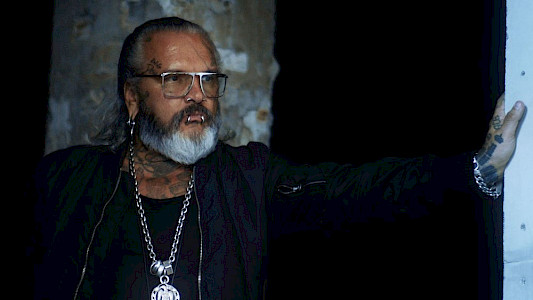
Sven Marquardt might be the most famous bouncer worldwide. But beside standing in front of the legendary techno club Berghain in Berlin, he is also a well-known and skilled photographer. Long before the Berlin Wall came down, Marquardt portrayed the subcultural East-Berlin scene. His black and white photography illustrates it as voluptuous, laid-back, dirty and existential. Even if shot by daylight, his work is permeated by darkness, ecstasy and night.with: Sven Marquardt, Dominique Hollenstein
Beauty and Decay – Sven Marquardt
Germany 2019, 47 minby Jeanine Meerapfel, Floros Floridis
Artificial intelligence is already changing almost every area of life today. The documentary/essay is inspired by these changes that influence our perception of Topos. By combining film images, graphics with documentary text modules, the author associatively points out how the progress of data and technology colonize human existence and fundamentally influence the balance between the psychological, mental and biological aspects of life.
MOVING SAND/TOPOS
Germany 2017, 52 minby Mechthild Gaßner
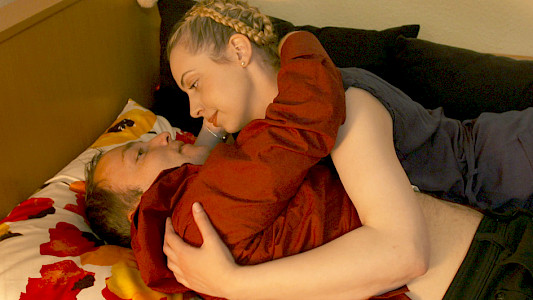
Nina, Edith and Ronald are sexual assistants. Their clients are people with disabilities, their job: to satisfy their desire for physical contact. Is this a form of prostitution? A study of a taboo subject.“I’m no different to anyone else!” says Torsten in his wheelchair.”I also long for tenderness, intimacyand sex.“ The sexual needs of the disabled are generally not recognised; in fact, we do not expectdisabled people to have such feelings. People like Nina, Edith and Ronald have a different ap
TOUCHING
Switzerland, Germany 2016, 119 minby Heidi Specogna
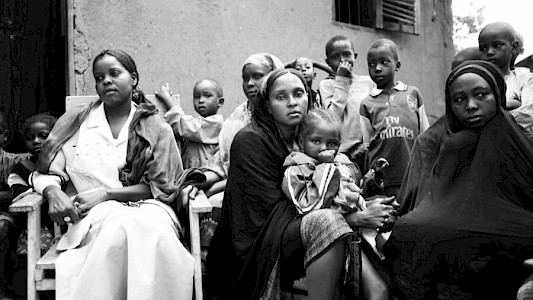
It all started with a small school exercise book. But instead of being full of vocabulary, the pages were checkered with the courageous testimonies of 300 Central African women, girls and men. They reveal what Congolese mercenaries did to them between October 2002 and March 2003 in the wake of armed conflict. On their own initiative, they gathered together their testimonies in this book to record the crimes committed against them.As a result of rape, Amzine, a young Muslim woman, gave birth to a
Cahier Africain
Germany 2014, 78 minby Johann Feindt, Tamara Trampe
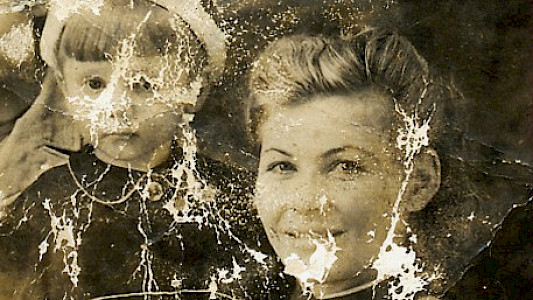
December 1942. A snowfield behind the russian lines in WW II. This where my mother gave birth to me. She was a nurse in the Red Army back then. 70 years later I go back to find out. (Tamara Trampe)
MY MOTHER, A WAR AND ME
2014, 94 minby Regina Schilling
Portrait of actress, author and director Adriana Altaras. Adriana Altaras is a director, actress and writer. And she is from a country which no longer exists: Yugoslavia. The daughter of Jewish partisans who fought for Tito and later started a new life in post-war Germany, in this lovely film she tells the story of her ’high maintenance family’. Adriana’s domestic situation appears unusual at first glance, but can be seen as typical of the generation born after the War. Despite a high standard o
TITO’S GLASSES
Germany 2013, 78 minby Anne Thoma
Today’s wars and conflicts are increasingly complex and incomprehensible. Often, they are caused by local civil conflicts with global repercussions in the power struggle over territories and resources. This is why politicians employ those who understand the language, have access to expert knowledge and know how to be discrete. They employ experts, who turned 'making peace' into a new, private business model. “If you want to put an end to war, you have to talk to the fighters!” An exclusive group
MILES & WAR
Germany 2012, 74 minby Regine Dura
September 8, 1948. The overseas landing stage of Cape Town harbour is crowded with a group of middle aged men waiting for children from Germany. The fathers-to-be are members of the right-wing Broederbond, stalwart believers in 'Apartheid'. Behind the children’s transport stands an unprecedented adoption scheme: Nazi elite offspring of 'Aryan blood' shall insure 'good genes' and help to 'stay white on a black continent'. The film tells the life stories of Werner Schellack and Peter Ammermann,
WHITE BLOOD
Switzerland, Germany 2011, 91 minby Heidi Specogna
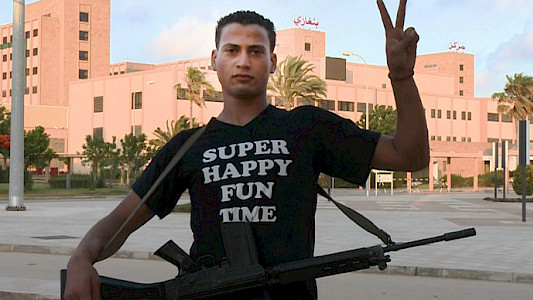
They don’t wear uniforms or carry weapons. They have no bodyguards. They are equipped with laptops, cameras and sound recorders. They work along dusty roads and in overcrowded refugee camps. They listen to hundreds of testimonies of rape, murder and torture; so gruesome they themselves sometimes come close to breaking point. Despite impossible working conditions, they collect the evidence for indictments against those who ordered some of the most serious crimes of our time - committed in Darfur,
CARTE BLANCHE
Germany 2011, 97 minby Annekatrin Hendel
Once with the Stasi, always with the Stasi? Once you were in the agent controller's grasp you could never escape - that's what they say, anyway. Writer Paul Gratzik was an unofficial informer for the GDR State Security Service for twenty years, broke with them in the 80's and exposed his identity. "Vaterlandsverräter" ("Traitors to the Fatherland") is a portrait of an exceptional man. On one hand it is a psychological profile of one of an extraordinarily paradoxical figure, a "man of extrem
VATERLANDSVERRAETER
Germany 2010, 98 minby Tamara Trampe, Johann Feindt
The documentary LULLABY recounts dreams and longings of the childhood years. And it deals with the remains of those yearnings, after years of facing the daily struggles of adult life. The first lullabies are sung in the intimacy of home, surrounded by loved ones, sheltered and warm. It is the memory of those moments that open the door to a journey into human destinies. The journey also leads through Berlin. We happen upon people at very different stages of their life. Sometimes it’s a brief enco
LULLABY
Germany, France 2010, 54 minby Jürgen Ellinghaus
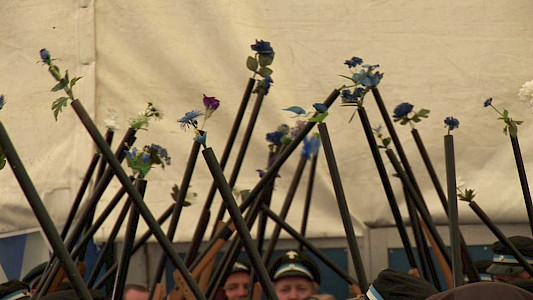
Every two years, the small town of Beverungen, in the middle of Germany, celebrates with particular vigour its traditional Marksmen's Festival. Festivities are focused on numerous parades with marchers in uniform and a shooting contest, where the winner is declared "King". Throughout the Germanic regions, marksmen's guilds are known since the 10th century. They protected cities and rural areas against troubles, wars and looting. In Beverungen, about a quarter of the active male population is inv
Cross and Banner
Germany 2009by Hans-Erich Viet
What is going on in Germany? Is Germany realy a pain in the neck? And if so, why? In this documentary road-movie shot between 2005 and 2008, director Hans-Erich Viet travels through Germany to find out just how the German soul ticks. The journey took place without any concrete planed destinations, but rather was determined through the events that took place and offers answers to all the moaning and groaning going on in Germany today.
MADE IN DEUTSCHLAND
Germany 2008, 90 minby Regina Schilling
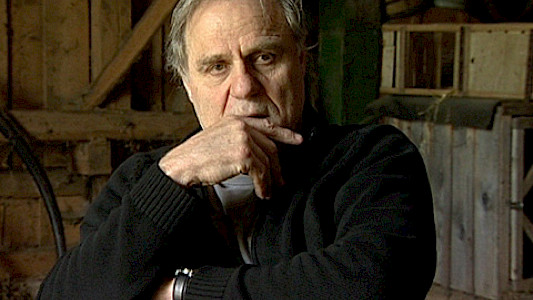
For two years, Schilling accompanied this exceptional actor and interviewed some of his temporarycompanions such as Werner Herzog, Herbert Achternbusch and his lover Luisa Francia. Bierbichleropenly talks about his love-hate relationship with the theatre, the origins and his longing for art,his inner conflict with being an actor and his search for new ways including singing Mahler andEisler songs and writing a book. With diary-like video recordings, the film creates especially movingmoments in w
BIERBICHLER
Germany 2004, 108 minby Andres Veiel
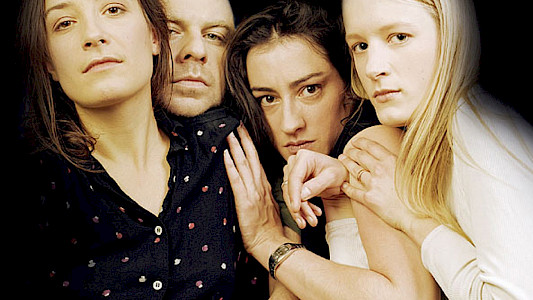
Four acting students are the focus of Andres Veiel’s long-term observational documentary. We meet Stephanie, Karina, Constanza and Prodromos while they are preparing for their acting school auditions. The selection procedure takes months; it is a trying, nerve-racking time spent vacillating between hope and anxiety. All four make it into the school, but their initial euphoria about commencing their studies – including group exercises, role play and obligatory fencing lessons
Die Spielwütigen - Addicted To Acting
1990, 90 minby Harriet Eder, Thomas Kufus
Unique film material, never previously screened, shot by six German soldiers as they invaded the Soviet Union in WW II. The specific angle - that of amateur film-makers - and the use of 16mm colour film, means the film provides a completely different picture of the Eastern Front.The men who took the pictures have been traced and interviewed. Their enthusiasm about the technical quality of the pictures gives the film a cruel insight into the perfection of the Nazi machine. [IFFR 1994]
My Private War
Germany 1990, 83 minby Johann Feindt, Jeanine Meerapfel, Helga Reidemeister, Dieter Schumann, Tamara Trampe
Rhine wine in Saxony! It is being served at an information stand set up by West Germany’s Christian Democratic Union party (CDU) just before the first and only free elections to East Germany’s People’s Assembly; the ballot will give the CDU almost 41% of the vote. But while the East Germans appear entirely sober about it all despite the sweet swill on offer, during the election campaign in February/March of 1990 the West Germans seem drunk on the new order. “Socialism is
In the Splendour of Happiness
You can contribute updates for the current person (Johann Feindt).
Bitte aktivieren Sie Javascript, um auf unsere Website zugreifen zu können.