Germany 2017, 90 minby Martin Farkas
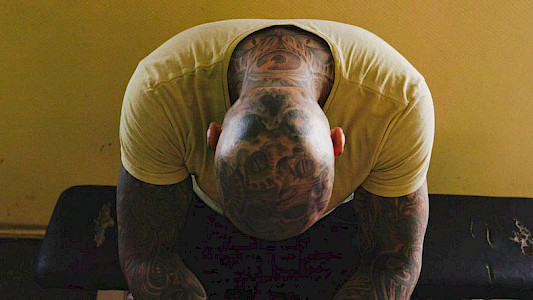
“After all, these are not good memories, fun memories. And really, that time is buried.” Between 30 April and 4 May 1945, several hundred civilians commited mass suicide in the Pomeranian town of Demmin. There was desperation between the ideological void and the fear of the Red Army. Whole families drowned, hanged or poisoned themselves. The nervousness of the old citizens of Demmin whom Martin Farkas visits is still noticeable: not a hand that stays motionless during the interview – they are ru
Living in Demmin
Germany 2014, 90 minby Annekatrin Hendel
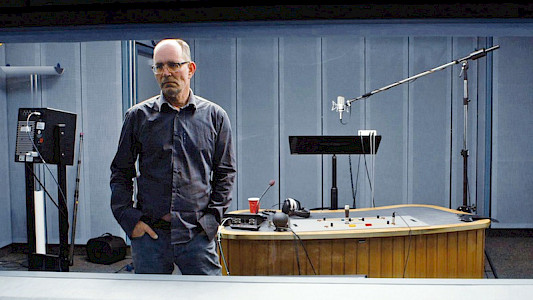
He was the charismatic pop star of East Berlin’s oppositional literary scene in Prenzlauer Berg in the eighties, a close acquaintance of Christa Wolf, Franz Fühmann and Heiner Müller. He was also a zealous informer working for the GDR’s secret police: Sascha Anderson, born 1953. Twenty years on, the pain he inflicted on friends and colleagues is as deep-seated as ever and the finely woven web of lies, half-truths and legends he unfurled around him still raises tempers. Annekatrin Hendel sits S
ANDERSON
Germany 2012, 90 minby Andreas Dresen
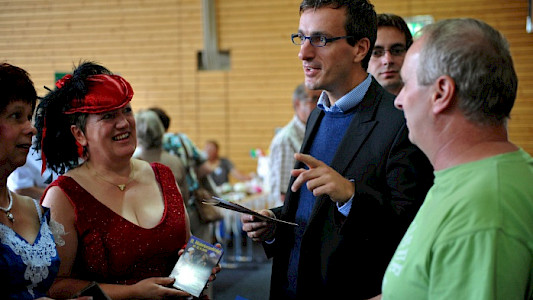
Henryk Wichmann, 33, member of the CDU party has been working as an opposition representative in the Brandenburg state parliament since 2009. The film follows him over the course of one year, observing his work in parliament and his constituency Uckermark/Upper Havel. There he visits schools, senior fairs, the Federal Armed Forces and local business enterprises. He has to deal with labour deficit, faces troubles with the Deutsche Bahn and illegal dumpsites as well as with the Lesser Spotted Eagl
HENRYK FROM THE BACK ROW
Germany 2011, 97 minby Annekatrin Hendel
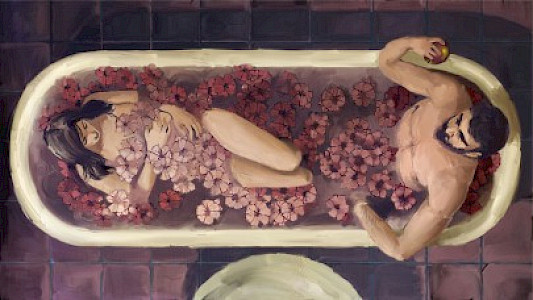
Once with the Stasi, always with the Stasi? Once you were in the agent controller's grasp you could never escape - that's what they say, anyway. Writer Paul Gratzik was an unofficial informer for the GDR State Security Service for twenty years, broke with them in the 80's and exposed his identity. "Vaterlandsverräter" ("Traitors to the Fatherland") is a portrait of an exceptional man. On one hand it is a psychological profile of one of an extraordinarily paradoxical figure, a "man of extrem
VATERLANDSVERRAETER
You can contribute updates for the current person (Jörg Hauschild).
Bitte aktivieren Sie Javascript, um auf unsere Website zugreifen zu können.