Germany 2023, 104 minby Jochen Hick
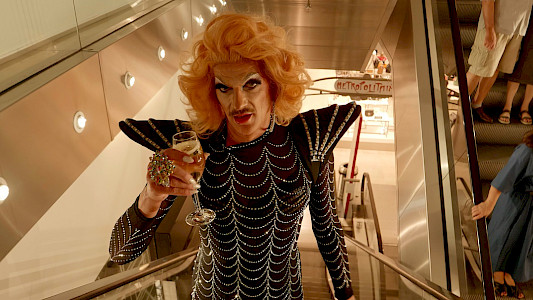
Queer people from all over the world have made Berlin what it is today. Many leave their home because they want to, others because they have to. This film follows a few of them.The queer universe of Berlin mirrors the movements of the world and is constantly evolving.In recent decades, a multitude of identities have made themselves heard. Today, gay and lesbian are only two terms among many.
QUEER EXILE BERLIN
2017, 97 minby Jochen Hick
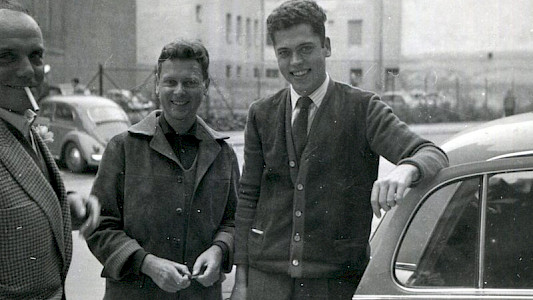
Today’s hip image of Berlin is based on the city’s vibrant and subversive subcultures, which originally emerged within the grey walls surrounding West Berlin. The queer scene played a major role in creating that subculture, with its sexual diversity and its wild and unconstrained party culture, ranging from the notorious Berghain club to CSD. Many of the scene’s actors, such as the Gay Museum, the Teddy Award, AIDS help organizations, and the queer magazine Siegessäule originated before 1989. Ye
My Wonderful West Berlin
Germany 2016, 89 minby Jochen Hick
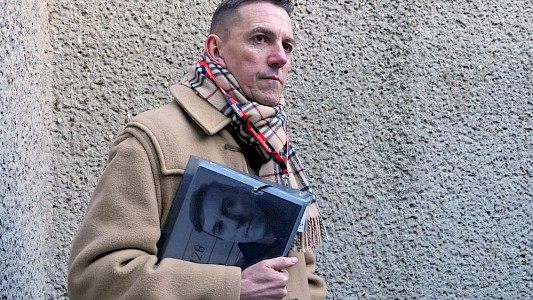
Being gay, young and conservative, Mario Röllig is one of the most in-demand witnesses to the atrocities committed by the GDR. He guides groups through today’s memorial site in the former Stasi prison where he was once incarcerated. Röllig confronts GDR aficionados and is also confronted by people who still believe in social utopias and who also talk about freedom (without ever mentioning the GDR).The film unveils a strange atmosphere of misunderstandings and failures to communicate. Mario still
THE GDR COMPLEX
Germany 2013, 94 minby Jochen Hick
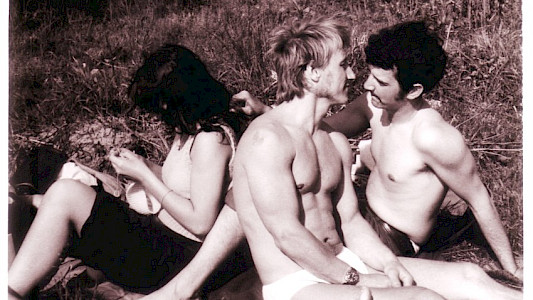
In 1968, paragraph 175, which made homosexual behavior punishable by law, was abolished in the German Democratic Republic. At first homosexuality was considered a negligible, somehow suspicious issue in real existing socialism. The nuclear family constituted the center of social society.“Out in East Berlin” tells the various, impressive-to-absurd personal histories of gay men and lesbians during socialistic GDR until the fall of the Berlin Wall. Their experiences on the path to a self-conscious,
OUT IN EAST BERLIN – Lesbians and Gays in the GDR
Germany 2009, 92 minby Jochen Hick
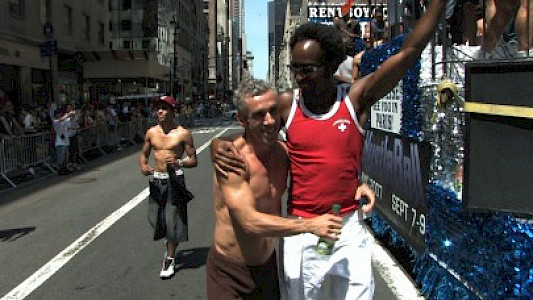
Jochen Hick's new film portrays Tom Weise, one of the initiators of HustlaBall an event originally created in order to encourage the acceptance of male prostitutes, but also to launch a rent boy website. After his parents split and, having lost all contact with them, this slightly-built former student of politics decides to go to New York at the beginning of the 1990s. Being viruspositive, he is obliged to live in the USA illegally. In fact, according to the law, he cannot even pay a visit to th
The Good American
Germany 2008, 97 minby Jochen Hick
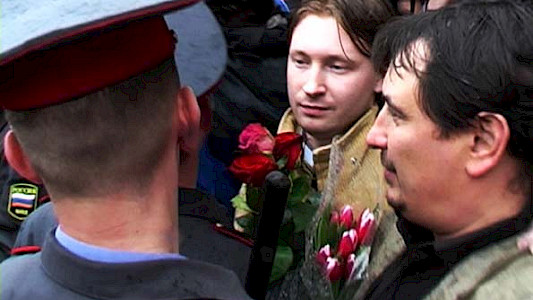
Not a trace of socialism – Moscow, at least at its centre, nowadays bears comparison with any capitalist city. Wealth, showiness, but also elegance as far as the eye can see – Moscow is no longer a grey city of apparatshiks. However, democracy is still a slow to take hold, especially if the degree of genuine democracy in the country is to be measured by its population’s treatment of minorities. Although paragraph 121, which outlawed gay and lesbian relationships, was abolished under Jelzin, ther
EAST/WEST - Sex & Politics
Germany 2006, 75 minby Christian Jentzsch, Jochen Hick
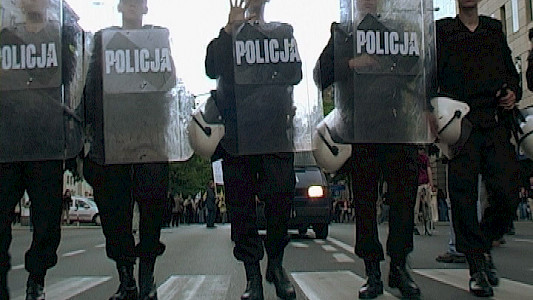
With the advent of same sex marriage, homosexuals have achieved near-equality in much of Europe. Everything is rosy, so why should they keep on fighting? A revealing and exciting journey from the center to the borders of Europe. The recently accomplished documentary contains exclusive stories, portraits, interviews and footage of various events in Geneva (United Nations), Poland, London, Windsor, Amsterdam, Kiev, Minsk, Egypt and Lebanon. It also features an exclusive interview with the Gay mayo
Rainbows End
Germany 2005, 104 minby Jochen Hick
Los Angeles in the year 2005: 19-year-old lads move through an apartment that has been equipped with webcams and looks like some sort of futuristic internet doll’s house. Not-quite-so-young men fulfil their sexual dreams as protagonists in bareback productions. And, at private sex parties, almost every second guy has either taken part in a porn film or wants to. In 1997, I followed on camera the fortunes of a group of men who had chosen to wok – either artistically or commercially – with their b
Cycles Of Porn – Sex/Life in L.A. part 2
Germany 2003, 106 minby Jochen Hick
In big cities discrimination against homosexuality and gay way of life is not a big issue anymore. Gay mayors and football club association presidents are no longer colorful exceptions to the rule, rather they have become an expression of normality. In rural areas, however, the definition of what is normal is quite different. Out here, normal means a husband, wife and children "the nuclear family". In the country, expressions such as "proofter" are still common parlance and mothers are ashamed i
Talk Straight - The World Of Rural Queers
Germany 1998, 91 minby Jochen Hick
Glossy magazines, porn awards, washboard stomachs and muscular pinups. Hollywood faithfully provides the public with a seemingly inexhaustible flood of male erotica. But there does come a time when the spotlights are turned off and the male models go about their own private lives within the city of palms on the pacific coast. Thepotentialities are enormous: innumerable clubs, sexhotlines and the sheer magnitude of partners to choose from. Nine young men in Los Angeles. Photomodels, porn actors,
SEX/LIFE in L.A. (part 1)
Germany 1995, 86 minby Jochen Hick
One summer in S&M and leather. Chicago, New York and San Francisco are only three stations in the annual circuit of a leather crowd which travels from event to event - in order to meet, to have sex or just to fantasize about it. Amsterdam based "Tom of Hamburg" is a former "International Mr. Leather"-titleholder, S&M pornstar and porn producer. He and his friends take us on an intense and erotic trip to the two main events: the "International Mr. Leather" and "Mr. Drummer" contests. We meet cont
Menmaniacs - The Legacy Of Leather
Germany 1991, 15 minby Jochen Hick
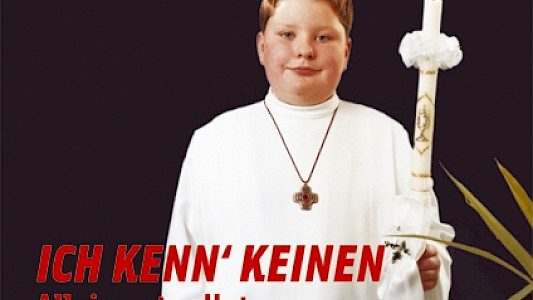
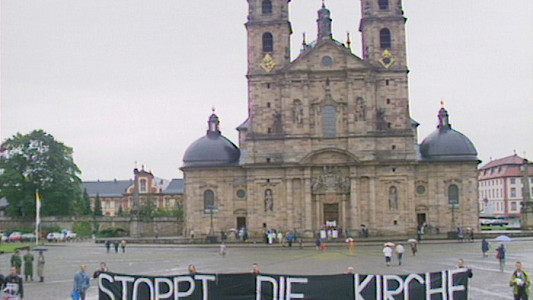
One rare testimonial of the German ACT UP movement is Jochen Hick’s short film WILLKOMMEN IM DOM | WELCOME TO THE DOME: A spectacular protest against HIV and AIDS discrimination by the Catholic Church during the German Bishops’ Conference in Fulda in 1991. (69th Berlinale Panorama 2019)
Welcome to the Dome
Germany 1990, 77 minby Ingrid Molnar, Anne Andersen
with: Angelika Hochdorfer, Sabine Klein-Schonnefeld, Dr.Susanne von Paczensky, Elfie Mayer, Renate Sadrozinski, Gerlinde Walka, Monika Fischer-Stenzel, Beate Lier, Anne Leiper, Ullabritt Horn, Jasmin Ebertz, Dr.Heribert Kentenich, patients of Dr.Theissen, pedestrian in the streets of Memmingen, and others. The reason to shoot and edit this film were a big processes taking place at least five years in Bavaria. In Germany it is forbidden to do abortions without consultation official counsellors an
MOTHER OUT OF PASSION
You can contribute updates for the current person (Jochen Hick).
Bitte aktivieren Sie Javascript, um auf unsere Website zugreifen zu können.