Germany 2020, 104 minby Jeanine Meerapfel
A WOMAN is a cinematic essay, a deeply personal look into the past of a woman. The story of Marie Louise Chatelaine, the director's mother, is the starting point, but several stories are added and told in parallel, in a fragmented reflection of yesterday and today. A family history that makes contemporary history recognizable, a deep search into the wounds of exile and a reflection on the function of memory. The images that follow the stations of this woman's life flow like a stream of conscious
A Woman
Germany 2019, 47 minby Jeanine Meerapfel, Floros Floridis
Artificial intelligence is already changing almost every area of life today. The documentary/essay is inspired by these changes that influence our perception of Topos. By combining film images, graphics with documentary text modules, the author associatively points out how the progress of data and technology colonize human existence and fundamentally influence the balance between the psychological, mental and biological aspects of life.
MOVING SAND/TOPOS
Germany 2008, 53 minby Jeanine Meerapfel
This is a personal trip to General Mosconi, a small town in theNorth of Argentina, rich with oil and gas. 1993 the state owned enterprise, YPF, that gave work, health care and education to the whole region, was privatised. The unemployment rate climbed to 70 percent, the whole infrastructure system collapsed.I went there to make a film-workshop on documentaries with members of the UTD, the union for unemployed workers in Mosconi. The press calls them piqueteros, they call themselves social worke
YOU CANNOT WIN WITHOUT FIGHTING
Germany 2007, 79 minby Jeanine Meerapfel
General Mosconi is a small town in the North of Argentina, rich with oil and gas. 1993 the state owned enterprise, YPF, that gave work, health care and education to the whole region, was privatised.The unemployment rate climbed to 70 percent, the whole infrastructure system collapsed. The town is an example for what is today understood as the loss of state and politics. Today, the majority of people living there cannot even afford a bottle of gas (gas is the cheapest energy source in Argentina).
MOSCONI - OR TO WHOM BELONGS THE WORLD
Germany 1990, 83 minby Johann Feindt, Jeanine Meerapfel, Helga Reidemeister, Dieter Schumann, Tamara Trampe
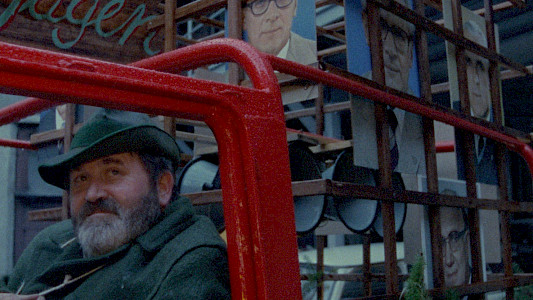
Rhine wine in Saxony! It is being served at an information stand set up by West Germany’s Christian Democratic Union party (CDU) just before the first and only free elections to East Germany’s People’s Assembly; the ballot will give the CDU almost 41% of the vote. But while the East Germans appear entirely sober about it all despite the sweet swill on offer, during the election campaign in February/March of 1990 the West Germans seem drunk on the new order. “Socialism is
In the Splendour of Happiness
You can contribute updates for the current person (Jeanine Meerapfel).
Bitte aktivieren Sie Javascript, um auf unsere Website zugreifen zu können.