2025, 30 minby Jakob Krese
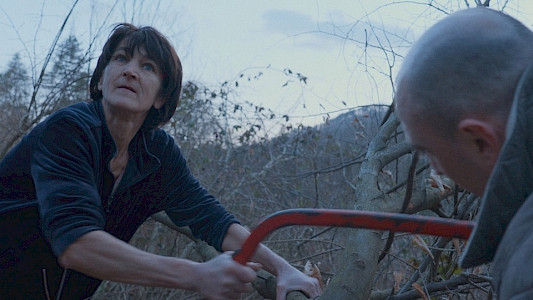
Hazira survived the massacre in Srebrenica. She has lived in the Ježevac refugee camp near Tuzla for 29 years. She was never able to return to her home village in the mountains above Srebrenica. Today it is located in Republika Srpska, the Serbian part of Bosnia and Herzegovina. The political and social conditions force Hazira to wait, her days are characterized by routines that ensure survival. She collects firewood, cleans obsessively and defies the harsh conditions of camp life. With black humor and quiet resilience, she faces the trauma of a war that continues to define her life. To prevent it from becoming too painful, Hazira is constantly on the move, always on the run from her memories, but also from the present and the fear that everything could start all over again. This state of affairs is symptomatic of the situation in Bosnia and Herzegovina today. 2025 marks the 30th anniversary of the genocide in Srebrenica and the end of the war in the former Yugoslavia. The film is a tribute to all those people who are still suffering from the consequences of this war.
Ceasefire
Germany 2023, 67 minby Annika Mayer
A family in the 60s on Super8. Stories of a violent husband fifty years later. A film about the invisibility of domestic violence.Director Annika Mayer searches for clues, and interviews her grandmother ROSE about old family Super8 recordings from the 50s and 60s. They show a family in the time of the 'German Economic Miracle': a fancy house with a garden in a small German town, a vacation at the North Sea, a Sunday trip to the National Garden Show. These are images that have inscribed themselves in the collective memory of the Federal Republic; it is a social expectation that is captured on film – you record what you want to see.But behind the facade, memories come up, fragments of a bygone era that still resonates. The film addresses the discrepancy between appearance and reality. Upon closer examination of the material, the doubts that are awakened in the viewers make the invisible visible. Through Rose’s narration, the image of post-war West German family happiness is dismantled piece by piece.
Home Sweet Home
Germany, Brasil 2021, 93 minby Jakob Krese
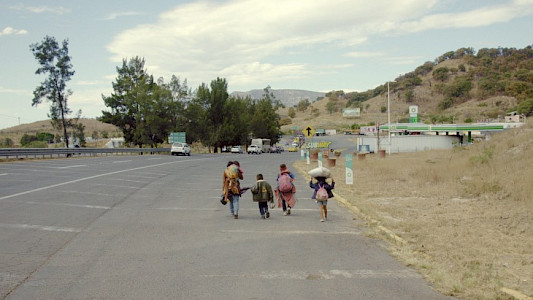
In 2018, thousands of people from Latin America set out together, fleeing from a lack of perspective, poverty and violence to the U.S. Among them Lilian, a single mother from Guatemala, who found the courage to leave her violent husband. The caravan was her only chance to achieve this act of strength. Nevertheless: 4,000 kilometres with four small children, walking, hitchhiking and travelling north on “La Bestia”, the freight train, are still extremely perilous.The film contrasts the media coverage with a sensitive view that deliberately focuses on one family. It registers inconceivable hardships, but also great helpfulness, Lilian’s power of endurance and her ability to make the exertions seem like an adventure trip for her children – at least occasionally. Despite this lightness, though, the struggle remains as present as the fact that the US is simultaneously building a wall to prevent anyone from crossing the border. When Lilian and her children reach the border after weeks of fear, she breaks down. Suddenly the question arises whether her goal is really this rich country. Isn’t it rather about finally standing up to male dominance and traditional gender roles? It’s very obvious that one thing remained on Lilian’s arduous way: Fear has yielded to a new self-confidence. [Luc-Carolin Ziemann, 64 DOK Leipzig]
Lo que queda en el camino
Bitte aktivieren Sie Javascript, um auf unsere Website zugreifen zu können.