2022, 90 minby Matthias Heeder
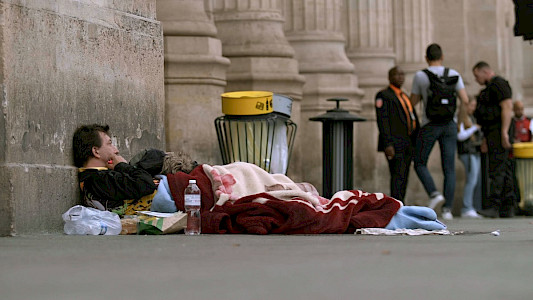
Inflation is hitting with full force: Even in rich industrialized countries, many people suddenly don’t even have enough money to feed themselves properly or pay their bills. "Inflation is a kind of power struggle," says economic historian Adam Tooze. "Who's going to be able to pay the rising prices, and who's going to be the loser?" Why is inflation now suddenly an issue again in Europe or the United States? What are central banks doing about it? Our film shows which mechanisms have contributed
The Return Of Inflation - The Gravy Days Are Gone
Germany 2021, 98 minby Axel Brüggemann
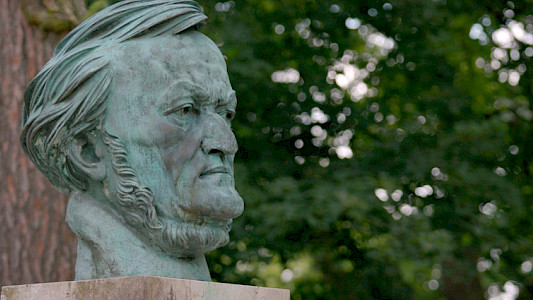
Richard Wagner is more than just music, he is a social phenomenon, a question of belief, and the Bayreuth Festival is the world's most important mecca for the cult of Wagner. GLOBAL WAGNER is a cheeky trip around the world of Wagnerians, from Venice to Latvia, Israel, Abu Dhabi and the US all the way to Japan – in between passion and music, politics, culture, glamour, rehearsals and bratwurst. How, to until this day, did such massive hype and such a cult following develop all over the world arou
GLOBAL WAGNER
Germany 2018, 90 minby Luigi Falorni, Roland Wagner
When author Giuseppe Tomasi di Lampedusa died in 1957 he was penniless. But one year later his only novel, 'Il Gattopardo', was published and went on to become a global success with more than 13 million copies sold to this day. In 1963, Luchino Visconti's film adaptation, starring Burt Lancaster, Claudia Cardinale and Alain Delon, received a Palme d'Or in Cannes. However, hidden behind the genesis of 'Il Gattopardo' there is a true love story – which almost outshines the novel: that of the autho
The Birth of the Leopard
Germany 2017, 89 minby Diego Pascal Panarello
After years drifting, Diego returns to Sicily. His dream of becoming a musician has not worked out. He has no job and no plans for the future but the sound of an ancient musical instrument, the mouth harp, points the way. From the torrid coasts of Sicily, Diego journeys to the frozen flatlands of Yakutia in Siberia where he becomes part of a prophecy from a century ago. The ‘sound of happiness’ is at last there.––––––––––––––––––––––––––After twenty years, the failed musician Diego returns to hi
The Strange Sound of Happiness
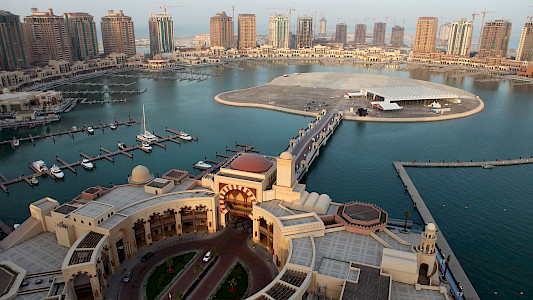
2012, 104 minby Jörg Bundschuh, Matthias Heeder, Nigel McCarthy
From Bazar to Wall Street:After the financial crisis and the events of the Arab Spring the Western world has been exposed to an alternative, religion-influenced system of economics called Islamic Finance. Indeed, in the shadows of our conventional financial system, Islamic states have developed another option that appears to have been less affected by the crises of recent years. But what is really behind this concept, how did it emerge, and what makes it different from the standard system? From
ISLAMIC ECONOMICS
You can contribute updates for the current person (Jörg Bundschuh).
Bitte aktivieren Sie Javascript, um auf unsere Website zugreifen zu können.
![THE BIRTH OF THE LEOPARD [Giuseppe Tomasi di Lampedusa]](/site/assets/files/413431/pic_1546824784_89545ca827d488aed5bd0a9d1e05eb95.533x300.jpeg)