Germany 2022, 55 minby Hedwig Schmutte
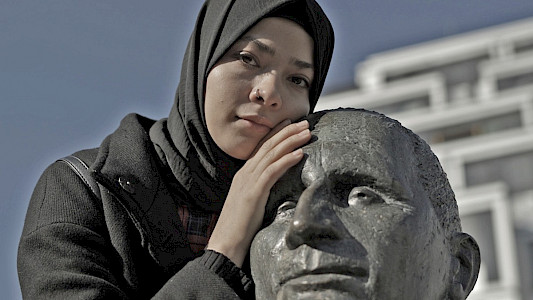
Anyone can lose his/her home. At any time, and anywhere in the world. Anyone can be displaced and forced to find refuge in a foreign land. For millions of people, this means the only way to survive. More than eighty years ago, hundreds of thousands of people were forced to flee Germany at the risk of their lives. The German poet and theater-maker Bertolt Brecht was one of them. His flight from Hitler drove him once around the globe. What followed was the interruption of an all-promising career a
Refugee Conversations – Bert Brecht
Germany 2019, 90 minby Hedwig Schmutte, Rolf Lambert
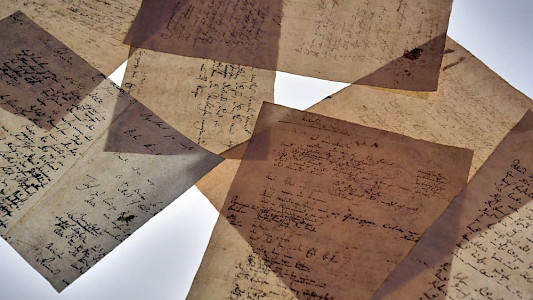
September 11th, 1806, the poet Friedrich Hölderlin is forcibly abducted from his then home in Homburg and brought to a mental hospital in Tübingen. There he is treated according to the traumatising methods of the time, then declared incurable. His remaing 36 years of life he spends isolated in a room in Tübingen. Taking the questionable forced abduction as a starting point the film recounts the uncompromising life path of this world-famous poet and traces his political radicalisation against the
Absolute Poet - Friedrich Hölderlin
Germany 2013, 52 minby Hedwig Schmutte, Ralf Pleger
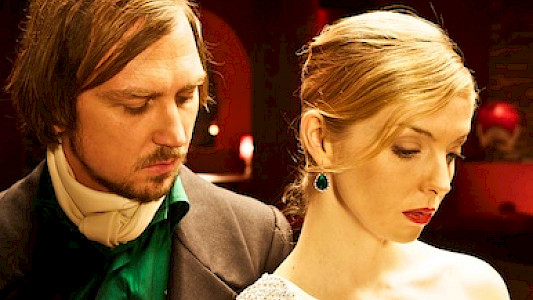
Ludwig van Beethoven’s work is legendary – and already was while he was still alive. He is famous around the world, and yet little is known about the conditions under which his music was composed. One thing is certain: he composed most of his masterpieces AFTER the onset of his deafness. When he composed his famous 9th symphony, he wasn’t able to hear a thing! A deaf composer? How is that possible? 200 years after Beethoven’s death, THE BEETHOVEN FILES casts light of one of the biggest mysteries
THE BEETHOVEN FILES
Germany 2010, 52 minby Torsten Striegnitz, Simone Dobmeier, Hedwig Schmutte
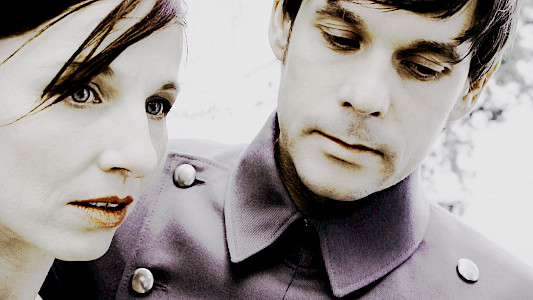
The death at Wannsee Lake – a spectacular case that has, to date, continued to disturb and fascinate the ensuing ages. The German poet Kleist was found shot – what is that supposed to mean? What exactly happened at Wannsee Lake that afternoon on November 21st, 1811? Who shot Kleist? What is known about the woman that died with him? Could it be that the bullets were meant for her? Or that he shot her? Or she, him? If yes, why? And why were the couple so cheerful and playful mere momen
THE KLEIST FILE
You can contribute updates for the current person (Hedwig Schmutte).
Please enable JavaScript to access our website.