Germany 2023, 52 minby Grit Lederer
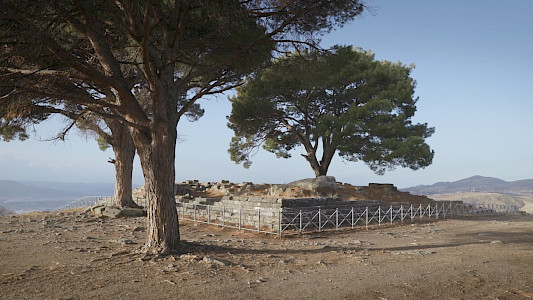
Over 1000 years ago, the Pergamon Altar was destroyed forever. The famous relief images, the fighting gods and giants, have been preserved. Today the ancient building is surprisingly present in two places – in Berlin's Pergamonmuseum as an exhibition architecture for the reliefs, and in Bergama, the old Pergamon, as the missing centerpiece of the city's history. Accompanied by Bénédicte Savoy, the documentary tells the story of how the monumental work of art became an attraction of the Museumsin
Pergamon Altar
Germany 2022, 52 minby Grit Lederer
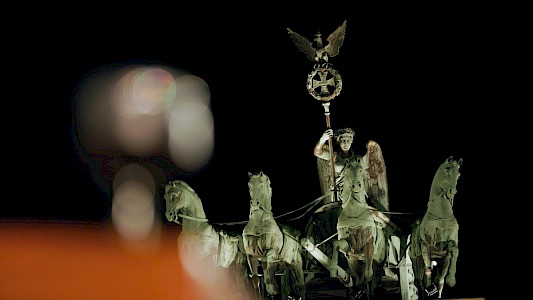
For eight years Berlin's Quadriga of the Brandenburg Gate was stored as Napoleon's war trophy in Paris. She almost stayed there forever. When the work of sculptor Johann Gottfried Schadow finally returned to Berlin in 1814, the work of art became a symbol of victory over France. The Brandenburg Gate turned into a hotspot of German history.In 1945, the original Quadriga was destroyed. There is a replica on the gate today. A plaster copy was recently rediscovered and restored in the rooms of the G
Berlin's Quadriga – A Franco-German Affair
2022, 52 minby Grit Lederer
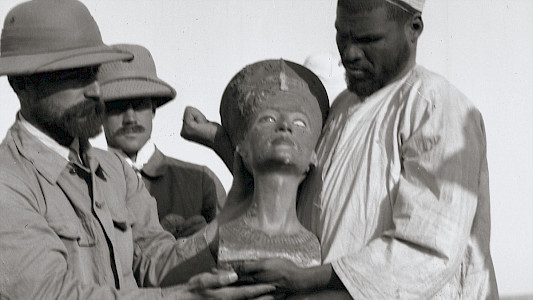
The bust of Queen Nefertiti is a magnet for every visitor to Berlin. On the Nile, however, the icon of Egyptian culture is sorely missed. Formally, the ownership structure seems to be clear. The distribution of the finds was carried out strictly according to the law. But there are doubts aboutthat. As early as 1924, the effigy of the Queen was reclaimed. The bust of Nefertiti exemplifies the question of where the future of such icons of world culture lies, in the field of tension between nationa
Nefertiti – To whom belongs beauty?
Germany 2022, 208 minby Marion Schmidt, Sven Rech, Grit Lederer, Inga Wolfram
Mankind’s greatest buildings, cultural landscapes and areas of natural beauty must be preserved for the future. On the 50th anniversary of the UNESCO World Heritage Convention, we visit four World Heritage Sites in Europe.In 2022, UNESCO celebrates the 50th anniversary of its World Heritage Convention – the idea of a global heritage that belongs to all peoples and must therefore be protected by the world community. Its mission is to preserve the world’s most beautiful and valuable buildings, cul
UNESCO World Heritage - Treasures for Eternity
Germany 2021, 45 minby Grit Lederer
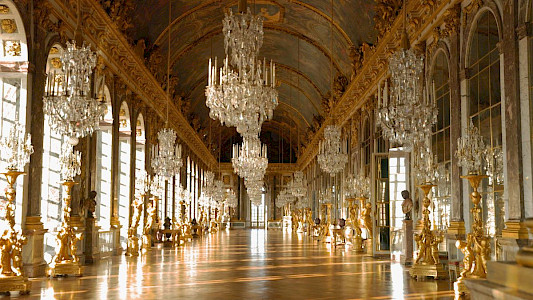
On January 18, 1871, 150 years ago, Wilhelm I. was proclaimed as German emperor in the magnificent Hall of Mirrors at the Palace of Versailles, once the seat of government of the 'Sun King' Louis XIV, was a national symbol – and the proclamation thus a show of power against France, a triumphant act in the hall of the 357 mirrors. The documentation also tells Versailles as a place of German history.
Mysterious places: Versailles Palace
Germany 2021, 52 minby Grit Lederer
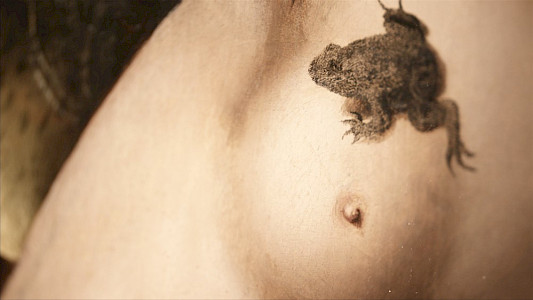
Death and the devil, faith and fear, seduction and eroticism in bright colors -gothic art casts a spell over 600 years ago. In the time of the Middle Ages, which was poor in images, this art played deliberately and skillfully with the emotions of the viewer: it triggered fear, devotion, but also rapture. To this day we can hardly avoid the power of the gothic art. Exploring them is an adventure, a discovery full of surprises. The documentation focusses on spectacular panels and paintings from th
FEAR, FAITH and GENIUS. GOTHIC ART!
2020, 52 minby Grit Lederer, Paul Mellenthin
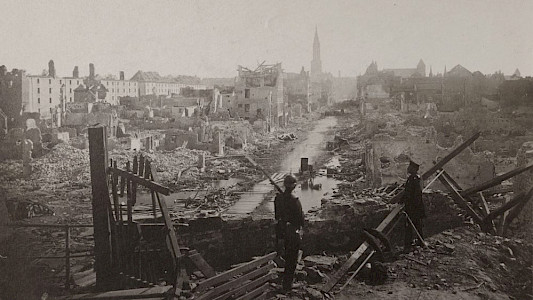
In the months of the war of 1870/71 and in the weeks of the Paris Commune photographers documented the scenes of the war with their plate cameras. This documentation accompanies the art historian Paul Mellenthin on his journey to the authentic places. It is the very special approach, a concentrated look at unknown photographs, which opens up new insights as well as the relevant question of the representability of war.
1870/71 Photographs of a forgotten War
Germany 2019, 55 minby Grit Lederer
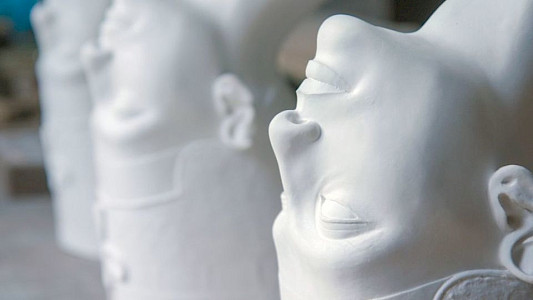
On the occasion of its 200th anniversary, a comprehensive anniversary exhibition in the newly opened James Simon Gallery on Berlin's Museum Island will be dedicated to the Berlin's Gipsformerei (Replica Workshop). Casting works of art or people, whether living or dead, in plaster was considered high art in the 19th century.The Berlin's Gipsformerei (Replica Workshop) has a worldwide unique inventory of over 7,000 molds. For the first time, a film documentation portrays this oldest institution in
Pergamon in Plaster
Germany 2019, 106 minby Grit Lederer
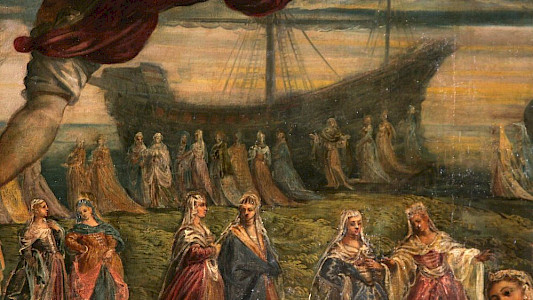
The sea is a place of imagination and nostalgia, but also the scene of wars and battles. Hardly any other motif has been treated in so many different ways in painting. Two ARTE documentaries are devoted to the subject and take the viewer on a 'picturesque' journey through landscapes and times.Famous paintings by Paul Cézanne, Gustave Courbet, Salvador Dalí, Caspar David Friedrich, Katsushika Hokusai, Jacopo Tintoretto, William Turner and Francisco de Zurbarán are presented in their original loca
Painting and the Sea
Germany 2017, 26 minby Grit Lederer
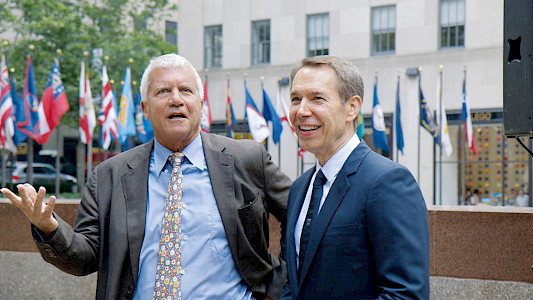
The global art trade is not a transparent world: Paintings are sold for millions of dollars even though the actual cost of paint and canvas were a few dollars only. How do these prices come about?This series looks behind the scenes of the dazzling art industry. Director Grit Lederer follows art dealers around the world. The protagonists of the series are Larry Gagosian, possibly the most powerful art dealer in the world at the moment, Gerd Harry Lybke, who established the Leipzig School with Neo
Art Dealers
Germany 2016, 53 minby Grit Lederer
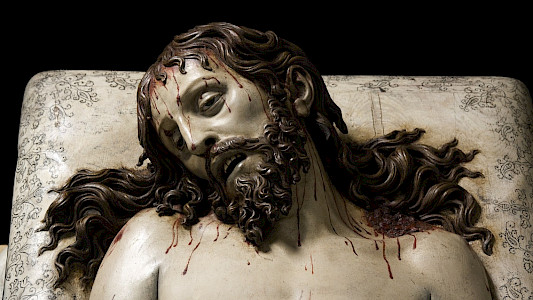
The documentary EL SIGLO DE ORO – The Golden Age of Spanish Art tells the fascinating story of Spanish art during its most important and successful era. In the 17th century, Spanish painting and sculpture are flourishing. The work of artists like El Greco, Velázquez, Zurbarán and Murillo is characterised by an unprecedented realism and a fine eye for psychological nuances. At the same time, art is closely intertwined with the Spanish court and the church. How was it used as a means of propaganda
EL SIGLO DE ORO - The Golden Age of Spanish Art
Germany 2015, 52 minby Grit Lederer
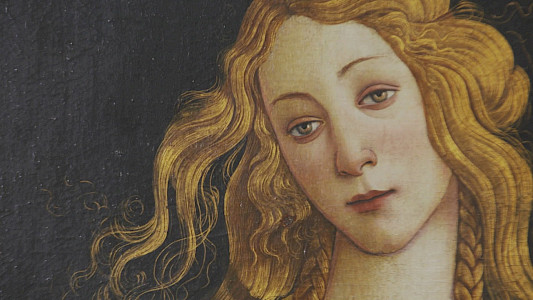
Born in 1445 Sandro Botticelli is one oft he most infuential Renaissance artists. His female figure, the famous VENUS, is part oft the iconographic memory of mankind. The documentary shows the very first time the life of this unique florentine artist and opens a new approach to his masterpieces and their influence till today.
BOTTICELLI
2015, 52 minby Grit Lederer
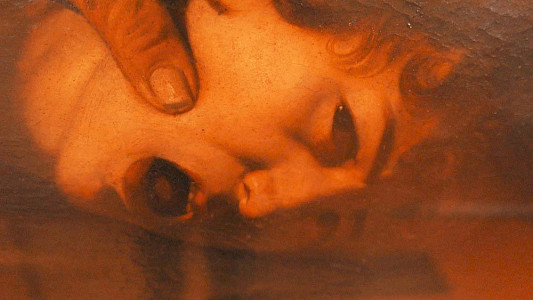
It is one of the most mysterious stories of the bible when God asks Abraham to obey his wish to sacrifice his son Isaak. The film shows the reflection on obedience in an exposition of artist Saskia Boddeke and filmmaker Peter Greenway as well as the answers of the three great religions Islam, Judaism and Christianity on the question, what does religious obedience means to us today.
CRUEL GOD? Violence, Religion and Art
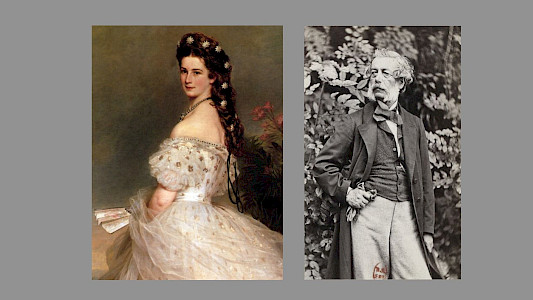
Who is the master behind the famous painting of empress „Sisi“? Franz Xaver Winterhalter (1805-1873) was the most well-known portrait painter of his era. „Royal Majesties, the nobility and VIPs – he came nearer to them than anyone else.“This documentary opens a new look on Winterhalters life and work, told in his own words.
Franz Xaver Winterhalter. Painter at their Majesties' Service
You can contribute updates for the current person (Grit Lederer).
Bitte aktivieren Sie Javascript, um auf unsere Website zugreifen zu können.