Germany 2018, 90 minby Bettina Braun
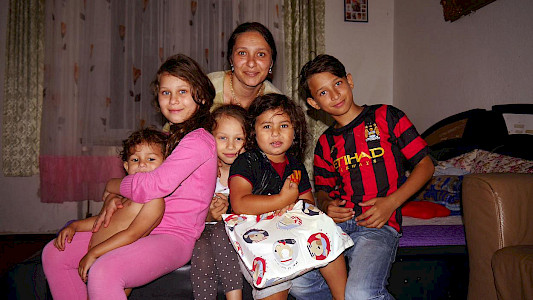
29-year-old Lucica, a Roma from Romania and mother of six children, is constantly struggling to make ends meet.Despite the family's efforts to build a better future in Germany, life for Lucica and the children becomes more and more difficult: her flat is too small, the electricity is cut off, they have problems with the neighbours, school and the new language, and Lucica‘s husband and the father of her children is in prison.The film follows the family closely over a period of one-and-a-half year
LUCICA AND HER CHILDREN
Germany 2015, 87 minby Stephan Bergmann
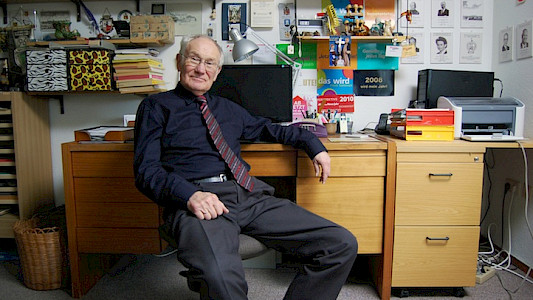
If life was a Romantic Comedy this is the film that makes us want to celebrate it to the end! The last gigolos have gotten grey. But still they are gentlemen, perfect and suave to the sole. They spend their golden years on cruise ships – as dancers and entertainers for solvent ladies of 60 years and over whoare hungry for amusement. Slowly and with a lot of humour, the film reveals that happiness is mainly down to everybody’s individual skill and luck. Some will try and make their dreams come tr
THE LAST GIGOLOS
Germany 2013, 80 minby Jürgen Brügger, Jörg Haaßengier
The film tells of land surveyors, self-surveyors, bacteria collection and locality research. It gives insight into the behaviour of German drivers leaving their parking spaces and demonstrates that the shells of tortoises in fact represent the innermost order of the world.Apparently normal citizens at home getting high on weird and self developed statistics, or trying to get a handle on the orderly nature of their bodily functions by means of complicated autoexperiments; researchers using system
ORGANIZED
Germany 2012, 89 minby Peter Heller (c/o filmkraft)
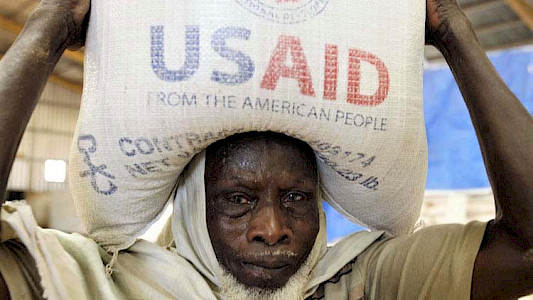
500 billion US dollars in a half-century - and no end to the aid is in sight. Prominent "do-gooders" of the entertainment industry such as Bono, Bob Geldorf, Angelina Jolie and Madonna, pressure the politicians to pump more development aid into Africa. An ever-increasing number of African economic experts and sociologists have begun to criticise this flood of aid. Our documentary film project follows the voices of protest that are being raised in Africa. Working in cooperation with scholars and
SWEET POISON
Germany 2010, 90 minby Maria Mohr
A film dedicated to the brothers and sisters who leave and those who stay – „on earth as in heaven“. BROTHER SISTER is a film about a German nun loving a Spanish saint to-be: Rafael Arnaiz, who died 3 years before Sister Ingrid was born. She only has a piece of his rib as an official relic – and his complete works, that she had translated from Spanish into German. But why a german nun loves a Spanish saint? Sister Ingrid is the filmmaker’s aunt. This allows an intensive look into the world of th
BROTHER SISTER
Germany 2010, 80 minby Jörg Haaßengier, Jürgen Brügger
The film takes us on a journey through urban periphery, which, despite being right on our doorstep, is entirely unfamiliar territory for most of us. Think of the late afternoon drive to IKEA. It is a journey through a characterless and anonymous landscape that appears to express nothing whatsoever. It is as if we had just parked the car on the hard shoulder, climbed over the barrier and fought our way through the brambles to the white areas on our mental street map. The alleged no-man’s land b
THE GARDENS OF EDEN
Germany 2009, 90 minby Karin Jurschick
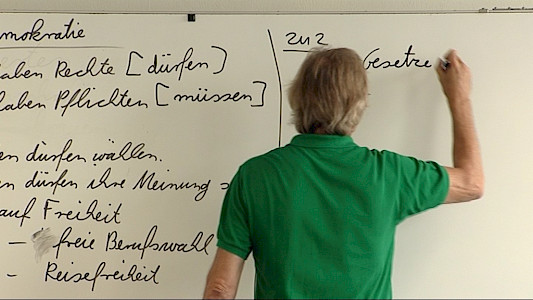
"...in terms of language, we participate in the creation of social reality, of the community..." (Framework of the curriculum of integration courses) Since January 1st, 2005 there has been a new Immigration Act in force in Germany. Integration is ordained.Whoever wants to stay here had better get to know Germany: with 600 language lessons and 45 lessons on orientation.The film tracks people from China, Somalia, Afghanistan, Morocco and other countries through their courses: what are they suppos
Certificate in German
Germany 2008, 84 minby Christiane Büchner
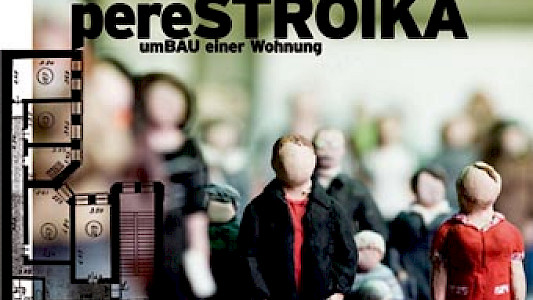
pereSTROIKA - reCONTRUCTION of a Flat
Germany 1998, 90 minby Dr. Robert Krieg
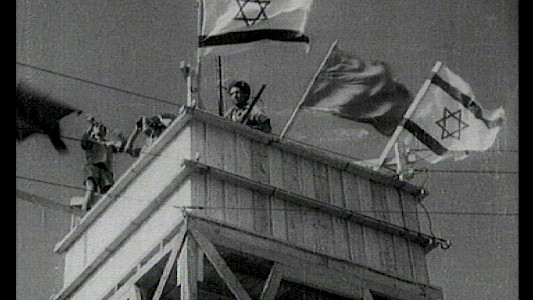
Our film is about Jews from Germany and Eastern Europe who, as young men and women, emigrated to Palestine in the thirties, under the influence of the Zionist movement, and helped to found the State of Israel. These men and women pushed for a peace agreement with the Palestinians as early as the forties and fifties, at a time when such activity was still regarded as treason. The subjective memories of these nonconformists establish historical contexts of which very few people are aware, providin
I came to Palestine...
You can contribute updates for the current person (Gesa Marten).
Please enable JavaScript to access our website.