2023, 86 minby Britt Beyer
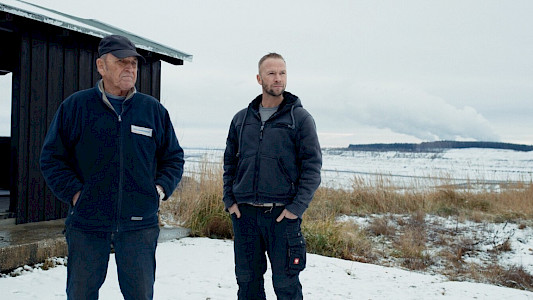
Coal mining has shaped Lusatia for generations. In the GDR it was still an important industrial location but, after the fall of communism, companies shut down and livelihoods were destroyed. With the planned phase out of coal, the region is facing another upheaval. Britt Beyer takes a sensitive look at the people who must deal once again with the collapse of existing structures and points of reference. [38 DOK.fest München, Ina Borrmann]
Tipping Point
Germany 2022, 39 minby Andrzej Klamt
Ukrainian photographer Yuri Kosin experienced the outbreak of war in his town of Irpin near Kiev. He documented the events as well as his escape a few weeks later. Now he is returning to his homeland. Yuri Kosin does not know what situation he will encounter in Irpin, but he knows that the world there will never be the same. The area around Kiev is considered safe again. Russian troops have withdrawn from western Ukraine. What they have left behind are places of horror. Butscha is located near I
Back in the War
Germany 2020, 88 minby Andrzej Klamt, Manhal Arroub
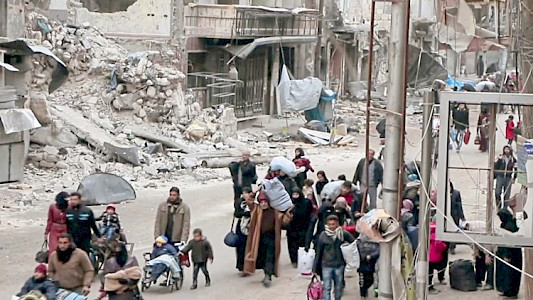
The war in Syria seems as impenetrable as a black box - the conflict began almost ten years ago and even today many people in the Western world have the feeling that they don't even understand who is actually fighting against whom. What began with demonstrations for political reforms and became a revolution of the "Arab Spring" has long since become a conflict dominated by foreign powers: Iran and Russia on the side of the Syrian dictator Bashar Al-Assad, but also Turkey, the USA, the Gulf State
Black Box Syria - The Dirty War
Germany 2018, 30 minby Ivette Löcker
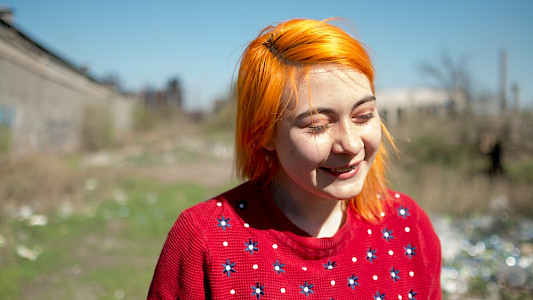
Anya and Seryozha, eighteen and nineteen years old, have been close friends since school. They live in Mariupol, an industrial city in southeastern Ukraine. Life is serious, but they approach it with humor and lightness. Anya asks whether they should move away together. What is keeping Seryozha in this city close to the war front? The film shows snapshots from the life of young people searching for who they want to be and how they want to live. They move between autonomy and uncertainty, rebelli
Anya and Seryozha
2016, 79 minby Frank Amann
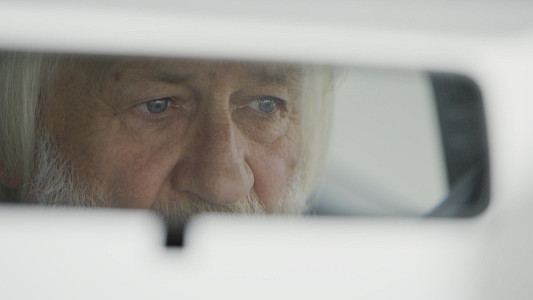
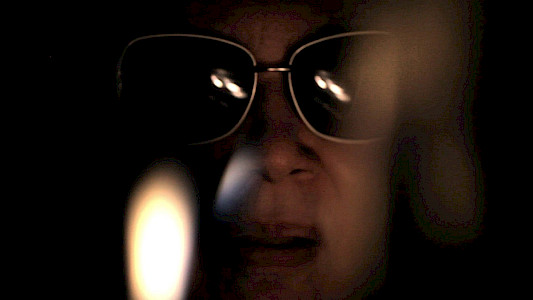
„Even with no input, or maybe especially with no input, the brain keeps creating images." Pete Eckert, blind photographerSHOT IN THE DARK is an intimate portrait of three successful artists who have one thing in common: visual impairment as a starting point for their visual explorations.This film poses fundamental questions about seeing and the imagination.Three blind photographers.It is as if through the slow working methods of these blind photographers something about the creation of photograp
SHOT IN THE DARK
Germany 2012, 52 minby Mira Thiel, Benjamin Cantu
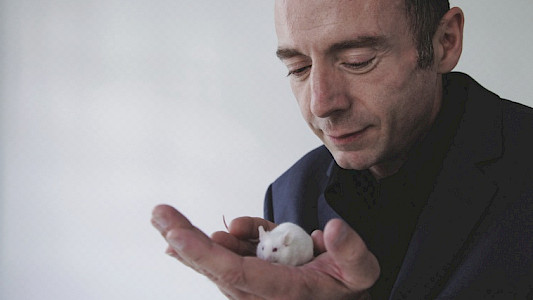
For years, researchers believed that a cure for AIDS was impossible. But that all changed four years ago when an American, Timothy Ray Brown, became the first patient in the world to be cured of HIV for ever at the Berlin Charité hospital. Internist Gero Hütter succeeded in curing his patient of both HIV and leukaemia, using stem cell treatment. Since then, it appears that victory over the frequently fatal infection is possible in the near future. This documentary tells the story of the se
THE BERLIN PATIENT
You can contribute updates for the current person (Frank Amann).
Bitte aktivieren Sie Javascript, um auf unsere Website zugreifen zu können.