2023, 118 minby Regina Schilling
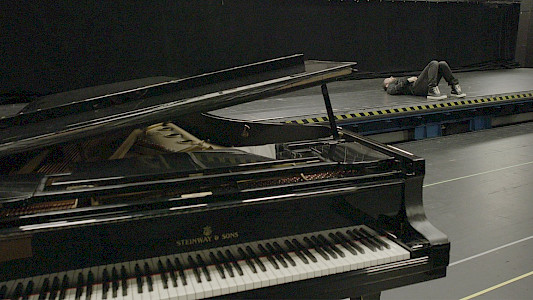
At 34, Igor Levit is an exceptional artist in the world of classical music. A young rebel, who - at the piano - transforms into a mature musician. At age nine he arrived in Germany, a Jewish immigrant of Russian descent. Having an opinion and publicly expressing it, is not a choice, it is a survival strategy. The film follows the artist over two years as Levit explores his “life after Beethoven“, as he searches for his next challenge, his identity as an artist. We observe him recording new pieces, his intense immersion into the music, his collaborations with conductors, orchestras and recording artists, his warm embrace of the audiences. And then Covid hits. Having booked 180 concerts all over the world, just to see them being cancelled, Levit is among the first to adapt, establishing a musical lifeline between him and his community on Instagram and twitter. And by doing so he discovers a new freedom, away from the constraints of touring, publishing and marketing.Over the course of two years the film accompanies the artist while he navigates between a traditional career in the classics, his need for activism and an uncertain path as a musician who connects and inspires. [GFQ 4 2022]
Igor Levit – No Fear
Germany 2018, 80 minby Johanna Sunder-Plassmann, Tama Tobias-Macht
outside portrays four homeless men. Starting from the objects they cary around with them the film opens the gates to a world that otherwise remains hidden.outside not only invites to a change of perspective but tries to show four homeless people that have preserved a sense of dignity and pride that is all too often denied to them.Belinale catalogue:Homeless people, tramps, vagabonds and vagrants. Are they all the same idea? Or are they completely different? Sometimes the choice of words can help to change perspectives. The film draußen also adopts a different perspective by following four people living on the streets who own very little. Nothing they possess would ascribe them any apparent social status and yet everything they have is of value. Matze, Elvis, Filzlaus and Sergio are all survivors - and each of them is a real character. In order to hear their stories the two directors decided to adopt a particular strategy and concentrate instead on the items that their protagonists carry about with them. They asked them to open the door to their world by allowing them to take a look inside their plastic bags, pockets and shopping trollies, much as if they were entering someone’s home. The few objects that are to be found within contain a wealth of information and meaning. Charged with emotions and memories, these objects are no less than the fragments of their lives. In their conversations, the full import of these treasures begin to take shape.
outside
2012, 89 minby Ulrike Franke, Michael Loeken
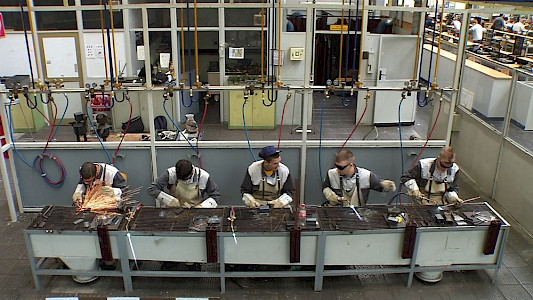
ARBEIT HEIMAT OPEL profiles six young people, aged 16 to 19, who began their apprenticeships as industrial mechanics at the Opel plant in Bochum, Germany in 2009. While they must learn to cope with a new phase in their lives, the start of their professional careers and approaching departure from the security of their parental homes, Opel itself is being sucked deeper and deeper into the maelstrom of the international financial crisis and facing ever-increasing economic pressure. We follow Jerome, André, Sinan, Tim, Marius and Marcel, with all their hopes and fears, through this period of radical change; we are introduced to their dreams for the future as well as their worries. They stand at the threshold of a professional life whose future is already uncertain. At the same time, ARBEIT HEIMAT OPEL contrasts the everyday lives of the Plant II apprentices with GM and Opel’s fortunes on the world stage on two seemingly unrelated levels. Despite their distance both in physical and in media terms, the two levels repeatedly intersect and come into contact with one another, connecting global strategies with local and personal life plans – and vice versa.
HOME HOPE OPEL
Bitte aktivieren Sie Javascript, um auf unsere Website zugreifen zu können.