Sweden, Germany 2023, 83 minby Greta Stocklassa
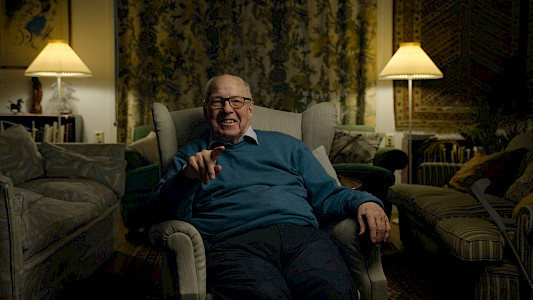
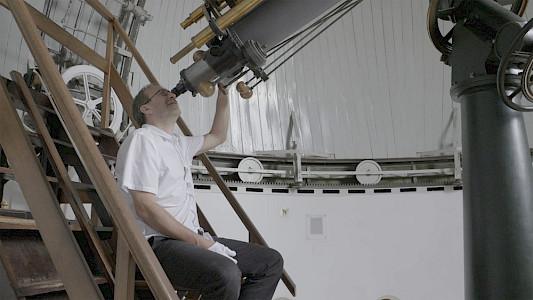
Greta had just turned 8 years old when she watched the unfolding of 9/11 on her tv in Stockholm. In the following months and years she saw her fellow countryman, the diplomat Hans Blix, become a major player in the global crisis, as weapons inspector for the UN.Now, in the 21st century of wars, political extremes and the climate catastrophes, Greta reaches out to Blix, now 94 years old, to ask if he can help her make sense of the world. Does diplomacy still have a role? Or is he the last of the
BLIX NOT BOMBS
Switzerland, Germany, Georgia 2021, 91 minby Salomé Jashi
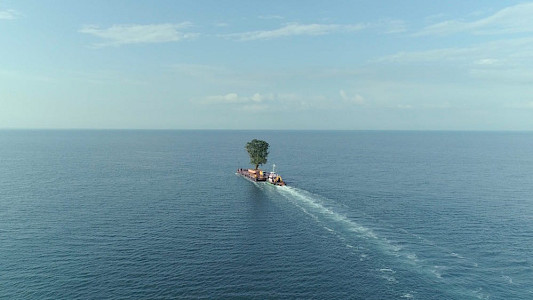
The opening shot of filmmaker Salomé Jashi’s striking environmental tale captures a tree as tall as a 15-story building floating on a barge across the vast Black Sea. Its destination lies within a garden countless miles away, privately owned by a wealthy and anonymous man whose passion resides in the removal, and subsequent replanting, of foreign trees into his own man-made Eden.With astonishing cinematic style,Taming the Garden tracks the surreal uprooting of ancient trees from their Georgian l
Taming the Garden
2021, 89 minby Laurentia Genske, Robin Humboldt
Two Syrian sisters, on the verge of adulthood and trans *, are looking to find their way in their new home-country Germany. This film not only tells the moving story of a family that sticks together despite all hardships, but also poses the question of one's own identity. A coming-of-age documentary about the search for one's individual place in society.
Zuhur's Daughters
2021, 85 minby Aicha Macky
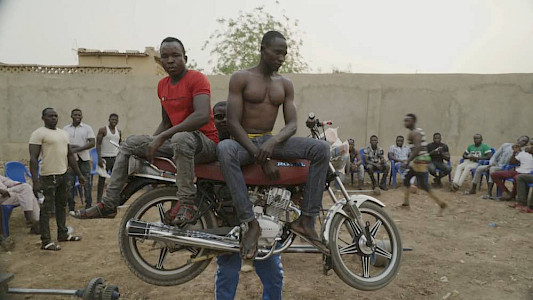
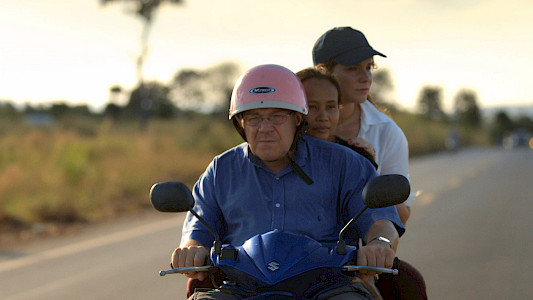
The wind-swept town of Zinder in the heart of the Sahel region of Niger is a place travellers only pass through.Kara-Kara, the former lepers’ quarter, is the pariahs’ district of this town. Gangs referred to as the "Palais” have sprung up in this area and are spreading their influence throughout the town. Obsessed by a culture of bodybuilding and violence, the gang members induce fear in the population.Outside the moments spent together in a body-building camp, some of them follow the path that
ZINDER
Germany 2020, 81 minby Valentin Riedl
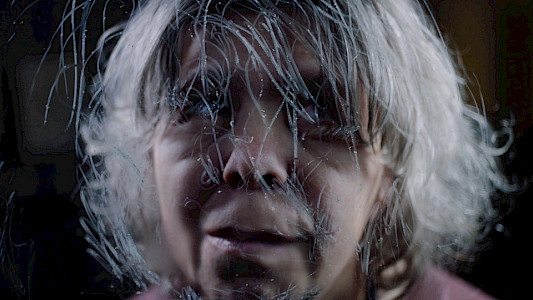
Carlotta cannot recognize faces, not even her own. For her, human faces are no bastion of trust, but places of fear and confusion. She is one of the 1% of all people whose part of the brain responsible for facial recognition does not work properly. With his film LOST IN FACE, neuroscientist Valentin Riedl travels through Carlotta’s universe, full of anthropomorphic animals, lucid dreams and bumpy false paths. He peels back her charming, idiosyncratic solutions that she employs to be able to join
Lost in Face
Romania, Germany, Finland 2020, 86 minby Radu Ciorniciuc
For two decades, the Enache family—nine kids and their parents—lived in a shack in the wilderness of Bucharest Delta: an abandoned water reservoir, one of the biggest urban natural reservations in the world, with lakes and hundreds of species of animals and rare plants. When the authorities decide to claim back this rare urban ecosystem, the Enache family is evicted and told to resettle in the city—a reality they know nothing about. Kids that used to spend their days in nature have to learn abou
Acasa, My Home
Switzerland, Germany, Polen 2020, 94 minby Eliza Kubarska
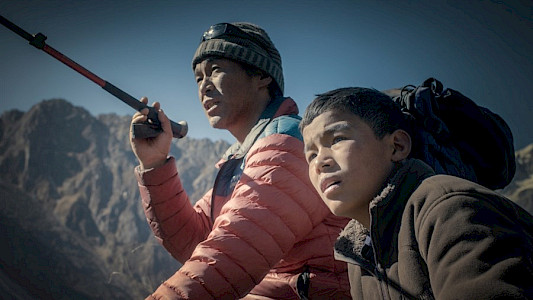
When a Sherpa family is asked by a group of westerners to lead a trek up the never-conquered east wall of the imposing Kumbhakarna Mountain in Nepal, they’re confronted with a dilemma. Not only is the summit reputed to be more challenging than Mount Everest, but according to the local Kirant religion, it’s a sacred mountain that is not supposed to be ascended. While the father would like to earn the money necessary for his son’s education, the mother, a fierce woman who supports her boy’s dream
The Wall of Shadows
2019, 85 minby John David Seidler
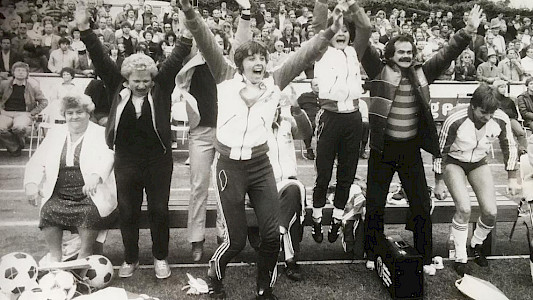
In 1981 Taiwan hosted its first Women's World Cup, at a time when the German Football Association did not promote but rather grudgingly tolerated women's football – in Germany it was officially banned until 1970.Since establishing a women's national team was of no interest to the German Football Association, the invitation to the Women’s World Cup in Taipei went straight to the reigning club champions SSG 09 Bergisch Gladbach. In the film the former players talk about the absurd conditions in wh
We Wanted More
2019, 84 minby Pia Hellenthal
"I dedicate my life to showing the world that one can pretend to be whoever they want." Eva, 25 - drifter, Berliner, pet-owner, poet, sex worker, virgo, recovering addict, housewife, feminist, model – declared privacy an outdated concept at the age of 14. This is the tale of a young woman growing up in the age of the internet, turning the search for oneself into a public spectacle, challenging you on what a woman 'should be'. Through her fragmented personalities you see the emergence of a genera
Searching Eva
Germany 2019, 106 minby Julia Horn
Markus Becker is hit by a car and falls into a coma. The doctors don't believe the 45-year-old will survive the next five to ten days and his father begins making funeral arrangements. Markus' brother Michael refuses to accept this fate. With an unwavering perseverance, creative ideas and humour, Michael manages to get his brother out of the vegetative state. For ten years filmmaker Julia Horn accompanied the two brothers with sensitivity and persistence and was also there do document the moment
Dear Brother
2019, 88 minby Sobo Swobodnik
Thomas Walter was part of the Berlin autonomous scene. In 1995 he and two co-perpetrators were accused of having attempted an arson attack on an uninhabited deportation prison in Berlin-Grünau which was prevented by the police. Arrest warrants for the three as members of a leftist terrorist association are still valid today. They went underground for decades. It is only in 2017 that Walter contacts his family in Germany again – from Venezuela, where he has applied for asylum.Thomas Walter is als
Against The Tide
Germany 2019, 94 minby Christoph Hübner, Gabriele Voss
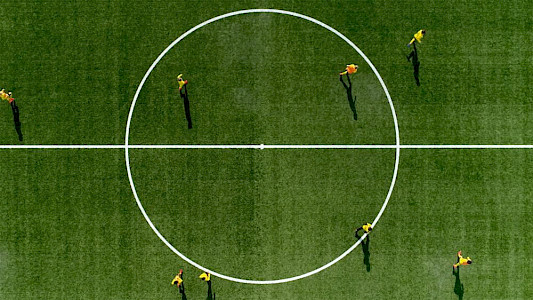
AFTERMATH tells the story of three former youth talents of the German football club Borussia Dortmund.The film encompasses a trilogy shot across 20 years, portraying the end of their career and asks the questions: what was, what is, what comes next?
Aftermath
Germany, Austria 2019, 83 minby Gesa Hollerbach
The last school has shut its doors, every other house is empty, there are only rapeseed fields as far as the eye can see. The last holdovers in the country are faced with the decision: stay or go? "All for the Countryside" traces a host of societal phenomena that are caused by changing dynamics in rural areas and follows four individuals over the course of several years, each of whom give unexpected impulses to life on the countryside. The quartet consists of a mayor who's stuck between the fro
All for the Countryside
Germany 2016, 83 minby Carolin Genreiht
It’s probably every daughter’s worst nightmare: a postcard from Thailand that reads: “My darling, I’m doing great here, eating Pad Thai and drinking Chang Beer. And I met a woman who is your age. Love, Dad.”My father Dieter has changed a lot in the past couple of years. After separating from my mother, he exchanged his hiking boots for fip-fops and travels to Thailand every year for a couple of weeks. Sometimes he travels alone, sometimes with friends – all of whom are divorced and over 60. My f
HAPPY
Germany, Polen 2014, 79 minby Zuzanna Solakiewicz
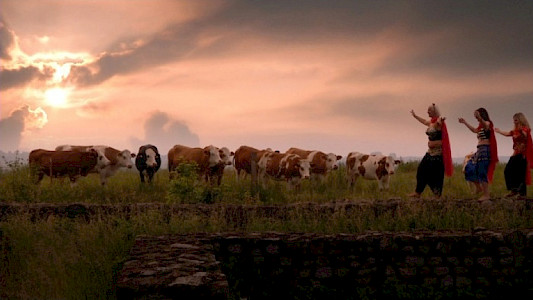
Eugeniusz Rudnik revolutionized the idea of music itself with a pair of scissors and a magnetic tape. As part of the legendary Experimental Studio of Polish Radio, he revealed hidden value in rough and rejected sounds long before the rise of the DJs. In an era of electronic music created in a workshop resembling a scientific lab, he composed music to reach and to portray other human beings.‘15 Corners of the World’ is an attempt to hear the vision of his music. Following the rhythms of architec
15 Corners of the World
Germany 2012, 74 minby Carolin Genreith
Getting old is nasty. Getting old makes you hot and cold. Getting old gives you wrinkles and sagging breasts. When a woman’s menopause begins, she stops looking in the mirror; libido and beauty will soon become things of the past. All you can do is accept the course of time, hide your extra padding under a big sweater and prepare for your new role as a grannyto-be. At least that’s what 28-year-old director Carolin Genreith is absolutely convinced of. She is all the more shocked when, in the mid
DANCING WITH BELLIES
You can contribute updates for the current person (Erik Winker).
Bitte aktivieren Sie Javascript, um auf unsere Website zugreifen zu können.