2022, 80 minby Heinz Emigholz
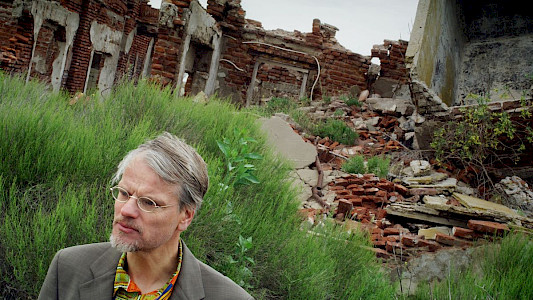
The quasi-fascist architecture of Francisco Salamone's slaughterhouses in the Argentine pampas, the utopian buildings by Freddy Mamani Sylvestre in El Alto, Bolivia, and the restorative "City Palace" in Berlin are the cornerstones of an analytical documentary film that explores the dual character of architectural modernism in the field of tension between avant-garde and political propaganda.The actor Stefan Kolosko acts as a diver in the sunken city of Epecuén, where he paraphrases a text by Jor
Slaughterhouses of Modernity
Germany 2022, 95 minby Heinz Emigholz
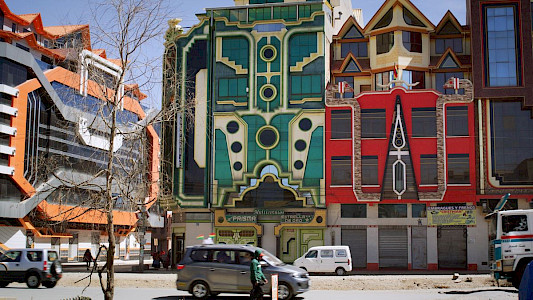
The Neo-Andean architecture of Freddy Mamani Sylvestre, influenced by indigenous culture, adorns the Bolivian city of El Alto. A psychoactive inspection at 4,000 metres above sea level.As a pioneer of Neo-Andean architecture, Freddy Mamani Silvestre attracts attention far beyond the borders of Bolivia. His non-conformist designs are influenced by the culture of the Aymara, the biggest ethnical group in the country, echoing their myths and patterns. Buildings constructed between 2008 and 2021 are
Mamani in El Alto
Germany 2021, 88 minby Christian Bäucker
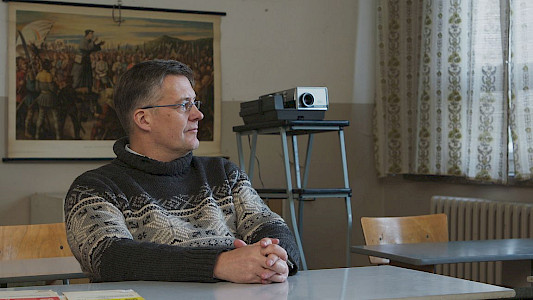
In his film HEIMATKUNDE, the director returns to the school building of his childhood in East Germany. For almost 25 years it lay empty, seemingly waiting to be revived. The remains of socialist education are pasted over, hidden, forgotten.In tentative interviews with contemporary witnesses we are gradually coming nearer to the systematic manipulation of the child’s mind. In this way, it becomes understandable how the dictatorship functioned and turned into the commonplace “that’s just the way i
The Lasting Formation
Germany, Austria, Bosnia-Herzegovina 2020, 70 minby Clarissa Thieme
„Was bleibt I Šta ostaje I What remains / Re-visited" is a re-encounter with the places and landscapes that already played the leading role in Thieme's „Was bleibt I Šta ostaje I What remains" (Berlinale 2010): Sites of War Crimes in the 1990s in Bosnia Herzegovina. Ten years later, Thieme returns to them – with those past recordings in tow. „Was bleibt I Šta ostaje I What remains / Re-visited" is an experimental filmic setup that invites interactions from locals without forcing them. The result
What Remains / Re-visited
2020, 76 minby Anja Dornieden, Juan David González Monroy
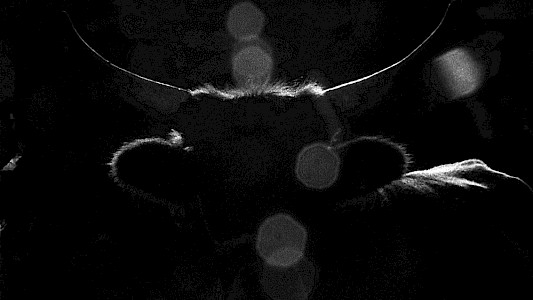
Aurochs is the name given to the wild ancestor of modern cattle. The aurochs has the distinction of being the first documented case of extinction. The last known wild aurochs died in the Jaktorów [Jaktoro,w] Forest in Poland in 1627. Both, hunting and the introduction of domesticated cattle led to its decline and disappearance. Its value, however, derived not just from being a source of sustenance. Traits that were attributed to the animal, such as speed, strength and courage, imbued it with gre
Her Name Was Europa
Germany 2020, 68 minby Ekaterina Reinbold
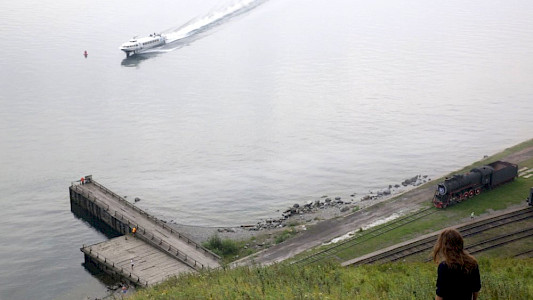
The movie где остался домовой / STANDING IN FRONT OF MANY HOUSES has two titles. The literal translation from Russian is .Where did the Domovoi go?. and refers to an old Slavic popular belief. Hence the house spirit, the Domovoi, ensures the protection and peace of a place. The English title plays with the impossibility of a direct translation of this figure and describes through the vivid STANDING IN FRONT OF MANY HOUSES the feeling of being lost in a diasporic experience. где остался домовой /
Standing in Front of Many Houses
2018, 36 minby Heinz Emigholz
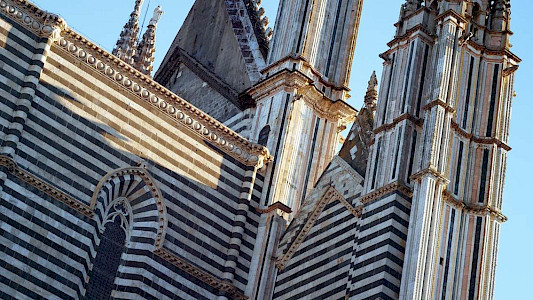
A confrontation and comparison of two church buildings, which could hardly be more different, but also a dialogue between various concepts of church and community: the Protestant Grundtvig’s Church in Copenhagen and the Catholic Cathedral in Orvieto. The cathedral in the central square in the middle of the city of Orvieto, with its visual histories in the interior and on the façade, and the imposing brick building of the church on the edges of Copenhagen, which forms the center of a housing comp
Two Basilicas
You can contribute updates for the current person (Christian Obermaier).
Please enable JavaScript to access our website.